A Known Example
I once knew a lady who, after graduation, job-hopped four times, spending only one to two-and-half years at each company before finally settling down at the last one. She’s still at the last organization till today.
It was a strategic move that paid off for her. And each move was leveraged by a pay increase.
It is worthy to note that such a move could also boomerang in the negative.
I also know a few people who worked and retired with the company that hired them right out of college.
My Experience
The longest time I worked with a company was six years. I job-hopped a few times (couple of years each) before venturing into freelancing. I then returned to the work force again for a while.
I love versatility. But hate routine and complacency. Anyways,
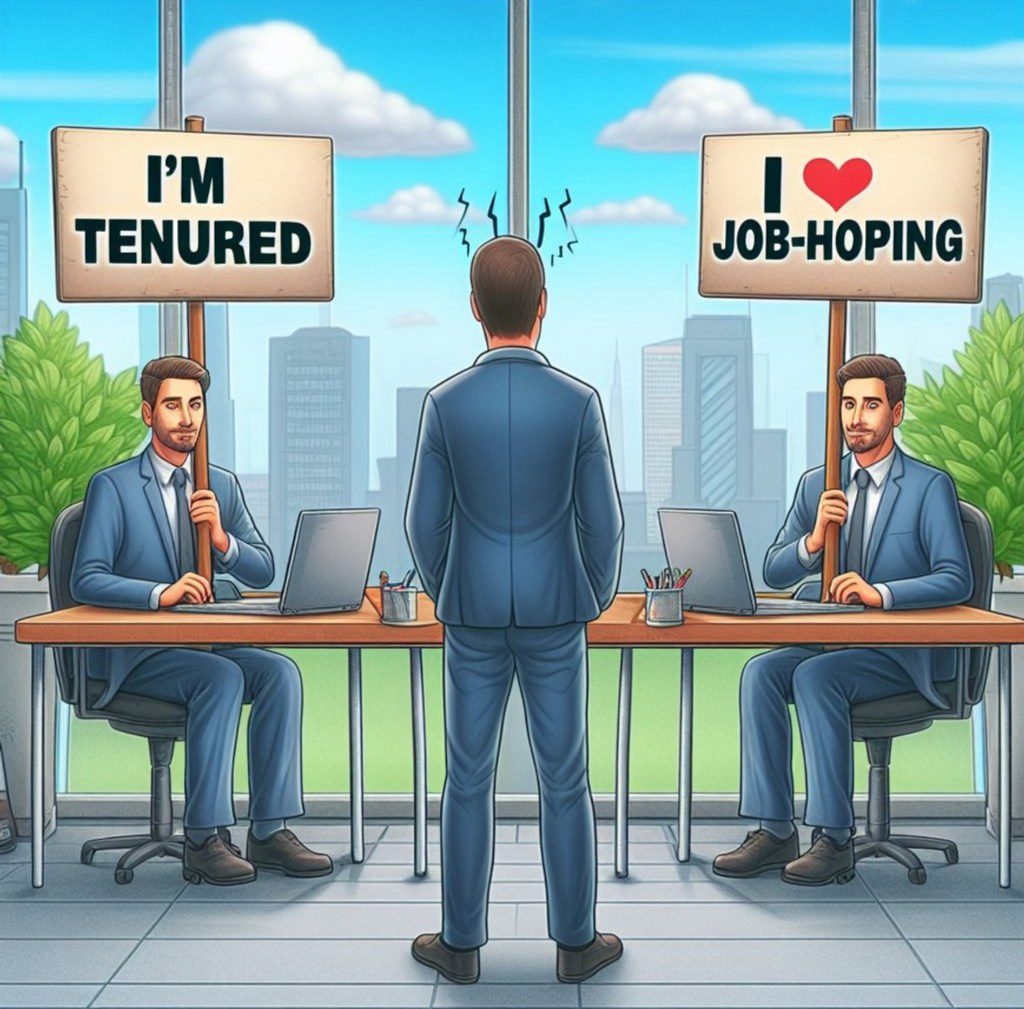
Making the choice between a tenured employee (> 5 years) with one company or an experienced employee with multiple companies is a decision between longevity and versatility. It’s also a decision between stability and adaptability. The choice will depend on several variables that should align with one’s career goals and aspirations.
Now, let’s consider the benefits and drawbacks of deciding between being a tenured employee with one company and being an experienced employee with multiple companies.
Introduction
The current job market is dynamic. Professionals are often faced with the dilemma of choosing between which career paths to pursue. Using ten years as the example, should they dedicate those years to a single company or accumulate those years of experience across multiple organizations? Both options offer unique advantages and challenges, making the decision a complex one.
Let’s explore the pros and cons of each path to help make an informed choice.
Long-Term Tenure: A Decade with One Company
Committing to a single company for a decade can be a rewarding experience, offering stability, familiarity, and deep-rooted connections within the organization. Some key considerations can include:
PROS
1. Expertise and Specialization
- Long-term employees often develop specialized skills and knowledge specific to their industry or role.
- Over ten years, one can become a subject matter expert (SME), gaining recognition and respect within the company and industry.
2. Career Advancement
- Loyalty is often rewarded with opportunities for career advancement, such as promotions, leadership roles, and higher compensation.
- Building a long-term relationship with one employer can lead to greater trust and recognition of your contributions.
3. Job Security and Benefits
- Established employees may enjoy greater job security, especially in times of economic uncertainty.
- Benefits like retirement plans, healthcare, and other perks may improve with tenure, providing a sense of financial stability.
4. Company Culture and Community
- Longevity fosters a sense of belonging and camaraderie within the company culture.
- One may develop meaningful relationships with colleagues and mentors, creating a supportive network.
However, there are potential downsides to long-term tenure. The downsides can include
CONS
1. Career Plateau
- After a certain point, advancement opportunities may become limited, leading to career stagnation.
- Lack of exposure to diverse environments and perspectives can hinder professional growth and innovation.
2. Risk of Complacency
- Longevity may breed complacency, diminishing the drive for continuous learning and skill development.
- Adaptability to new challenges and technologies may suffer due to prolonged exposure to a single organizational context.
3. Marketability Outside the Company
- Employers may perceive long-term employees as less adaptable or resistant to change, potentially limiting opportunities outside the organization.
- Transitioning to a new role or industry after a decade with one company can be challenging due to limited external experience.
Multi-Company Experience: A Decade of Versatility
On the other hand, gaining ten years of experience across multiple companies offers a diverse and dynamic career path. Some of the advantages include
PROS
1. Versatility and Adaptability
- Exposure to different organizational cultures, workflows, and challenges cultivates adaptability and resilience.
- Multi-company experience demonstrates flexibility and a willingness to embrace change, appealing to employers seeking agile professionals.
2. Broad Skill Set and Network:
- Working across various companies exposes one to a wider range of skills, tools, and methodologies.
- One can build a diverse professional network spanning different industries, enhancing future career prospects and opportunities.
3. Continuous Learning and Growth:
- Each new role brings fresh learning opportunities and challenges, fostering continuous professional development.
- Adapting to different environments stimulates creativity and innovation, fueling personal and career growth.
4. Marketability and Negotiation Power
- Multi-company experience enhances marketability, demonstrating one’s ability to thrive in diverse settings.
- You may have greater leverage in negotiations, with the option to leverage offers from multiple companies for competitive compensation and benefits.
CONS
However, there are also potential drawbacks to consider. Those include
1. Lack of Long-Term Stability
- Job hopping may raise concerns about reliability and commitment among potential employers.
- Building deep expertise or tenure-related benefits like pensions may be challenging with frequent job changes.
2. Integration Challenges
- Adjusting to new roles and environments requires time and effort, potentially impacting productivity and job satisfaction.
- Continuously starting over in new organizations can be emotionally draining and disruptive to work-life balance.
3. Limited Depth in Expertise
- While diverse experience offers breadth, it may come at the expense of deep expertise in a particular domain.
- Specialized roles or industries may require in-depth knowledge and experience that multi-company professionals may lack.
Conclusion
Deciding between a decade of tenure with one company or multi-company experience is a significant career choice that should align with one’s values, goals, and priorities. Both paths offer unique benefits and challenges, and there is no one-size-fits-all answer. One should consider factors such as career aspirations, industry dynamics, personal preferences, and long-term goals when making the decision.
Ultimately, whether one chooses stability and specialization or versatility and adaptability, it is pertinent to embrace the chosen path wholeheartedly and continue to strive for growth and fulfillment.


Great realization, Sean. I’m sure you have contributed and are still contributing.
Thanks for your continued support.
Hope you’re doing well.
LikeLike
A very good compare and contrast. I realised early on that the only way I can contribute to change and make things better was to be at the top 😊
LikeLike