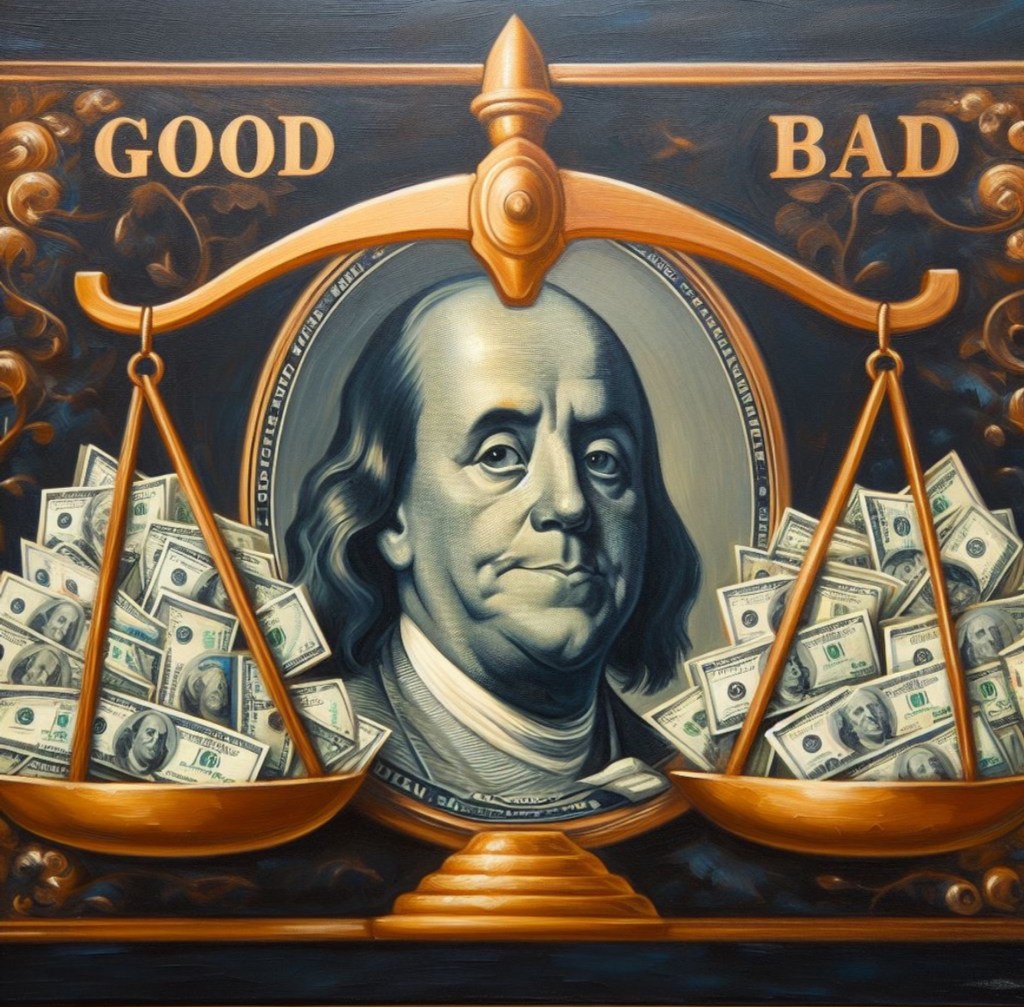
Not all money is good money is an aphorism we’re all accustomed to. However, we all merely talk about it rather than do something about it.
In the pursuit of wealth, it’s easy to fall into the trap of believing that all money is good money. However, a closer look reveals that this isn’t always the case. While money can provide security and comfort, its source and the means by which it is acquired can significantly impact one’s well-being and moral compass.
At least, this ought to be the case if you have breathe and or a conscience. But the contrast seems to currently prevail in most societies. Such that some chase after the “bad money,” “ill-gotten wealth,” and most don’t care about the source of the money if given to them.
It is time for us to check our moral compasses and be conscious of the source of money given to us.
Why we should
There are several reasons why we should:
- Firstly, money earned through unethical or illegal means should tarnish one’s integrity and reputation. Not glorify it as it’s currently being done in most cultures.
- Engaging in fraudulent activities, exploitation, or deceit may result in short-term financial gains, but the long-term consequences can be devastating.
- Trust, once lost, is challenging to regain, and the repercussions can extend far beyond financial matters, affecting personal relationships and professional opportunities.
- Pursuing money at any cost often leads to compromises that undermine one’s values and principles.
- Accepting opportunities that clash with one’s beliefs or engaging in work that lacks meaning and fulfillment can result in a hollow existence, devoid of genuine satisfaction.
- Individuals may sacrifice their health, time with loved ones, and overall well-being, ultimately realizing that the price paid for financial gain outweighs its benefits.
- Not all money contributes positively to society or the environment. Investing in industries that harm the planet or exploit vulnerable populations perpetuates systemic inequalities and damages the collective welfare. While financial success is often equated with prosperity, true wealth encompasses more than monetary riches—it encompasses environmental sustainability, social responsibility, and ethical stewardship.
Use Discernment
Discernment is crucial when evaluating the value of money.
Instead of blindly chasing wealth, individuals should consider the source of their income, the impact of their financial decisions, and the alignment of their pursuits with their values. By prioritizing integrity, ethical conduct, and social consciousness, individuals can redefine success beyond monetary metrics and cultivate a sense of fulfillment that transcends material wealth.
Considering the source of others incomes, if you are (or will) be a beneficiary of such income is equally as important.
Remember, not all money is good money—it’s the means by which it’s acquired and the purpose for which it’s used that ultimately determine its worth.
Examples: Businesses
Here are some examples of situations where money may not be considered “good money”:
1. Exploitative Labor Practices:
Companies that exploit their workers by paying below minimum wage, subjecting them to unsafe working conditions, or denying them essential benefits are examples of money earned through unethical means.
2. Environmental Degradation:
Industries involved in activities such as deforestation, pollution, or unsustainable resource extraction prioritize profits over environmental conservation. While they may generate wealth in the short term, the long-term consequences on ecosystems and future generations make this money morally questionable.
3. Weapons Manufacturing:
Investing in companies that produce weapons of war or contribute to the proliferation of arms perpetuates violence and conflict globally. While these industries may generate significant profits, the human cost and moral implications make this money undesirable.
4. Predatory Lending:
Financial institutions that engage in predatory lending practices, such as offering high-interest loans to vulnerable individuals or communities with little regard for their ability to repay, exploit the financial hardships of others for profit.
We’ve all heard of the few banks that were fined as a result of known predatory lending practices. You can google it for details on the topic.
5. Illicit Activities:
Money earned through illegal means such as drug trafficking, human trafficking, or organized crime not only perpetuates harm but also undermines societal values and the rule of law.
6. Tobacco and Alcohol Industries:
While legal, investing in industries that produce harmful substances like tobacco and alcohol can contribute to public health issues such as addiction, disease, and social problems, making the money earned from these industries morally questionable.
7. Sweatshops and Child Labor:
Companies that utilize sweatshop labor or employ child workers in unsafe conditions to cut costs and maximize profits prioritize financial gain over human rights and dignity.
The above examples which primarily focus on the actions of companies or industries, illustrate how money earned or invested in certain industries or activities can have negative social, environmental, and ethical implications, highlighting the importance of conscientious decision-making and responsible financial behavior.
Examples: Individuals
Individuals can also contribute to or benefit from unethical practices through their employment, investments, or purchasing decisions.
For instance, an individual may work for a company that engages in exploitative labor practices or invest in industries known for environmental degradation.
Similarly, consumers may unknowingly support unethical practices by purchasing products or services produced under exploitative conditions.
While companies play a significant role in perpetuating these issues, individuals also have a responsibility to critically evaluate their actions and choices to ensure they align with ethical principles and values.
By making informed decisions and advocating for ethical practices, individuals can help drive positive change and contribute to a more equitable and sustainable society.
 Think-Talk