Happy Resurrection Day, my friend.
The Resurrection Day is also known as (aka) Easter Sunday because it is the day Jesus resurrected (rose from the grave/dead).
Kids and Easter
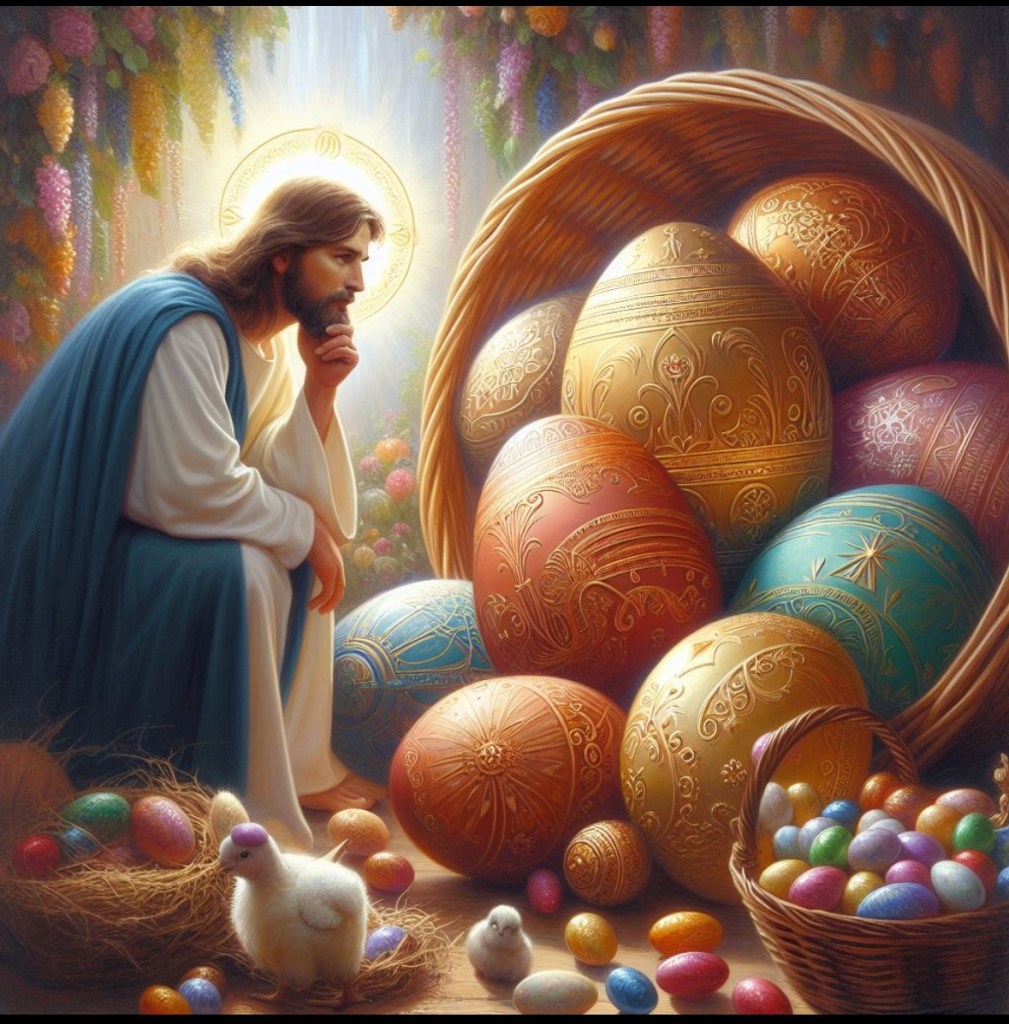
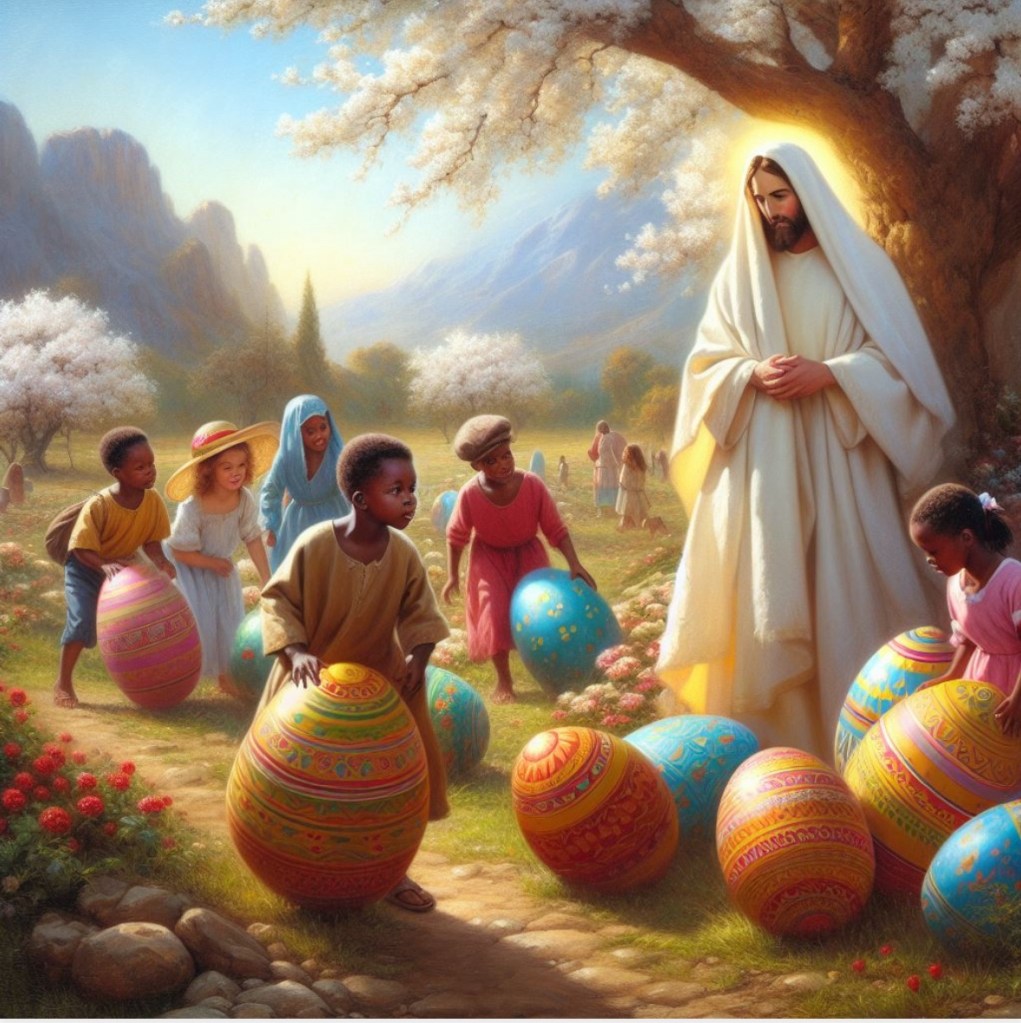
Every kid worldwide has done the egg decorating and egg hunting whether at school, church, or as a family fun activity. This is irrespective of whether the parents are pagan atheists, agnostics, or Christians. But, have you ever paused to ask: what has the egg decorating and egg hunting got to do with Jesus’ resurrection (rising from the grave)? What is their significance to celebrating Jesus’ rising?
A lot has been said about the egg decorating and hunting. To the extent that some churches have “banned” it stating that it is not scriptural. I have asked myself the question tons of times. I decided to again ask today as we celebrate Easter Sunday, the culmination of the Holy Weekend. Even the word “Easter” has been controversial in churches. We’ll leave the Easter controversy alone for now.
Let’s talk about the egg decorating, egg hunting, and its association with Jesus.
It’s Root
The tradition of egg decorating and egg hunting is believed to have pagan roots, predating Christianity. Eggs have long been associated with fertility, new life, and rebirth, making them a natural symbol for springtime celebrations. This was prevalent in the “historic Mesopotamian socieities, the area where Christianity was created” (as.com). When Christianity spread, many pagan customs were adapted and incorporated into Christian holidays, including Easter. (This can be deduced as the main reason why some churches decided to forgo the activity.)
Egg as a Symbol of Life
Just as Jesus emerged from the tomb after his death, the egg, when cracked open, reveals new life emerging from within. This symbolism of life emerging from death mirrors the central theme of Jesus’ resurrection.
Jesus’ resurrection
is seen as a renewal of hope and the promise of eternal life for believers.
Egg as a Symbol of Renewal
In many cultures, eggs are associated with springtime and the renewal of life after the cold winter months. Similarly, Jesus’ resurrection is seen as a renewal of hope and the promise of eternal life for believers.
The egg, with its associations of new life and rebirth, was easily integrated into the Christian narrative of Jesus’ resurrection. In Christian tradition, the egg became a symbol of the empty tomb of Jesus, representing his emergence from the tomb and his victory over death.
Egg Decoration as a Celebration
Decorating eggs in vibrant colors and intricate designs can be seen as a joyful expression of the hope and celebration that accompanies Jesus’ resurrection. The beauty and creativity of the decorated eggs reflect the joy and wonder of the Easter story.
The custom of decorating eggs may have evolved from this symbolism, with eggs being adorned in vibrant colors and patterns to represent the joy and celebration of Jesus’ resurrection.
Egg Hunting as a Symbolic Search
The act of hunting for hidden eggs can be seen as symbolic of the search for Jesus’ body by Mary Magdalene and the other women who visited the tomb on Easter morning. Just as they searched for Jesus and found the tomb empty, Easter egg hunts symbolize the joy of discovering the resurrected Christ.
Similarly, the tradition of egg hunting is believed to have originated from the practice of early Christians hiding eggs to symbolize the hiding of Jesus’ body in the tomb, followed by its discovery by Mary Magdalene. Over time, this evolved into the playful Easter egg hunts we know today, symbolizing the search for the resurrected Christ.
Overall, while the connection between egg decorating, egg hunting, and Jesus’ resurrection may not be direct, these traditions have become deeply intertwined with the broader symbolism and celebration of Easter within Christian culture.
Easter Traditions and Activities
Egg Decorating is one of the most popular Easter activities. People dye eggs in various colors, create intricate designs, or use stickers and other decorations to adorn them.
Egg Hunts: Children and adults alike enjoy participating in Easter egg hunts, where decorated eggs or plastic eggs filled with candies or small toys are hidden for participants to find.
Easter Baskets: Giving and receiving Easter baskets filled with chocolates, candies, toys, and other goodies is a common tradition, especially among families with children.
Easter Sunday Church Services: Easter Sunday is one of the few days that churches globally are packed to full and standing. (The other days are Christmas and New Year). Many people attend special church services on Easter Sunday to celebrate the resurrection of Jesus Christ, which is the central theme of the holiday for Christians.
Sunrise Services: Some Christian communities hold sunrise services on Easter Sunday, symbolizing the dawn of a new era with Jesus’ resurrection. It’s a time for reflection and celebration as the sun rises, marking the beginning of a new day and new hope.
Easter Brunch or Dinner: Families often gather for a special meal on Easter Sunday, which may include traditional dishes such as roasted lamb, ham, hot cross buns, and spring vegetables.
Hot Cross Buns: These spiced sweet buns, marked with a cross on top, are traditionally eaten on Good Friday. The cross symbolizes the crucifixion of Jesus, while the spices represent the spices used to embalm his body.
Lamb: Roast lamb is a traditional Easter dish in many cultures, symbolizing Jesus as the sacrificial Lamb of God. It also represents the arrival of spring, as lambs are typically born around this time.
Paschal Candle: In Catholic and some other Christian traditions, a large candle called the Paschal Candle is lit during Easter Vigil services. It symbolizes the light of Christ, dispelling the darkness of sin and death.
Easter Lilies: These fragrant flowers are often associated with Easter, symbolizing purity, renewal, and the resurrection of Jesus.
And, I just found out about the Easter Parades! I find it interesting that I had never heard of the Parades till now! We learn every day. 😊
Easter Parades
Some communities host Easter parades featuring floats, costumes, and live music to celebrate the holiday in a festive and communal way.
Easter parades are often held in various cities and towns around the world, particularly in countries with a strong Christian tradition. Some of the most well-known Easter parades include:
New York City, USA: The Easter Parade and Bonnet Festival along Fifth Avenue is one of the most famous Easter parades in the world, featuring elaborate bonnets and costumes.
London, UK: The Easter Parade in London takes place in several locations, including Battersea Park and Hyde Park, with participants dressed in colorful costumes and Easter-themed attire.
Seville, Spain: The Semana Santa (Holy Week) processions in Seville are a major event, featuring elaborate floats, religious statues, and traditional music.
Paris, France: The Easter Parade in Paris often takes place along the Champs-Élysées and features festive floats, live music, and street performers.
Toronto, Canada: The Beaches Lions Club Easter Parade in Toronto is one of the largest Easter parades in North America, featuring floats, marching bands, and community groups.
These are just a few examples, but Easter parades can be found in many other cities and towns as well, each with its own unique traditions and atmosphere. Is there an Easter Parade in your city?
Think-Talk says:
Jesus said:
“Let the children come to me …”
(Matthew 19:14, Mark 10:14, Luke 18:16)
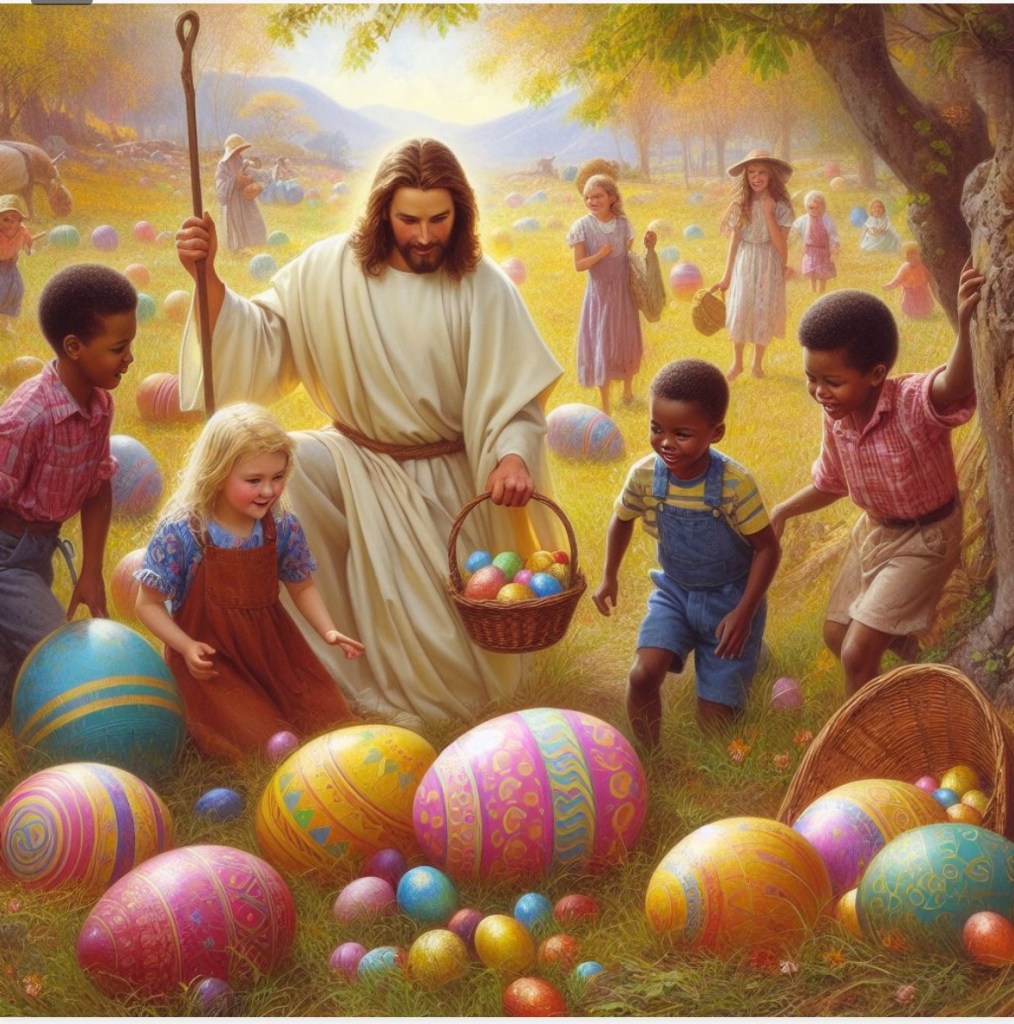
I can see Jesus present and celebrating the Egg Decorating and Egg Hunting with His children. Though the activities may not have originated as part of the earliest Christian traditions, they have become meaningful symbols within the broader context of Easter celebrations, enriching the spiritual significance of the holiday for many believers. We should allow the children to continue for their significance. So we are not guilty of depriving the children because of its rhetorics. As it is written … For the letter killeth, but the spirit gives life (2 Corinthians 3:6b).
The traditions adds depth and richness to the Easter celebration, providing opportunities for reflection, gratitude, and rejoicing in the central tenets of the Christian faith.


I’m glad you also think that the eggs and bunnies make appropriate symbols for Easter.
And, being a long white I had those hot cross buns – I remember the song too: hot cross buns, one a penny, two a penny, hot cross buns!
Thank you so much for the visit. Much more for the comment.
LikeLike
As the egg represents resurrection, it seems an appropriate symbol for Easter. Bunnies represent fertility and thus new life and so also may belong. I appreciate all the details you have here. Hot-cross buns, yum!
LikeLike