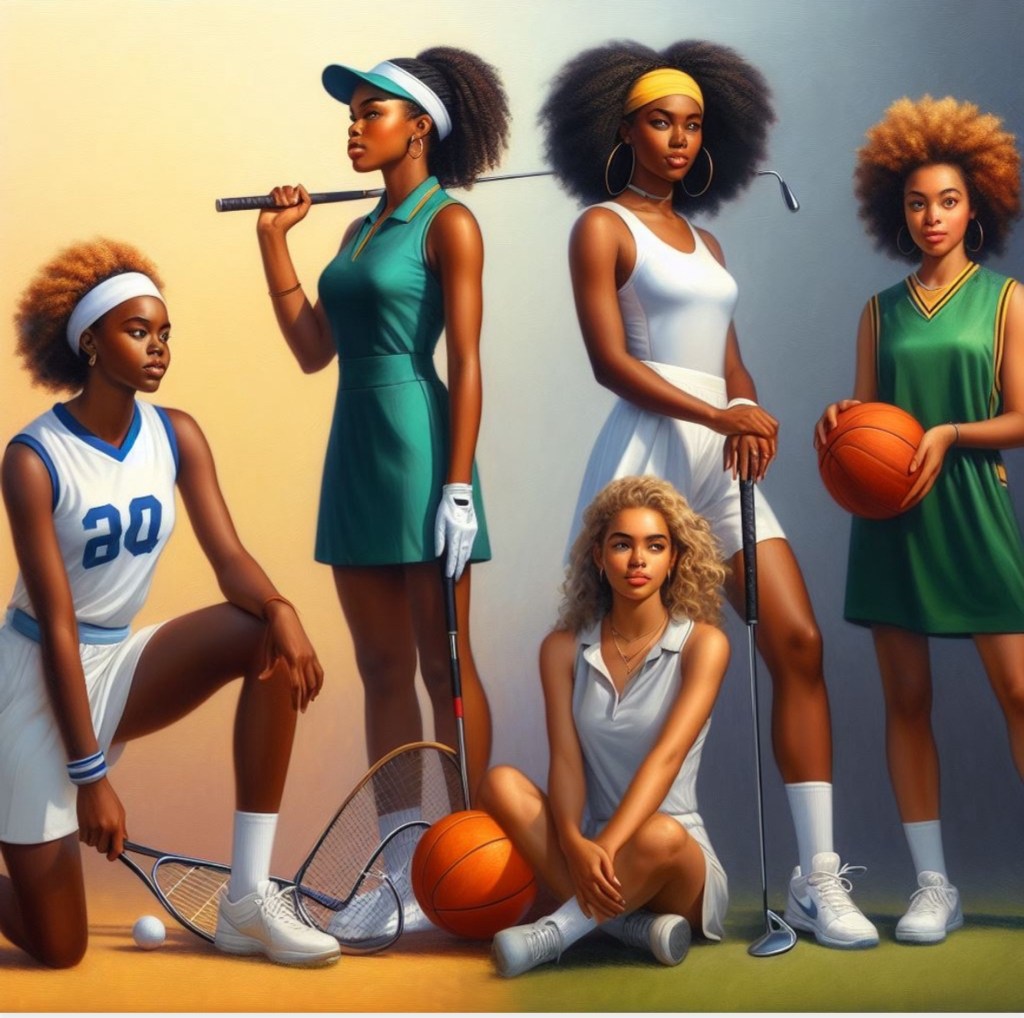

Golf and basketball. What do they have in common? I mused as I accidentally stumbled on to the final rounds of the Augusta National Women’s Amateur (ANWA) Golf on my TV.
ANWA, now in its fifth year, comprises of 72 top, young best non-professional female golfers in the world, group ranges from ages 16 to 24, representing 17 countries and 27 U.S. colleges. (The Athletic).
Just yesterday, I watched the NCAA (National Collegiate Athletic Association) Iowa-Connecticut women basketball game.
As you may, or may not, know the NCAA is ongoing and yesterday was the Final Four. As fun as it was, I had anticipated more fire power between the two indomitable teams. The final few minutes unfortunately were plagued by “silly” fouls, calls, and turnovers. Iowa won the game.
I would say that ANWA is comparable to NCAA in that both involve college ladies.
Viewership
According to ESPN, 14.2 million viewers watched the Iowa-Connecticut game, compared to “roughly 1 million viewers” (The Athletic) who watched the ANWA. 🤔
The latter was on a national television station, while the other was broadcast on the Sports channels. I don’t know if that makes any difference – I’ll leave you to be the judge.
The NCAA women golf championship is coming up later this month, it will be interesting to see how it garners viewership compared to its basketball counterpart.
As I take in the golf, I began thinking of the sports’ parallels and distinctions. Read along …
The Sports’ Parallels and Distinctions
Golf and basketball have some intriguing parallels and distinctions. Both sports require precision and skill, but their gameplay and fan bases diverge significantly.
In golf, players rely on individual performance, focusing on technique and strategy to navigate the course. It’s often associated with patience and concentration, attracting a demographic that values tranquility and the outdoors. Fans of golf appreciate the strategic aspect of the game and often find joy in the serene ambiance of the golf course.
On the other hand, basketball is a fast-paced team sport characterized by athleticism and coordination. Players must work together to score points, creating a dynamic and electrifying atmosphere. Basketball tends to draw in a more diverse fan base, including those who enjoy the intensity of competition and the communal experience of cheering for their team.
While both sports have their unique appeal, they cater to different preferences in terms of gameplay and fan engagement.
Golf appeals to those who enjoy solitary challenges and the beauty of nature, whereas basketball thrills those who revel in the excitement of teamwork and high-energy action on the court.
Breaking it Down
Individual vs. Team Dynamics:
Golf is predominantly an individual sport where players compete against themselves and the course, relying solely on their own skills. In contrast, basketball is a team sport where players must collaborate and coordinate with teammates to achieve success, emphasizing teamwork and communication.
Physicality and Athleticism:
While both sports require athleticism, the nature of physical exertion differs. Basketball demands high levels of cardiovascular endurance, agility, and explosive movements like jumping and sprinting. Golf, while still requiring athleticism, emphasizes precision, control, and finesse in executing shots rather than raw physical power.
Accessibility and Demographics:
Golf has historically been associated with a more affluent demographic due to the cost of equipment, club memberships, and course fees. It often attracts an older demographic and is perceived as a leisurely activity. Basketball, on the other hand, is more accessible to a wider range of socioeconomic backgrounds and age groups, with opportunities for informal play in parks and urban areas.
Global Appeal:
Basketball has a strong global presence, with leagues and fans spanning continents. It’s particularly popular in countries like the United States, China, and various European nations. Golf also has a global following but tends to have a stronger foothold in regions like North America, Europe, and parts of Asia where golfing traditions are deeply rooted.
Fan Experience:
Golf spectators typically follow players around the course in a tranquil setting, occasionally applauding good shots but maintaining a respectful silence during play. In contrast, basketball fans create an energetic and raucous atmosphere in arenas, cheering, chanting, and actively engaging with the game’s momentum.
Scoring Systems:
Golf uses a stroke-based scoring system where players aim to complete each hole in the fewest number of strokes possible. In contrast, basketball employs a point-based scoring system, with teams attempting to outscore their opponents within a specified time frame.
Equipment and Attire:
Golfers use a variety of clubs designed for different distances and shot types, along with specialized equipment like golf balls, tees, and golf carts. Golf attire typically includes collared shirts, slacks or shorts, and golf shoes. Basketball players wear sneakers, shorts, and jerseys, with the game requiring minimal equipment beyond a ball and hoop.
Professional Tours and Leagues:
Golf has several prestigious professional tours, including the PGA Tour, European Tour, and LPGA Tour, where top players compete in tournaments worldwide. Basketball boasts prominent leagues such as the NBA (National Basketball Association) in the United States, Basketball Africa League (BAL), and EuroLeague in Europe, showcasing elite talents and attracting millions of viewers globally.
Cultural Impact:
Both sports have left indelible marks on popular culture, but their representations differ. Golf is often associated with refinement, prestige, and corporate networking, with golf courses serving as venues for business meetings and social gatherings. Basketball, on the other hand, is deeply ingrained in urban culture, influencing fashion, music, and street culture, with pickup games and basketball courts serving as community hubs.
Still more aspects
Seasonality and Venue:
Golf tournaments are typically held outdoors and can take place year-round, depending on the climate of the region. Major golf championships often rotate among different courses, showcasing diverse landscapes and challenges. In contrast, basketball is primarily an indoor sport played in arenas, with seasons typically running from autumn to spring in professional leagues.
Strategy and Mental Game:
Both sports require strategic thinking and mental fortitude, but the nature of strategy differs. In golf, players must carefully assess course conditions, plan each shot meticulously, and adapt to changing circumstances. Basketball involves strategic elements like play-calling, defensive schemes, and adapting to opponents’ tactics in real-time during the game.
Global Icons and Legends:
Golf and basketball have produced iconic figures and legends who transcend their respective sports. Golf boasts legendary players like Tiger Woods, Jack Nicklaus, and Arnold Palmer, whose achievements have elevated the sport’s profile worldwide. Basketball has produced iconic figures like Michael Jordan, Hakeem Olajuwon, Dikembe Motumbo, LeBron James, Kobe Bryant, Steph Curry, and Giannis Antetokounmpo to name a few, whose influence extends beyond the court into popular culture and global brand endorsements.
Training and Skill Development:
The training regimens for golfers and basketball players differ significantly due to the distinct demands of each sport. Golfers focus on honing their swing mechanics, mastering various shot types, and developing consistency through practice on the driving range and putting green. Basketball players emphasize skills such as dribbling, shooting, passing, and defensive techniques, often engaging in drills, scrimmages, and conditioning exercises to improve performance.
Social Dynamics and Networking:
Golf is renowned for its role as a networking tool in business and social circles. Many deals and connections are made on the golf course, with executives and professionals using the sport as a platform for relationship-building and negotiations. Basketball also fosters camaraderie and social connections, but its influence in networking tends to be more informal, often occurring in pickup games, leagues, and community events.
Historical and Cultural Significance:
Both golf and basketball have rich histories that reflect broader cultural trends and societal values. Golf has roots dating back centuries, evolving from traditional Scottish games into a global sport associated with prestige and tradition. Basketball emerged in the late 19th century in the United States and has since become a symbol of athleticism, diversity, and resilience, reflecting the dynamic nature of modern society.
Finally, but not really
Golf and basketball offer endless avenues for exploration, from their rich histories to their impact on culture, society, and beyond. Whether delving into the intricacies of swing mechanics or analyzing the strategic nuances of basketball plays, there’s always more to discover and discuss about these beloved sports.
These above points illuminate the multifaceted nature of golf and basketball, showcasing the myriad ways in which these sports intersect with culture, society, and human experience.
Sure, there are more still to write about regarding both sports but these points highlight the major parallels and distinctions between the two. They underscore the diverse nature of golf and basketball, highlighting their unique characteristics and the varied experiences they offer to players and fans alike.
Overall, while both golf and basketball offer distinct experiences for players and fans, their appeal lies in catering to different preferences, whether it’s the tranquility of a golf course or the exhilaration of a basketball arena.
 Think-Talk