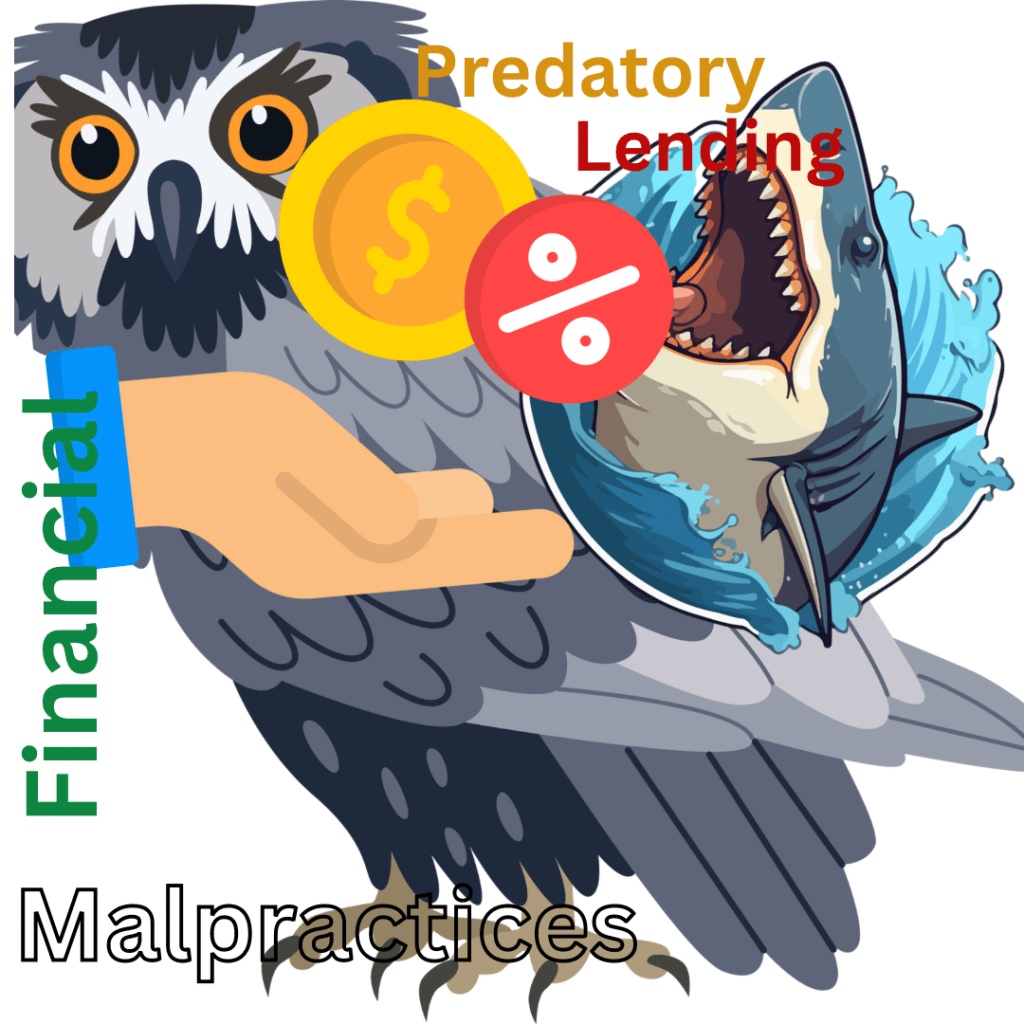
What is it?
Predatory lending refers to the practice of providing loans with unfair or abusive terms and conditions that exploit borrowers, particularly those who are vulnerable or financially disadvantaged. It involves some key points such as:
1. Exploitative Practices
Predatory lenders often target individuals who may not qualify for traditional loans or who are in desperate need of funds. They may use deceptive tactics, such as misleading advertising, high-pressure sales techniques, or hidden fees, to lure borrowers into taking out loans with unfavorable terms.
2. High Interest Rates
Predatory loans typically come with exorbitant interest rates that far exceed the market rate for similar financial products. These high rates can quickly accumulate, trapping borrowers in a cycle of debt and making it difficult for them to repay the loan principal.
3. Hidden Fees and Penalties
Predatory lenders may impose hidden fees, excessive penalties, or arbitrary charges that inflate the cost of borrowing and make it challenging for borrowers to understand the true terms of the loan. These additional costs can push borrowers further into debt and exacerbate financial hardship.
4. Targeting Vulnerable Communities
Predatory lending practices disproportionately affect marginalized communities, including low-income individuals, minorities, the elderly, and those with limited access to traditional banking services. Predatory lenders often operate in areas with high levels of economic distress and exploit the financial vulnerability of these populations.
In summary, predatory lending preys on the financial vulnerability of individuals and communities, perpetuating cycles of debt and economic hardship. Addressing this issue requires a multi-faceted approach that involves regulatory reform, consumer education, and efforts to expand access to fair and affordable financial services. By working together to combat predatory lending, we can promote financial inclusion, protect consumer rights, and build more equitable and resilient communities.
Other Financial Malpractices
Predatory lending is just one facet of financial malpractices that can impact vulnerable individuals. Here are some other examples:
1. Payday Loans:
Payday loans are short-term, high-interest loans typically targeted at low-income individuals who need quick access to cash. These loans often come with exorbitant fees and interest rates, trapping borrowers in a cycle of debt.
2. Unfair Mortgage Practices:
During the subprime mortgage crisis, many lenders engaged in predatory lending practices, such as offering adjustable-rate mortgages with low initial teaser rates that later ballooned, leading to widespread foreclosures and financial devastation for homeowners.
3. Deceptive Financial Products:
Some financial institutions market complex financial products, such as credit cards with hidden fees, insurance policies with unclear terms, or investment products with high commissions, targeting individuals who may not fully understand the risks involved.
4. Illegal Debt Collection Practices:
Debt collectors may engage in abusive tactics, such as harassment, threats, or false representations, when attempting to collect debts from vulnerable individuals. These practices violate consumer protection laws and can lead to further financial distress and emotional hardship.
5. Fraudulent Investment Schemes:
Individuals may fall victim to investment scams or fraudulent schemes promising high returns with little risk. These schemes often target retirees, the elderly, or inexperienced investors, leading to significant financial losses and devastation.
6. Exploitative Rent-to-Own Agreements:
Rent-to-own agreements allow individuals to lease products such as furniture or appliances with the option to purchase them later. However, these agreements often come with inflated prices and excessive fees, making it difficult for renters to eventually own the items outright.
7. For-Profit Colleges and Student Loan Debt:
Some for-profit colleges engage in deceptive marketing practices and offer substandard education in exchange for high tuition fees, leaving students with significant debt and few job prospects upon graduation.
These examples highlight the diverse ways in which vulnerable individuals can be exploited by financial institutions and unscrupulous actors.
Addressing financial malpractices requires a comprehensive approach that includes regulatory oversight, consumer education, enforcement of consumer protection laws, and efforts to promote financial literacy and empowerment among vulnerable populations.
Financial Regulatory Oversights
If you have been a victim of any of the above, , or know someone who has, please know that there are mechanisms in place for you to seek recourse.
These various oversight mechanisms and regulatory bodies are tasked with curbing financial malpractices and protecting consumers. Some of these include:
1. Consumer Financial Protection Bureau (CFPB)
The CFPB is a U.S. government agency responsible for enforcing consumer protection laws and regulations related to financial products and services. It conducts investigations, enforces regulations, and provides consumer education and advocacy.
2. Securities and Exchange Commission (SEC)
The SEC regulates the securities industry, including stock exchanges, brokerage firms, and investment advisers. It enforces securities laws and regulations to protect investors from fraud, manipulation, and other deceptive practices.
3. Federal Trade Commission (FTC)
The FTC is tasked with promoting consumer protection and preventing anticompetitive business practices. It investigates and prosecutes deceptive advertising, unfair business practices, and fraudulent schemes across various industries, including finance.
4. Banking Regulators
Banking regulators, such as the Federal Reserve, the Office of the Comptroller of the Currency (OCC), and the Federal Deposit Insurance Corporation (FDIC), oversee banks and financial institutions to ensure they comply with banking laws and regulations, maintain financial stability, and protect consumers’ deposits and assets.
5. State Attorneys General
State attorneys general have the authority to enforce consumer protection laws and pursue legal action against individuals and businesses engaged in deceptive or fraudulent practices within their respective states.
6. International Organizations
International organizations, such as the International Monetary Fund (IMF) and the World Bank, work with member countries to promote financial stability, strengthen regulatory frameworks, and combat financial crimes on a global scale.
7. Self-Regulatory Organizations
Some industries have self-regulatory organizations (SROs) that establish and enforce industry standards and codes of conduct. Examples include the Financial Industry Regulatory Authority (FINRA) for securities firms and the National Credit Union Administration (NCUA) for credit unions.
These oversight mechanisms play a crucial role in safeguarding consumers, maintaining market integrity, and promoting fair and transparent financial practices. However, ongoing vigilance, collaboration among stakeholders, and updates to regulatory frameworks are necessary to address emerging threats and adapt to evolving market dynamics.
Caveat
While there are laws and regulations in place to protect consumers from predatory lending practices, enforcement mechanisms may be inadequate, and loopholes may exist that allow predatory lenders to continue operating with impunity. Strengthening regulatory oversight and implementing stricter consumer protections are essential steps in combating predatory lending.
Alternatives and Solutions:
Providing access to affordable and transparent financial services, such as responsible lending programs, financial education initiatives, and community development efforts, can help empower borrowers and reduce their susceptibility to predatory practices. Additionally, advocating for stronger consumer protections and promoting financial literacy can help raise awareness and prevent individuals from falling victim to lpredatory lending schemes.
 Think-Talk