
Prayer holds a profound power in many people’s lives, transcending religious, cultural, and personal boundaries. At its core, prayer is a form of communication with God (or a higher power), a way to seek guidance, express gratitude, and find solace. It provides a sense of connection to something greater than oneself, fostering a feeling of hope and purpose.
For many, prayer is a source of comfort during times of distress. It offers a way to cope with anxiety, fear, and uncertainty, providing a mental and emotional anchor. The act of praying can bring peace and clarity, helping individuals navigate life’s challenges with renewed strength and perspective.
“For where two or three are gathered together in my name, there am I in the midst of them.”
(Matthew 18:20 KJV)
Additionally, prayer can enhance a sense of community. Corporate or group prayers, whether in religious gatherings or informal settings, can create a strong sense of solidarity and support. Sharing this spiritual practice can foster deeper bonds and mutual encouragement among participants.
There’s Power in your Prayer
The power of prayer lies in its ability to cultivate gratitude. By reflecting on the positive aspects of life and expressing thanks, individuals can shift their focus from problems to blessings, fostering a more optimistic and appreciative mindset.
“Elijah was a man with a nature like ours, and he prayed earnestly that it would not rain; and it did not rain on the land for three years and six months.
And he prayed again, and the heaven gave rain, and the earth produced its fruit.”
James 5:17-18 NKJV
Moreover, prayer is a catalyst for personal growth and self-awareness. It encourages introspection, helping individuals align their actions with their values and goals. Through regular prayer, people often find a clearer sense of direction and purpose in their lives.
In essence, the power of prayer and praying is multifaceted. It provides comfort, strengthens community, fosters gratitude, and promotes personal growth, making it a vital practice for many seeking spiritual and emotional well-being.
Forms of Prayer
Prayer comes in various forms, each serving different purposes and reflecting diverse religious and personal practices. Here are some common forms:
- Adoration: This form of prayer focuses on worshiping and praising God. It involves expressing reverence, awe, and love for Father God, often acknowledging their greatness and majesty.
- Thanksgiving: In prayers of thanksgiving, individuals express gratitude for the blessings, guidance, and positive aspects of their lives. This form helps cultivate a sense of appreciation and positive perspective.
- Confession: Confessional prayers involve admitting and seeking forgiveness for sins, mistakes, or wrongdoings. This form is about repentance and asking for divine mercy and cleansing.
- Supplication (Petition): These prayers involve asking for specific needs or desires, whether for oneself or others. It can include requests for health, guidance, protection, or help in challenging situations.
- Intercession: Intercessory prayers are made on behalf of others. People pray for the well-being, healing, and support of friends, family, community members, or even strangers.
- Meditative: Meditative prayer is a contemplative practice focusing on quiet reflection and deep listening. It often involves scripture, spiritual writings, or silent communion with God, aiming for inner peace and insight.
- Liturgical: These are structured prayers, often part of religious services or rituals as in the Catholic faith. They follow specific patterns and are recited collectively, fostering a sense of unity and tradition within a faith community.
- Contemplative: Contemplative prayer emphasizes a deep, intimate connection with God, often beyond words. It focuses on being present with Him, fostering spiritual depth, awareness, and a “desperation” if you will, to hear from Him.
- Imprecatory: These are prayers asking for justice or protection, sometimes involving calling for God’s intervention against perceived enemies or injustice.
Each form of prayer reflects a different aspect of the human spiritual experience, offering various ways to connect with God, seek support, and nurture one’s inner life.
Faith, Belief, and Trust
“But without faith it is impossible to please Him, for he who comes to God must believe that He is, and that He is a rewarder of those who diligently seek Him.”
Hebrews 11:6 NKJV
Faith, belief, and trust are integral components of praying for answered prayers, creating a foundation that strengthens the prayer experience and its impact.
Faith is the bedrock of prayer. It is the unwavering confidence in the existence and benevolence of God. When praying, faith assures individuals that their prayers are heard and valued. This certainty fosters a sense of peace and hope, even when immediate answers are not evident. Faith is what keeps people returning to prayer, believing in its power and purpose.
Belief goes hand-in-hand with faith, focusing on the specific outcome or response sought through prayer. Belief is the conviction that the higher power has the ability and willingness to grant what is asked for. This belief shapes the content and intensity of the prayer, infusing it with sincerity and earnestness. When individuals believe in the possibility of answered prayers, their prayers become more focused and passionate.
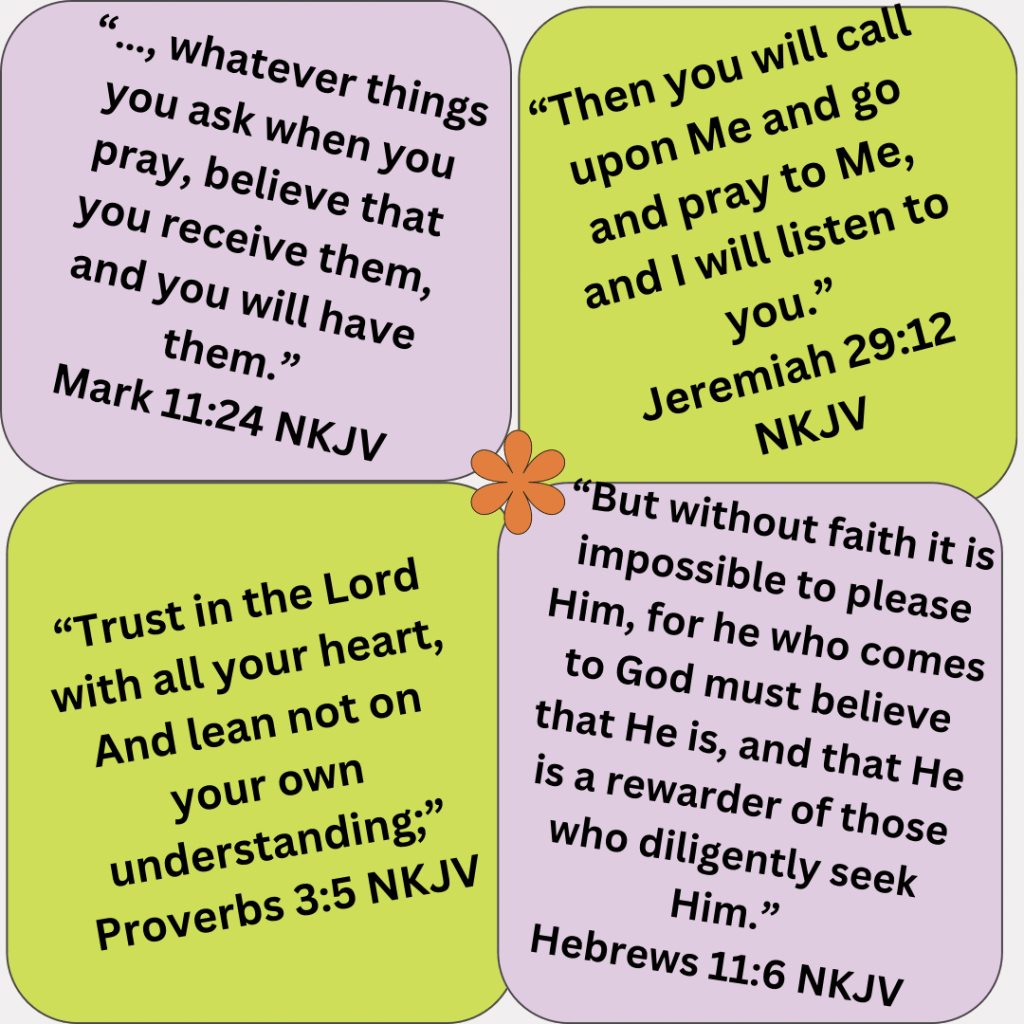
Trust is the acceptance of God’s wisdom and timing. It involves surrendering personal control and relying on divine judgment. Trusting in prayer means acknowledging that answers may not always align with personal desires or come in expected forms. It’s the understanding that God has a greater plan, and what is given—or not given—is ultimately for the best. This trust allows individuals to maintain serenity and patience, regardless of the immediate outcomes of their prayers.
When faith, belief, and trust are integrated into prayer, they create a powerful spiritual synergy. Faith anchors the practice, belief fuels it with conviction, and trust sustains it through uncertainty. Together, these elements help individuals approach prayer with a balanced mindset, open to both the process and the outcome, fostering a deeper connection with God and a more fulfilling spiritual life.
 Think-Talk