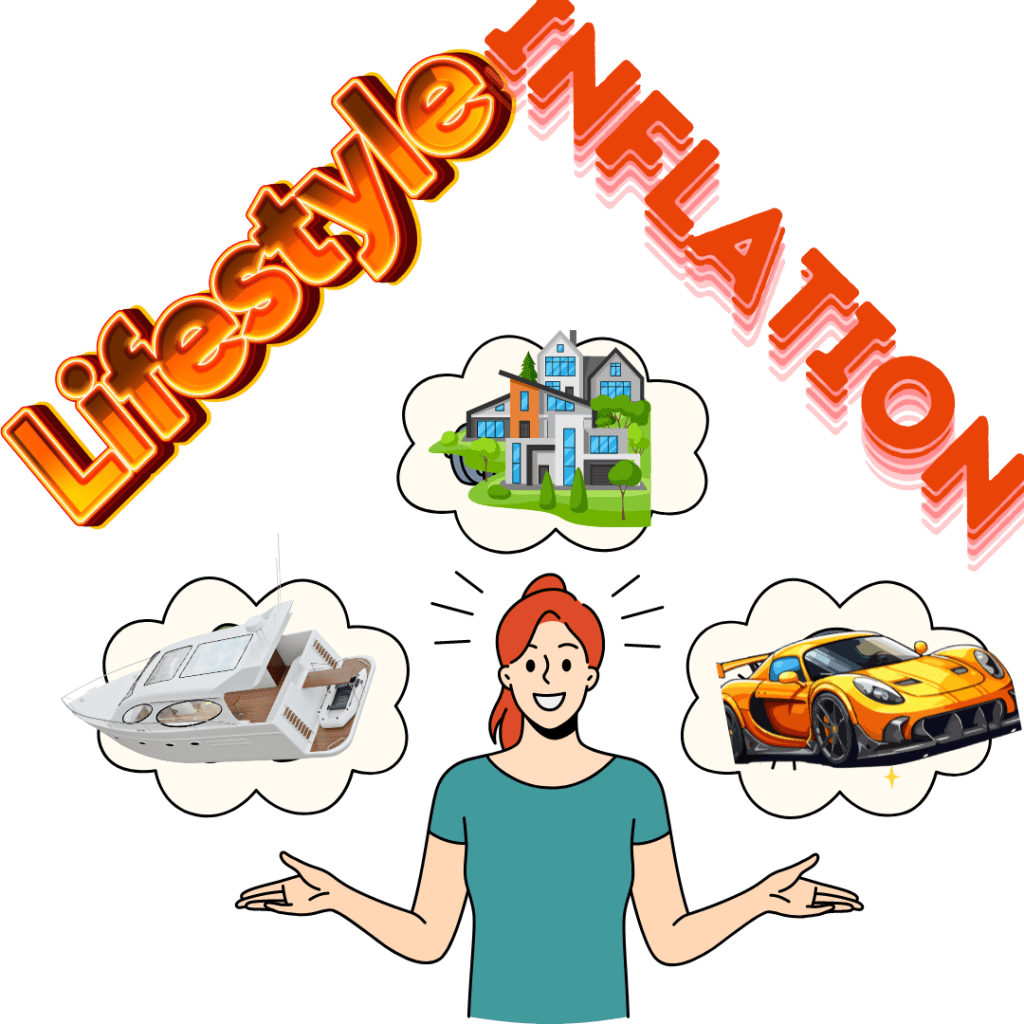
Is your Lifestyle rising, or competing with, Inflation? Pause to think on this. If your answer is “Yes,” you guessed right, your lifestyle is suffering from Lifestyle Inflation.
Lifestyle Inflation refers to the phenomenon where an individual’s spending increases as their income rises. This often happens because people start to spend more on discretionary items and luxuries, rather than saving or investing the additional income. While it might seem harmless to enjoy the fruits of your labor, lifestyle inflation can significantly impact your financial health.
How Lifestyle Inflation Occurs
- Increased Income: You get a raise, a bonus, or a higher-paying job.
- Higher Spending: You start spending more on non-essential items, such as dining out, vacations, or luxury goods.
- Habitual Growth: Over time, this increased spending becomes the new norm, making it harder to revert to a more frugal lifestyle.
The Dangers of Lifestyle Inflation
- Reduced Savings: Higher spending often means less money is set aside for savings, retirement, or emergencies.
- Increased Debt: To maintain an inflated lifestyle, some might resort to credit cards or loans, leading to debt accumulation.
- Financial Vulnerability: Without a solid financial cushion, any unexpected expenses or income loss can cause significant stress.
How to Combat Lifestyle Inflation
- Budgeting: Create a budget that prioritizes savings and essential expenses before discretionary spending.
- Automated Savings: Set up automatic transfers to savings accounts or investment funds to ensure you save before spending.
- Mindful Spending: Regularly review your expenses and identify areas where you can cut back.
- Financial Goals: Set clear financial goals, such as buying a home, starting a business, or early retirement, to stay motivated to save.
Practical Example
Imagine you receive a $10,000 annual raise. Instead of spending it all on a new car or luxury vacations, allocate a portion towards:
- Savings: $4,000 into an emergency fund.
- Investments: $3,000 into a retirement account.
- Discretionary Spending: $2,000 for leisure activities.
- Debt Repayment: $1,000 to pay down existing debts.
By doing this, you enjoy a better quality of life without jeopardizing your financial future.
Understanding and managing lifestyle inflation is crucial for achieving long-term financial stability and freedom. By making conscious choices about spending and saving, you can ensure that your increased income leads to greater financial security rather than financial stress.
 Think-Talk