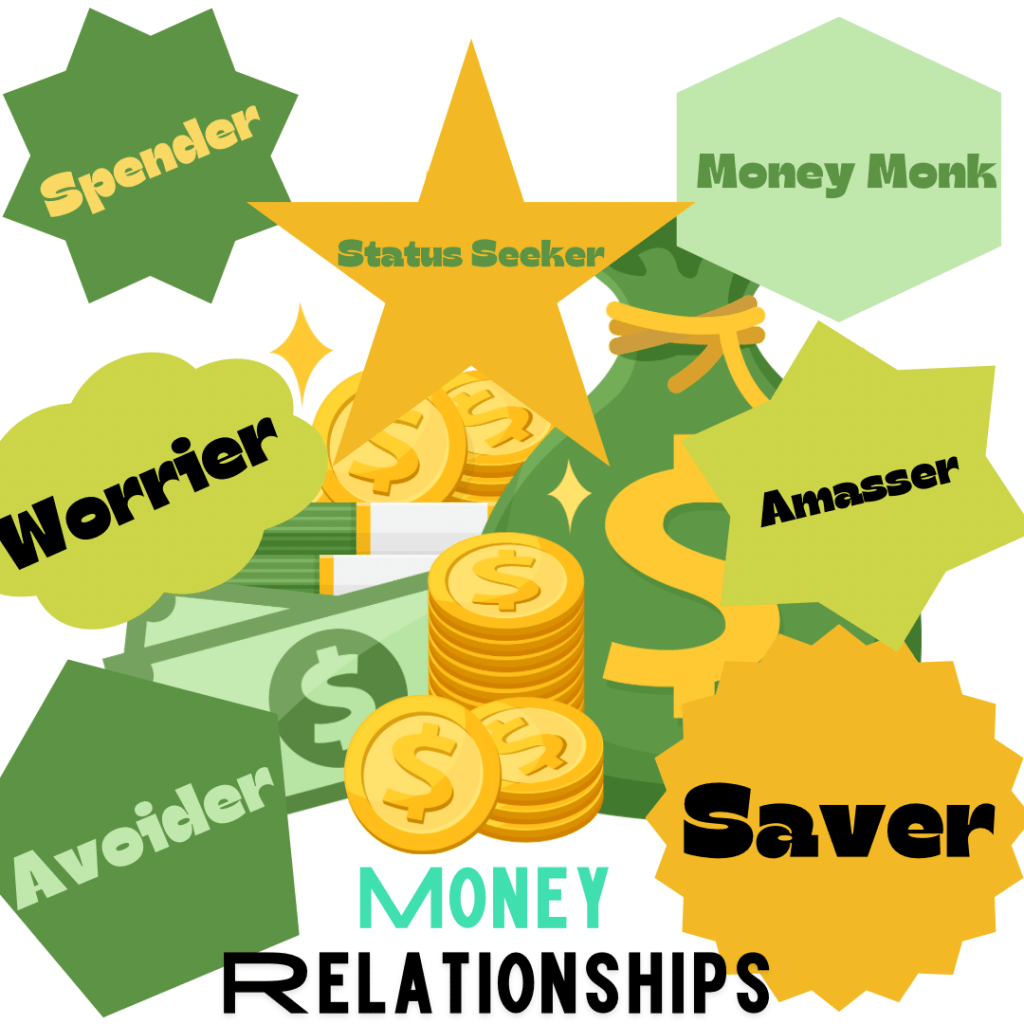
What relationship do you have with Money? Are those relationships innate (DNA) or self-derived? We all have money relationships that we are either conscious or unconscious of. Knowing those relationships and why will greatly help us with our money habits and relationships.
What’s your Money Relationship?
Money is a critical aspect of our lives, influencing our decisions, relationships, and overall well-being. Just as people have unique personalities, they also have distinct relationships with money. Understanding these money relationships can help individuals, families, and couples manage their finances more effectively and harmoniously. Here are some common types of money relationships. Can you identify which is your dominant type of?
The Saver
Savers prioritize saving money over spending. They often have a budget, track their expenses meticulously, and feel a sense of security knowing they have a financial cushion. Savers often save to the detriment of living a good and comfortable life.
For example, Jane diligently saves a portion of her paycheck every month. She has a detailed budget for groceries, entertainment, and other expenses, ensuring she stays within her limits. Jane’s ultimate goal is to have enough savings for a comfortable retirement and unexpected emergencies.
The Spender
Spenders enjoy using their money for immediate gratification. They often prioritize experiences and possessions, sometimes at the expense of long-term financial goals. Spenders forgo the long-term for the short-term benefits.
An example is Mark who loves treating himself and his friends to nice dinners and vacations. He often finds it hard to resist buying the latest gadgets and fashion items. While Mark enjoys his lifestyle, he sometimes struggles with saving for the future.
The Avoider
Avoiders prefer not to think about money. They may ignore bills, avoid budgeting, and procrastinate on financial decisions, often leading to financial stress and instability. The Avoider is also one who fails to plan or make decisions concerning money because they cannot see how the money will flow to enable them execute those plans/decisions.
Lisa is an example of an avoider. She dislikes dealing with finances. She avoids opening her bank statements and lets her bills pile up until the last minute. This avoidance often leads to late fees and a constant feeling of financial anxiety.
The Money Monk
Money Monks see money as a necessary evil and believe that wealth is corrupting. They often prioritize spiritual or moral values over financial gain. Most Money Monks are mostly so by spiritual calling. They live off of the generosity of others. Even at that, those generous donations are immediately given away to charity.
John works at a non-profit organization and lives a modest lifestyle. He donates a significant portion of his income to charity and focuses on living simply. John believes that true happiness comes from helping others rather than accumulating wealth.
The Amasser
Amassers derive pleasure from accumulating wealth. They feel secure and powerful when their bank accounts and investments grow.
Sarah invests heavily in stocks and real estate. She closely monitors the market and takes calculated risks to increase her wealth. For Sarah, watching her portfolio grow gives her a sense of accomplishment and security.
The Money Worrier
Money Worriers are constantly anxious about their financial situation, regardless of their actual wealth. They fear losing money and are often overly cautious with their spending and investments.
An example is Tom who, though he has a stable job and a substantial savings account, he constantly worries about unexpected expenses and potential financial disasters. He frequently checks his bank balance and is reluctant to make any significant purchases.
The Status Seeker
Status Seekers use money to project a certain image or status. They often spend on luxury items and experiences to showcase their wealth and success. There is nothing wrong in buying luxury items if you can afford them.
Balancing Money Relationships
In relationships, and even within families and in friendships, differing money personalities can sometimes lead to conflicts. For example, a Saver might feel frustrated with a Spender’s habits, while a Spender might feel restricted by a Saver’s cautious approach. Open communication and mutual respect are essential for managing these differences. We all can benefit from discussing our financial goals, creating a shared budget, and finding compromises that satisfy us all whether as friends, roommates, family, or couples.
Conclusion
Understanding your money relationship and those of the people around you can significantly improve your financial well-being and relationships. By recognizing and respecting different financial perspectives, you can create a more harmonious and financially stable life. Whether you’re a Saver, Spender, or any other type of money personality, the key is to find a balance that aligns with your values and goals.
 Think-Talk