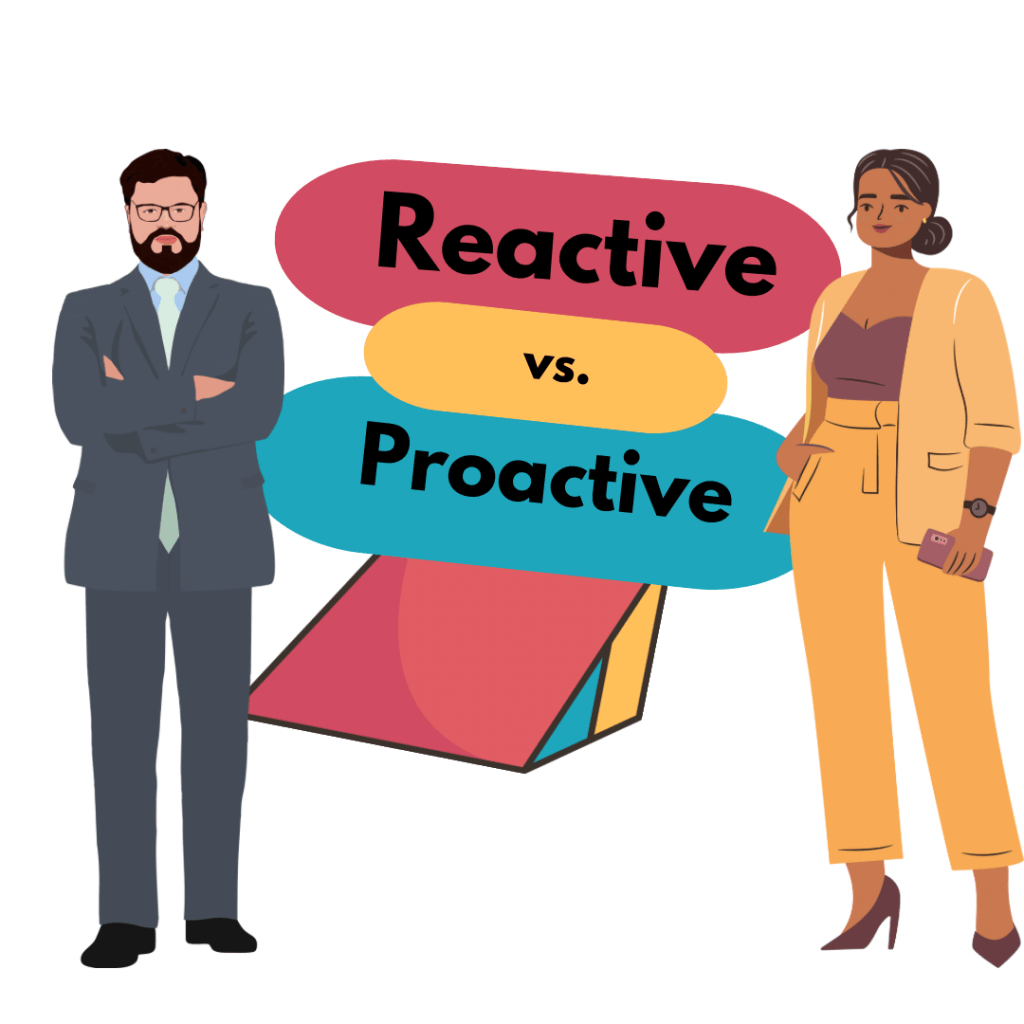
Human behavior is a fascinating subject, and one particular aspect that stands out is our tendency to be reactive rather than proactive. While being proactive involves anticipating and preparing for future events, being reactive means responding to events as, or after, they occur. This inclination toward reactivity can be traced back to various psychological, biological, and social factors. Understanding these factors can help us learn how to shift towards a more proactive approach in our lives.
I believe that everyone chooses how to approach life. If you’re proactive, you focus on preparing. If you’re reactive, you end up focusing on repairing.
– John C. Maxwell
Psychological Factors
- Cognitive Biases: Our brains are wired to focus on immediate threats and rewards. This is a result of evolutionary survival mechanisms. Cognitive biases such as the “availability heuristic” make us more likely to react to immediate and noticeable events rather than plan for future possibilities. For example, people might be more likely to buy insurance only after experiencing a theft or disaster.
- Comfort Zone: Proactivity requires stepping out of our comfort zones, taking risks, and facing uncertainty. It’s often easier and less stressful to deal with problems as they come rather than anticipate and prevent them. The fear of the unknown can keep us locked in a reactive mindset. For instance, many avoid going to the dentist until they experience severe pain, rather than attending regular check-ups that could prevent such issues.
Biological Factors
- Fight-or-Flight Response: Our autonomic nervous system is designed to react quickly to immediate threats through the fight-or-flight response. This instinctual reaction has been crucial for survival throughout human history. However, it can also lead to a tendency to respond to situations only when they become urgent. An example is how people often wait until they are extremely stressed before they seek ways to manage their stress levels, such as through relaxation techniques or counseling.
- Energy Conservation: From a biological standpoint, conserving energy was essential for our ancestors. Being proactive requires more mental and physical energy compared to reacting to immediate needs. Thus, our brains may be naturally inclined to conserve resources by not expending energy on future planning. For instance, many people neglect regular exercise, only starting to work out when health problems arise.
Social Factors
- Societal Norms: Modern society often values immediate results and quick responses. In the workplace, for example, employees are frequently rewarded for their ability to handle crises efficiently. This can reinforce a reactive culture where long-term planning and proactivity are not given the same level of importance. An example is how businesses often invest in cybersecurity measures only after experiencing a data breach, rather than proactively safeguarding their systems.
- Peer Influence: Our behavior is significantly influenced by those around us. If we are surrounded by people who are predominantly reactive, we are likely to adopt similar patterns. The social environment can thus perpetuate a cycle of reactivity. For instance, in social circles where last-minute planning is the norm, individuals may find themselves consistently reacting to plans rather than organizing events ahead of time.
The Impact of Technology
In today’s digital age, technology plays a crucial role in shaping our behavior. The constant influx of information and notifications can keep us in a state of perpetual reactivity. Social media, instant messaging, and news alerts demand our immediate attention, making it challenging to focus on long-term goals and proactive planning.
Examples of Reactive Behavior
- Career Development: Many people sign up for courses or training only after losing their jobs. This reactive approach contrasts with proactively acquiring new skills and knowledge to stay competitive in the job market, which could prevent job loss in the first place.
- Spiritual Practice: It is common for individuals to turn to God or Jesus only after experiencing a calamity. Daily cultivating a relationship with a higher power could provide guidance and support that might help avert such crises.
- Health and Wellness: Often, people adopt healthier lifestyles only after a serious health scare, such as a heart attack or diabetes diagnosis. Proactively maintaining a healthy diet and exercise routine can prevent these conditions from developing.
- Financial Planning: Many start saving or investing for retirement only when they realize they are nearing retirement age without sufficient funds. Proactively managing finances and saving early can ensure a more secure and comfortable future.
Strategies to Become More Proactive
- Mindfulness and Reflection: Practicing mindfulness can help increase self-awareness and reduce the tendency to react impulsively. Regular reflection on one’s goals and priorities can foster a proactive mindset.
- Setting Clear Goals: Having well-defined goals and breaking them down into manageable steps can make it easier to plan ahead and take proactive measures.
- Time Management: Prioritizing tasks and managing time effectively can help allocate resources for proactive activities rather than merely responding to urgent matters.
- Building Resilience: Developing emotional resilience can reduce the impact of stress and enable better long-term planning. Techniques such as stress management, healthy lifestyle choices, and seeking social support can contribute to resilience.
Drivers of Our Destiny
In summary, while being reactive is a natural human tendency rooted in our psychology, biology, and social environment, it is possible to cultivate a more proactive approach. By understanding the underlying factors and implementing strategies to overcome them, we can shift from merely responding to events to actively shaping our futures. This transformation can lead to more fulfilling and less stressful lives, where we are not just passengers but drivers of our destiny.
 Think-Talk