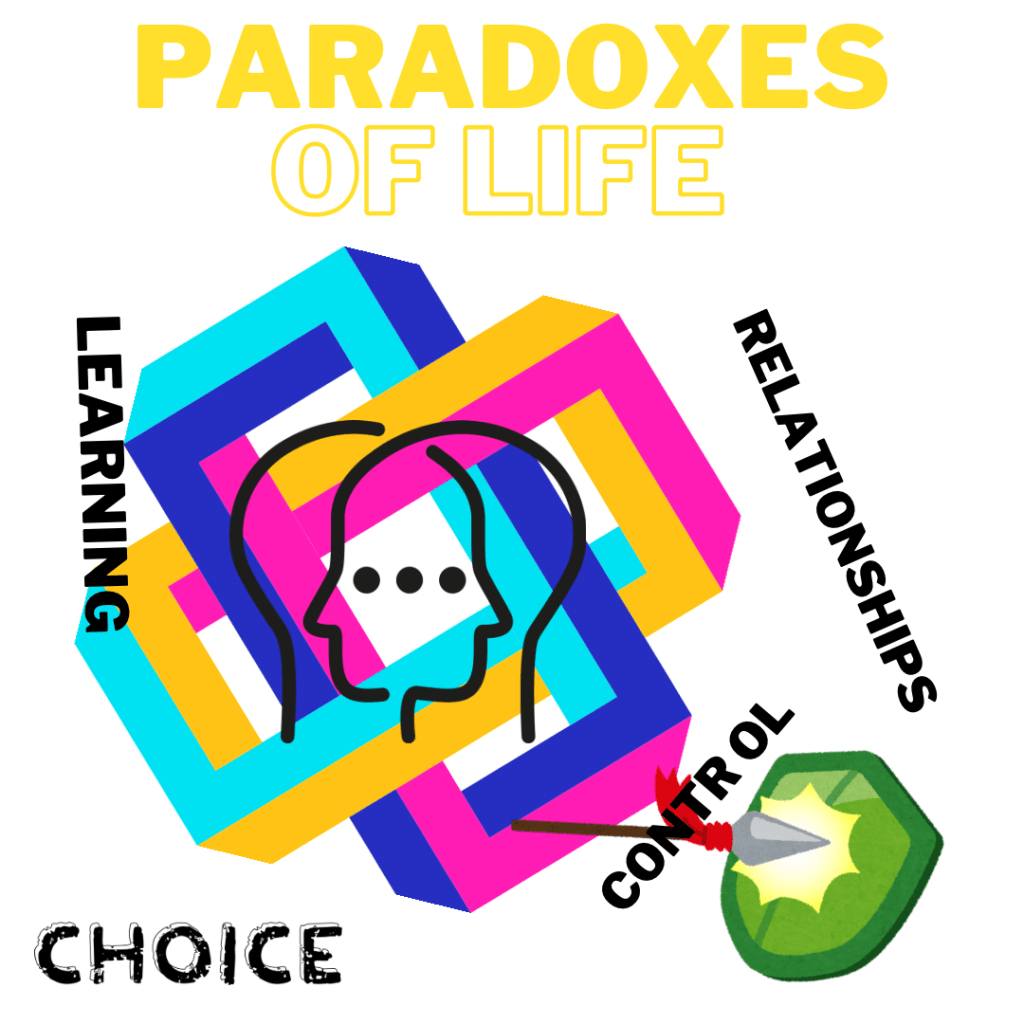
DEFINITION
Paradox
/par-uh-doks /
noun
• a statement that seems self-contradictory or absurd but in reality expresses a possible truth: “Less is more” is a paradox often repeated in the arts and other fields.
It is a paradox of healthy grief that we must work at it while surrendering to it.
• any person, thing, or situation displaying an apparently contradictory nature: In the media the candidate was called a paradox—an unpopular populist.
• a self-contradictory and false statement, especially one arising from seemingly acceptable premises and correct logical argument.
Life is a paradox
– Benjamin De Casseres
The Dozen
- The Paradox of Choice
The idea that having more choices can lead to less satisfaction. While we assume more options make us happier, they can also lead to anxiety and indecision, making us less content with our final choice. - The Paradox of Success
Success often requires a series of failures. The more you fail and learn from those failures, the greater your chances of achieving success. It’s a reminder that setbacks are often necessary steps on the path to achieving one’s goals. - The Paradox of Happiness
Pursuing happiness directly often leads to less happiness. Happiness is usually a byproduct of other activities, such as building relationships, pursuing meaningful goals, or helping others. - The Paradox of Self-Improvement
The more you try to become better, the more you realize your flaws. This awareness can be discouraging, but it’s also a necessary part of growth and self-improvement. - The Paradox of Learning
The more you know, the more you realize how much you don’t know. This paradox highlights the vastness of knowledge and the humility required in the pursuit of learning. - The Paradox of Control
Trying to control everything can lead to a loss of control. Micromanaging and overplanning can result in stress and a sense of helplessness when things inevitably go wrong. - The Paradox of Freedom
True freedom comes with self-imposed constraints. To achieve long-term goals and personal growth, individuals often need to set limits and adhere to discipline, which can feel restrictive in the short term but liberating in the long run. - The Paradox of Effort
Sometimes, the harder you try, the worse the outcome. Overexertion and stress can impede performance, whether in creative endeavors, sports, or problem-solving. - The Paradox of Vulnerability
Being vulnerable and open can make you feel exposed, yet it also fosters deeper connections and stronger relationships. Vulnerability is often seen as a strength, not a weakness. - The Paradox of Certainty
Seeking certainty can lead to uncertainty. The desire for absolute answers can cause anxiety and doubt, while accepting uncertainty can bring peace and open-mindedness. - The Paradox of Effort and Relaxation
Sometimes, the best way to solve a problem or make progress is to step back and relax. Overworking and stressing over a solution can cloud judgment and creativity, while taking a break can provide new perspectives and solutions. - The Paradox of Relationships
In relationships, giving more can lead to receiving more. Selfless acts of kindness and generosity often result in deeper connections and reciprocation, while being overly self-focused can lead to isolation and dissatisfaction.
These paradoxes reflect the complexities and contradictions inherent in human experience, encouraging a deeper understanding and appreciation of life’s nuances.
 Think-Talk