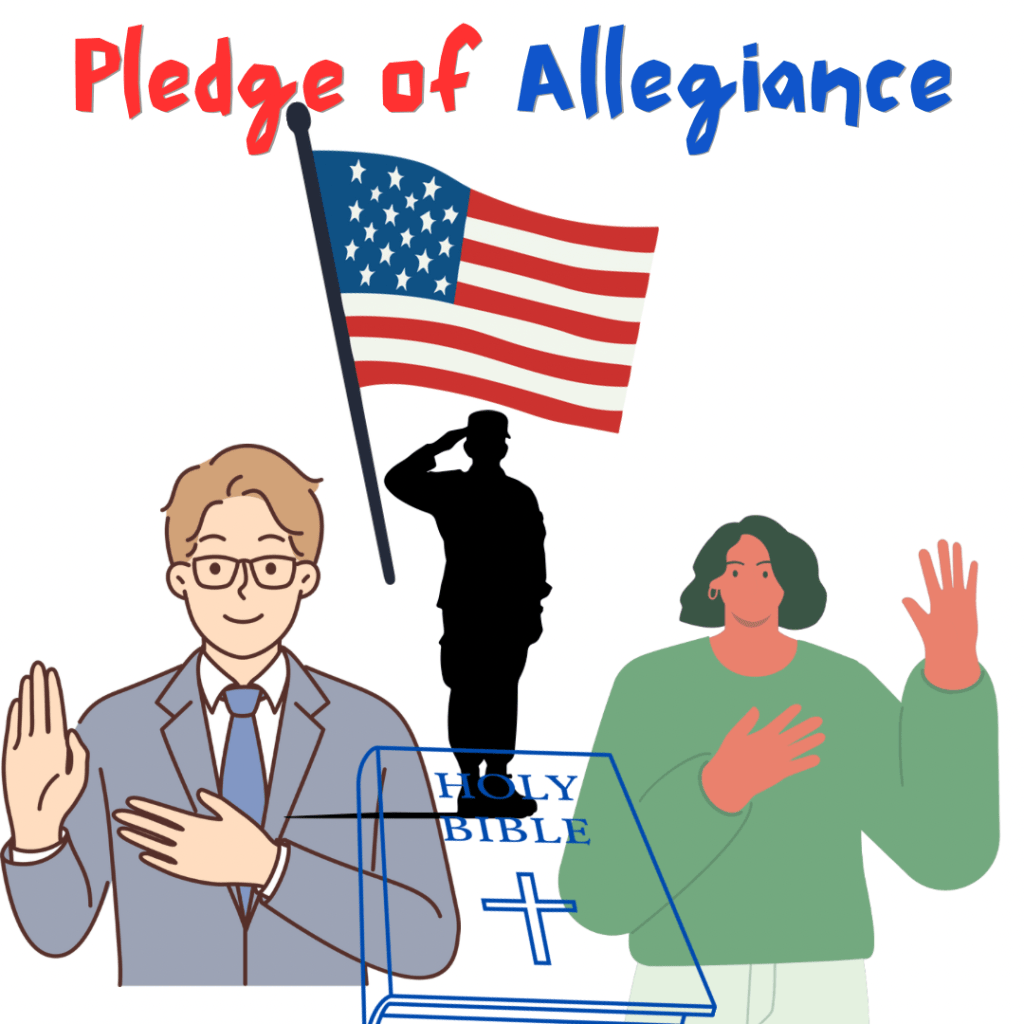
America is again at a critical crossroad and it’s an opportune time to remind Americans of its foundation by reflecting on the Pledge of Allegiance.
“I pledge allegiance
to the Flag of the
United States of America, and to the Republic for which it stands,
one Nation under God, indivisible,
with liberty
and justice for all“
The Pledge of Allegiance is a staple of American patriotism, often recited by schoolchildren and at public events. The words resonate with ideals that define the American dream. However, a closer examination reveals paradoxes that question the very principles the Pledge upholds.
One Nation Under God
History reveals that the phrase “one Nation under God” was added to the Pledge in 1954 during the Cold War, a period marked by a strong sentiment to distinguish the United States from atheistic communist regimes. This inclusion was meant to reinforce the idea of America as a nation guided by divine principles. However, the increasing separation of church and state, a fundamental principle of American governance, creates a contradiction.
In recent years, there have been numerous debates and legal battles over the presence of religious symbols and language in public spaces and government institutions. The push for secularism in public life highlights a shift away from religious expressions in state matters. This divergence makes the notion of being “one Nation under God” seem more symbolic than practical, as the country’s policies and societal norms evolve towards inclusivity of diverse beliefs, including secularism and atheism.
Indivisible
The term “indivisible” suggests unity and cohesion, a collective identity that binds Americans together despite their differences. Yet, the reality of American society tells a different story. The nation is deeply divided along political, racial, socioeconomic, and ideological lines.
Political polarization has reached unprecedented levels, with bipartisan cooperation becoming increasingly rare. Social issues such as racial inequality, gender discrimination, and immigration have further polarized the population. These divisions have manifested in protests, civil unrest, and a fragmented media landscape that often exacerbates rather than bridge the gaps between different groups. The ideal of indivisibility seems far from reality in a nation struggling with profound and persistent divisions.
Liberty and Justice for All
The aspiration for “liberty and justice for all” is perhaps the most poignant paradox in the Pledge. The United States prides itself on being a land of freedom and equal opportunity, but systemic inequalities challenge this ideal.
Economic disparities continue to grow, with wealth concentrated in the hands of a few while many Americans face poverty and financial insecurity. Access to quality education, healthcare, and housing remains unequal, disproportionately affecting marginalized communities. The justice system, too, is riddled with inconsistencies and biases, often failing to deliver equitable outcomes for all citizens. Issues such as mass incarceration, police brutality, and racial profiling have underscored the gap between the promise of justice and the lived experiences of many Americans.
Reconciling Ideals with Reality
Acknowledging these contradictions does not diminish the significance of the Pledge
The paradoxes within the Pledge of Allegiance invite reflection on how to reconcile these cherished ideals with the complexities of contemporary American life. Acknowledging these contradictions does not diminish the significance of the Pledge but rather calls for a deeper commitment to addressing the issues it highlights.
Efforts to foster unity, uphold justice, and respect diverse beliefs are essential in bridging the gap between the nation’s ideals and its realities. This involves open respectable dialogues, policy reforms, and active engagement from all sectors of society to create a more inclusive and equitable nation.
Conclusion
The Pledge of Allegiance remains a powerful symbol of American values and aspirations. Its paradoxes—being one nation under God in an increasingly secular society, claiming indivisibility amidst deep divisions, and promising liberty and justice for all in the face of systemic inequalities—serve as a reminder of the ongoing journey towards realizing these ideals. By confronting and addressing these contradictions, Americans can strive to create a nation that truly embodies the principles enshrined in the Pledge.
May God help us. May God help America. May God help Americans be doers, and not merely reciters, of its Pledge of Allegiance.
 Think-Talk
Pingback: Sheer Anarchy in a Democracy: A Nation in Crisis and the Call for Divine Intervention - Think-Talk