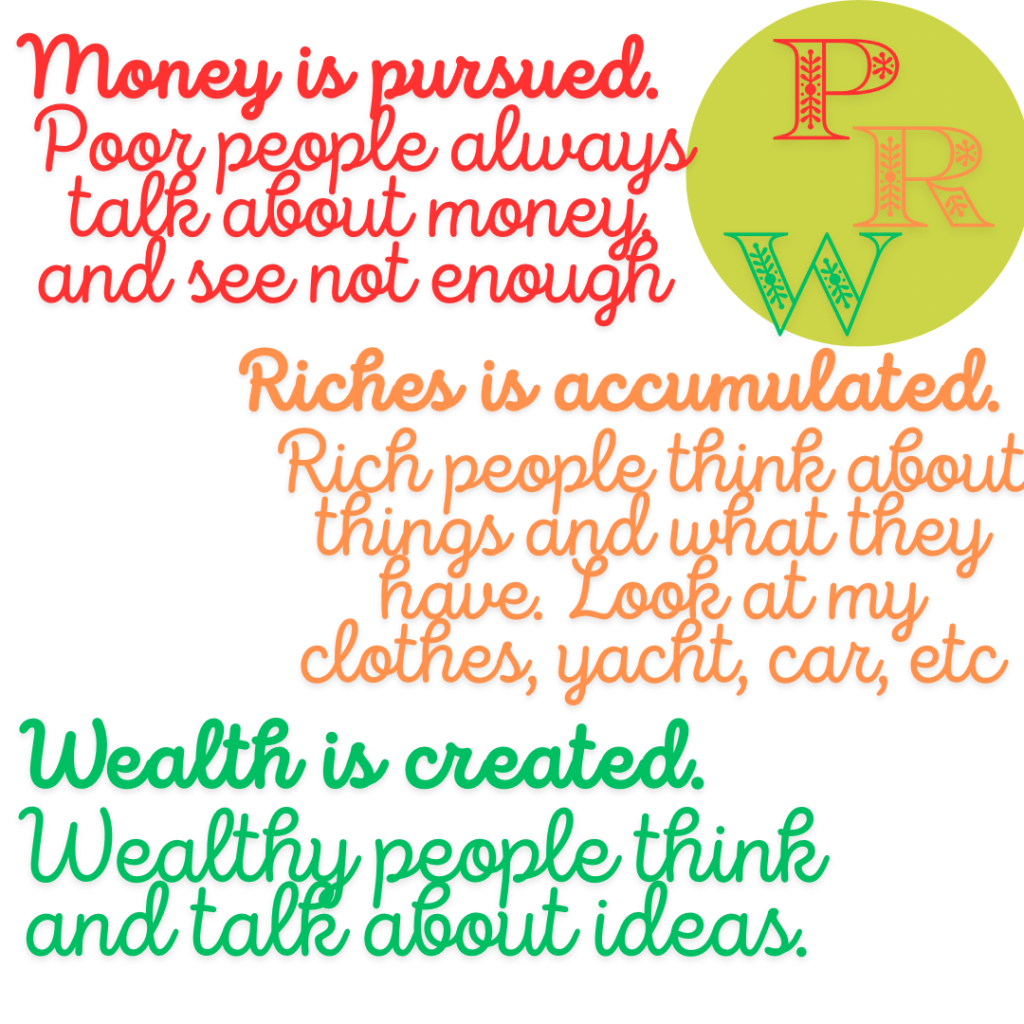
In today’s society, wealth and financial status often serve as markers of success. However, not everyone fully understands the distinctions between being poor, rich, and wealthy. These terms are often used interchangeably, but they each represent different mindsets, lifestyles, and financial strategies. In this post, we’ll explore the key characteristics that differentiate these three groups and provide actionable advice on how one can transition from poverty to richness and from richness to true wealth.
The Poor: Live for Today
We’ve all heard the saying that most are one paycheck away from poverty. 66.2% of Americans fall into living paycheck-to-paycheck.
According to the US Census Bureau, 11.5% (37.9 million) of Americans are poor.
And we probably know someone who works two or more jobs, not because they love the jobs, but because they need both or more jobs to make ends meet. Robert Kiyosaki calls it the rat race.
How do we get out of the rat race?
Mindset and Behavior of The Poor
The poor often live paycheck to paycheck, focusing on survival rather than growth. Their mindset is frequently shaped by scarcity, leading to decisions that prioritize immediate needs over long-term stability. This group may rely heavily on credit for day-to-day expenses, accumulating debt that can be difficult to escape.
The Poor’s Lifestyle
A poor lifestyle is often characterized by limited access to quality education, healthcare, and opportunities for upward mobility. This group may not have the resources to save or invest, leaving them vulnerable to financial emergencies. The focus is on getting by, with little to no room for financial planning or investments.
Financial Strategies:
- Short-term Focus: Due to the lack of resources, the poor tend to focus on immediate needs rather than long-term financial goals.
- Limited Financial Literacy: A lack of education about personal finance often hinders their ability to manage money effectively.
- Dependency on External Support: Many rely on government assistance or charitable organizations to meet basic needs.
The Rich: Acquire Wealth
To be considered rich according to the IRS standard, you need to make $45,000 per month and only 2% of Americans qualify. (Yahoo Finance). That exonerates most Americans!
The Rich’s Mindset and Behavior
The rich have more financial resources and typically focus on accumulating assets. Their mindset is driven by a desire for success, often resulting in a higher tolerance for risk. This group tends to pursue higher education and career advancement, understanding the importance of investing in their skills and knowledge.
Lifestyle of The Rich:
The rich enjoy a comfortable lifestyle, with access to luxury goods, high-quality education, and the ability to travel and experience the finer things in life. They often live in affluent neighborhoods and may have multiple streams of income. However, their wealth is often tied to their active involvement in income-generating activities, such as running a business or holding a high-paying job.
Financial Strategies:
- Investment Focus: The rich understand the importance of investing in stocks, real estate, and businesses to grow their wealth.
- Risk Management: They are more willing to take calculated risks that could yield significant returns.
- Financial Planning: The rich typically engage in detailed financial planning, often working with financial advisors to maximize their income and investments.
The Wealthy: Sustains Wealth Across Generations
A net income of $2 million is required to be considered wealthy in America. (Yahoo Finance)
Mindset and Behavior of The Wealthy:
The wealthy possess a mindset that goes beyond just acquiring money—they focus on sustaining and growing wealth over generations. This group is often involved in strategic investments, philanthropy, and legacy building. Their mindset is centered around long-term thinking, with a strong emphasis on wealth preservation. In Robert Kiyosaki’s terms, the wealthy makes more work for them, even while they’re sleeping.
They (the wealthy) prioritize privacy, quality, and exclusivity, often avoiding flashy displays of their wealth.
Lifestyle of The Wealthy:
Wealthy individuals often live lives of comfort and security, but their lifestyle is less about flaunting wealth and more about securing it for future generations. They prioritize privacy, quality, and exclusivity, often avoiding flashy displays of their wealth. Their focus is on building a legacy, whether through philanthropy, education, or ensuring their family’s continued prosperity.
Financial Strategies:
- Diversification: The wealthy diversify their investments across various asset classes, including real estate, stocks, bonds, and private equity.
- Wealth Preservation: They use trusts, estate planning, and other tools to protect their wealth from taxes, lawsuits, and economic downturns.
- Generational Wealth Planning: The wealthy invest in educating their heirs on financial management and the responsibilities that come with maintaining wealth.
Moving from Poor to Rich: A Pathway to Financial Success
Investing in yourself is one of the best ways to improve your financial standing.
The following are recommended if you desire a change in your financial status from being poor to rich:
- Change Your Mindset: The first step to transitioning from poverty to wealth is changing your mindset from one of scarcity to one of abundance. Start thinking about how you can create value, acquire skills, and improve your financial situation.
- Educate Yourself: Financial literacy is key to moving out of poverty. Learn about budgeting, saving, investing, and the importance of credit management. There are many free resources available, including books, online courses, and community programs.
- Start Saving and Investing: Even small amounts saved regularly can grow over time. Focus on building an emergency fund first, then start investing in low-risk options like savings accounts or index funds. As your financial knowledge and confidence grow, explore more diverse investment opportunities.
- Increase Your Income: Seek opportunities to increase your income through additional education, certifications, side hustles, or career advancements. Investing in yourself is one of the best ways to improve your financial standing.
Transitioning from Rich to Wealthy: Sustaining and Growing Wealth
- Long-Term Planning: Shift your focus from short-term gains to long-term wealth preservation. Work with financial advisors to create a comprehensive plan that includes retirement, estate planning, and generational wealth strategies.
- Diversify Your Investments: Avoid putting all your eggs in one basket. Diversify your investment portfolio to include a mix of assets that can weather different economic climates. This reduces risk and ensures more stable returns over time.
- Focus on Legacy: Wealth is not just about money; it’s about creating a lasting impact. Consider how you can use your wealth to benefit others, whether through philanthropy, education, or building a family legacy that extends beyond material possessions.
- Educate the Next Generation: Ensure that your heirs understand the value of wealth and how to manage it responsibly. This can include formal education, mentorship, and involving them in financial decisions to prepare them for the responsibilities of sustaining wealth.
Conclusion
Understanding the distinctions between being poor, rich, and wealthy is crucial for anyone aiming to improve their financial situation. By adopting the right mindset, investing in education, and making strategic financial decisions, it’s possible to move from poverty to richness, and from richness to sustainable wealth. Remember, wealth is not just about acquiring money but about creating a lasting legacy that can be sustained across generations.
Interestingly, the gap, which is gradually shrinking, between the poor and the rich is the middle-class. Stay tuned till next Monday for the mindset, behavior, lifestyle, and more of the middle class.
 Think-Talk