When it comes to delicacies, one man’s feast may be another’s nightmare. There are numerous delicacies worldwide that push the boundaries of what some find palatable. Foods considered a delicacy in one culture can seem repugnant or unusual in another. These unique dishes often reflect deep-rooted traditions, local resources, and cultural values.
Let’s explore these delicacies, including some commonly overlooked animals, unconventional parts of livestock, and even pets that are eaten in certain cultures. While these may seem shocking or crass to some, they hold cultural significance where they are consumed.
Reader Beware!
Continue reading at your own risk – some of these delicacies might “offend” your palate or comprehension.
Delicacies from around the World
These crass delicacies cuts across continents. With a few exceptions, majority of these delicacies often don’t look like their names. You would have devoured them before realizing what you ate.
Let’s look at these sample of thirty-nine (39) of the most famous (or infamous) delicacies from around the world:
- Balut – Philippines
Vietnam, Cambodia
Balut is a fertilized duck egg that is boiled and eaten from the shell, often seasoned with salt or vinegar. The embryo is developed enough that consumers can see the duckling inside, complete with feathers, bones, and all. Balut is considered a street food delicacy, known for being rich in protein and believed to boost stamina and virility. - Casu Marzu – Italy (Sardinia)
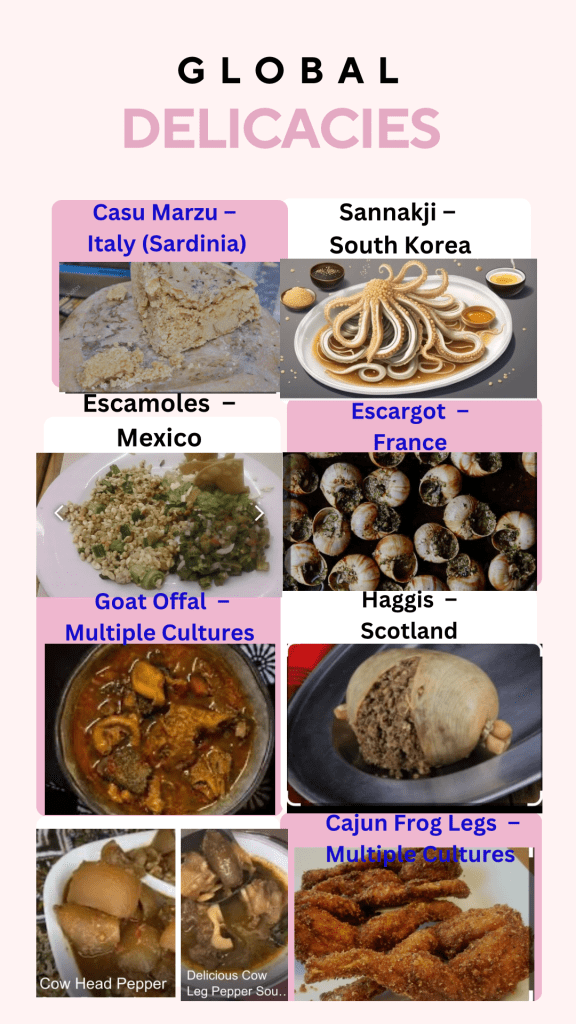
This Sardinian cheese is often referred to as “maggot cheese” because it’s made by introducing fly larvae to ferment the cheese. The larvae help break down the fats, creating a soft, almost liquid texture. Many outside Sardinia are horrified by the idea, but locals enjoy it for its strong, pungent flavor and creamy consistency. - Hákarl – Iceland
Hákarl is fermented shark meat that is considered a Viking delicacy in Iceland. The shark used is poisonous when fresh, so it’s buried, fermented for several months, and then dried. The result is a dish with an intensely strong, ammonia-like smell and flavor, which many people find difficult to stomach. - Surströmming – Sweden
This Swedish dish is a type of fermented herring, notorious for its incredibly strong, pungent smell. The fish is salted just enough to prevent it from rotting, allowing fermentation to take place. It is traditionally eaten outdoors with flatbread and potatoes, as the smell can be overwhelming for those not accustomed to it. - Sannakji – South Korea
A popular delicacy in South Korea, sannakji consists of live octopus tentacles, often served still wriggling on the plate. It’s typically seasoned with sesame oil and salt. The tentacles continue to move due to nerve activity, and some diners find the sensation of eating moving food a bit unsettling, but it’s considered a delicacy for its freshness and taste.
- Escamoles – Mexico
Known as “insect caviar,” escamoles are the larvae of ants harvested from the roots of agave plants. These larvae have been eaten in Mexico since ancient times and are considered a delicacy due to their creamy, buttery texture. They are often sautéed with butter and spices and served with tortillas. - Fugu – Japan
Fugu is the Japanese name for pufferfish, which is considered a high-risk delicacy because certain parts of the fish contain lethal toxins. Chefs must undergo rigorous training and certification to prepare fugu safely, as even a small mistake can result in fatal poisoning. Despite the risks, fugu is prized for its delicate flavor and unique texture. - Kiviak – Greenland
This traditional Inuit dish is made by fermenting seabirds inside a hollowed-out seal carcass. The birds are stuffed whole, feathers and all, into the seal, which is then buried and left to ferment for several months. The end result is a pungent dish eaten during winter or on special occasions. It is highly nutritious and helps combat the harsh Arctic environment. - Shiokara – Japan
Shiokara is a Japanese dish made from various marine animals, most often squid, which are fermented in their own viscera and seasoned with salt. The dish is an acquired taste, known for its strong, salty, and sometimes slimy texture. Many people outside Japan find the flavor off-putting, but it’s considered a delicacy for those who appreciate fermented foods. - Jellied Moose Nose – Canada (Indigenous)
A traditional Indigenous Canadian dish, jellied moose nose is exactly what it sounds like. The nose is boiled to remove the hair, then cooked again until it becomes gelatinous. It’s served cold in slices, much like head cheese, and is a delicacy among some Indigenous groups for its unique texture and flavor. - Stinkheads – Alaska (Native Alaskan)
A fermented dish made from the heads of king salmon, stinkheads are buried underground in wooden barrels for several weeks until they reach a fermented state. The dish has a strong odor and is considered an acquired taste, but it is a delicacy in Native Alaskan culture, where fermented foods play a significant role in traditional diets. - Witchetty Grubs – Australia (Indigenous)
A staple in the traditional Aboriginal Australian diet, witchetty grubs are large, white larvae found in the roots of certain plants. They can be eaten raw or lightly cooked and are highly nutritious, providing protein and fat. While many find the idea of eating large grubs repugnant, it’s a prized source of sustenance for Indigenous Australians. - Escargot – France
Escargot refers to edible land snails, a famous French delicacy that is often served in garlic butter and herbs. While the idea of eating snails may seem strange to some, escargot is prized in French cuisine for its delicate flavor and tender texture. It’s considered a luxurious appetizer in many French restaurants.
Snails are also considered a delicacy in Africa and Asia.
- Frog Legs – France, China, Southeast Asia
Frog legs are popular in French and Chinese cuisine, as well as in parts of Southeast Asia. They are usually sautéed, fried, or stewed and are said to taste similar to chicken, with a slightly more delicate flavor. Frog legs are often served in garlic butter or fried with spices, and they’re considered a delicacy in many regions. - Cow’s Head and Other Offal – Mexico, South America, Africa
In many cultures, no part of the cow goes to waste. “Cabeza” (cow’s head) is often slow-cooked to make tender tacos in Mexico, while “tripe” (cow stomach) is used in dishes like “menudo” (Mexico) or “mondongo” (South America and the Caribbean). The “tongue” (known as “lengua”) is another delicacy in Mexican cuisine, prized for its soft texture when cooked correctly. Similarly, “intestines”, “kidneys”, and “liver” are enjoyed across various African and South American countries, either fried, grilled, or stewed. - Goat Offal – Caribbean, Middle East, Africa
Goat is consumed in many countries, and its offal (heart, liver, intestines, etc.) is often included in dishes. “Curry goat” is famous in the Caribbean, but in places like Nigeria, parts of the goat such as the head, tongue, and organs are used in various soups and stews. In the Middle East, dishes like “mansaf” use the whole goat, and “Kibbeh nayeh” can sometimes include raw goat or lamb meat mixed with bulgur wheat. - Blood Sausage (Boudin Noir) – France, Spain, UK, Germany, Philippines
Blood sausage is a type of sausage made by cooking or drying blood (usually from pigs or cows) mixed with grains, fat, and spices. In France, it’s called “boudin noir”, in Spain, it’s “morcilla”, and in the UK and Ireland, it’s “black pudding”. Blood sausages are enjoyed across Europe, Latin America, and even in the Philippines, where it’s known as “dinuguan”. - Guinea Pig (Cuy) – Peru, Ecuador
In the Andean regions of Peru and Ecuador, guinea pigs, or cuy, are traditionally raised for food and are considered a delicacy. Cuy is often roasted or fried and served whole, usually with potatoes or corn. While many in the Western world see guinea pigs as pets, in the Andes, they are an important source of protein and have been eaten for thousands of years. - Dog Meat – China, Korea, Vietnam, Nigeria
Yes, in some countries, dogs are consumed as part of their cuisine. In China, especially during the Yulin Dog Meat Festival, dog meat is served as a delicacy.
Korea has a long tradition of eating “boshintang”, a spicy dog meat soup, though the practice has declined with modernization. In Vietnam, dog meat is considered a special dish served at certain times of the year, particularly in the north.
In Nigeria, dog meat is occasionally eaten in certain regions, where it is believed to have medicinal properties. - Cat Meat – China, Vietnam, Peru
Similar to dog meat, cat meat is consumed in some parts of the world.
In Guangdong, China, cat meat is often served in stews, and
in Vietnam, it’s less common but still available in certain areas.
There are also reports of cat consumption in Peru, where it may be eaten during festivals or on special occasions. However, this practice is often limited to rural or less-developed regions. - Pig’s Blood Cake – Taiwan
In Taiwan, pig’s blood cake is a street food delicacy. It’s made from congealed pig’s blood and sticky rice, which is steamed, skewered, and often coated with peanut powder and cilantro. This savory treat has a chewy texture and is popular among locals. - Squirrel – United States (Southern)
In parts of the Southern United States, particularly in rural areas, “squirrel meat” is considered a delicacy. It’s often used in stews, fried, or baked in pies. Though not common in mainstream American cuisine, it’s still cherished in traditional Southern cooking, where hunting small game like squirrels is a cultural practice. - Bushmeat – Central and West Africa
In many parts of Central and West Africa, “bushmeat” (meat from wild animals such as monkeys, antelope, porcupines, and even bats) is a common source of protein and is considered a delicacy. The consumption of bushmeat remains a traditional food in many African cultures. - Rocky Mountain Oysters – United States (Western)
Despite their name, Rocky Mountain oysters are not seafood but the testicles of bulls, pigs, or sheep. This dish is popular in the American West, particularly in ranching states like Colorado. The testicles are often breaded, fried, and served as a delicacy at fairs and cowboy-themed events. - Haggis – Scotland
Haggis is a traditional Scottish dish made from a sheep’s liver, lungs, and heart, mixed with onions, spices, and oatmeal. These ingredients are encased in the animal’s stomach (or a sausage casing) and boiled. Though it might sound unappetizing to some, haggis is considered Scotland’s national dish and is a centerpiece of Burns Night celebrations, where it’s served with neeps (turnips) and tatties (potatoes). - Century Egg (Hundred-Year Egg) – China
Century eggs, also known as hundred-year or thousand-year eggs, are duck, chicken, or quail eggs that have been preserved in a mixture of clay, ash, and salt for several weeks to months. The process transforms the egg’s white into a jelly-like consistency and the yolk into a creamy texture with a greenish-black color. While the sulfurous smell may deter some, the flavor is revered in China and other parts of Asia, often served sliced as an appetizer. - Tuna Eyeballs – Japan
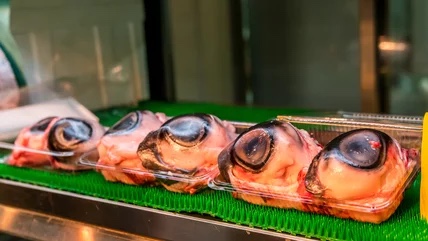
In Japan, tuna eyeballs are considered a delicacy and are often found in grocery stores or restaurants. The eyeballs, about the size of a golf ball, are boiled and seasoned with soy sauce and garlic. They have a soft, gelatinous texture and are thought to be rich in nutrients like omega-3 fatty acids. - Bird’s Nest Soup – China,
Malaysia, and other parts of Southeast Asia.
A highly prized delicacy in China, bird’s nest soup is made from the saliva nests of swiftlets, small birds native to Southeast Asia. The nests are harvested from cliffs and are believed to have medicinal properties, including boosting the immune system and improving skin health. Bird’s nest soup is incredibly expensive and is often served during special occasions like weddings. - Bat Soup – Palau, Indonesia
In some parts of Palau and Indonesia, fruit bats are a local delicacy. Bat soup is made by boiling a whole fruit bat (including the fur), often with coconut milk and spices. Bats are considered a good source of protein in these regions, and the soup is believed to offer health benefits. - Tarantulas – Cambodia
Fried tarantulas are a popular street food in Cambodia, particularly in the town of Skuon. During the Khmer Rouge regime, food was scarce, and Cambodians began eating tarantulas out of necessity. Today, they are considered a delicacy, usually deep-fried and sold as a snack. The legs are crunchy, while the abdomen is soft and contains the organs, eggs, and sometimes the spider’s venom sac. - Mopane Worms – Southern Africa
Mopane worms, the larvae of the emperor moth, are a popular food in Southern Africa, especially in Zimbabwe and South Africa. These large, green-and-black caterpillars are either dried or fried and eaten as snacks or added to stews. They are highly nutritious, rich in protein, and considered a delicacy in many rural communities. - Kangaroo – Australia
In Australia, kangaroo meat is both a traditional and modern delicacy. It is lean, high in protein, and commonly grilled or roasted. Kangaroo has been consumed by Indigenous Australians for thousands of years and is increasingly popular in contemporary Australian cuisine. While some people outside of Australia may find the idea of eating a national symbol unusual, kangaroo meat is appreciated for its flavor and sustainability. - Puffin Heart – Iceland
Puffins are a common sight along the coasts of Iceland, and their meat is considered a delicacy, particularly their hearts. Puffin heart is often served smoked or pan-fried and is said to have a taste similar to liver. Puffin hunting is an ancient tradition in Iceland, though it has become controversial in recent years due to conservation concerns. - Horse Meat – Japan, Italy, Kazakhstan, France
While eating horse meat is taboo in many countries, it is considered a delicacy in Japan (where it’s known as “basashi”, often served raw as sashimi), Italy, Kazakhstan, and parts of France. Horse meat is lean and tender and can be served in many forms—raw, smoked, grilled, or stewed. - Tuna Sperm (Shirako) – Japan
In Japan, shirako (literally “white children”) refers to the sperm sacs of fish, most commonly cod, pufferfish, or tuna. It is served raw, steamed, or fried and is prized for its soft, creamy texture and delicate flavor. Shirako is often eaten as part of traditional Japanese cuisine, especially in high-end restaurants. - Beondegi – South Korea
In South Korea, beondegi are silkworm pupae that are steamed or boiled and sold as a street snack. They are a common sight in markets and are enjoyed for their crunchy texture and nutty flavor. Beondegi is considered a traditional snack, particularly loved by older generations. - Snake Wine – Vietnam, China
Snake wine is a type of rice wine that contains a whole snake (often venomous) steeped in the alcohol. In Vietnam and China, snake wine is believed to have medicinal properties, such as increasing vitality and treating ailments. The venom is neutralized by the alcohol, and the drink is considered a delicacy, consumed for its supposed health benefits. - Lutefisk – Norway, Sweden
Lutefisk is a traditional dish in Norway and Sweden, made from dried whitefish (usually cod) that has been soaked in water and lye for several days, giving it a gelatinous texture. It’s often served with potatoes, peas, and bacon. While the strong smell and unusual texture can be off-putting to some, it is a beloved dish in Scandinavian culture, especially during Christmas. - Smalahove – Norway
Smalahove is a traditional Norwegian dish made from a sheep’s head. The head is either steamed or boiled and served with potatoes and turnips. It was originally a food for the poor but has now become a sought-after delicacy, especially in western Norway. The eyes and tongue are considered the most prized parts of the dish.
Serge Ibaka, former Torobto Raptors, LA Clippers, and Milwaukee Bucks’ basketball player has a food channel, How hungry are you”, which I love. He cooks a variety of these delicacies and invites fellow players to dinner. It’s hilarious watching the players’ reactions when they’re told what’s for dinner. Check the channel out here.
There are even more unique delicacies from around the world that reflect the incredible diversity of cultural cuisines. We’ll continue the deep dive into the bird dishes that stretch the boundaries of culinary creativity, in Part II. Stay tuned 😋
Were you surprised by any of these delicacies? Share in the Comments section below.
 Think-Talk