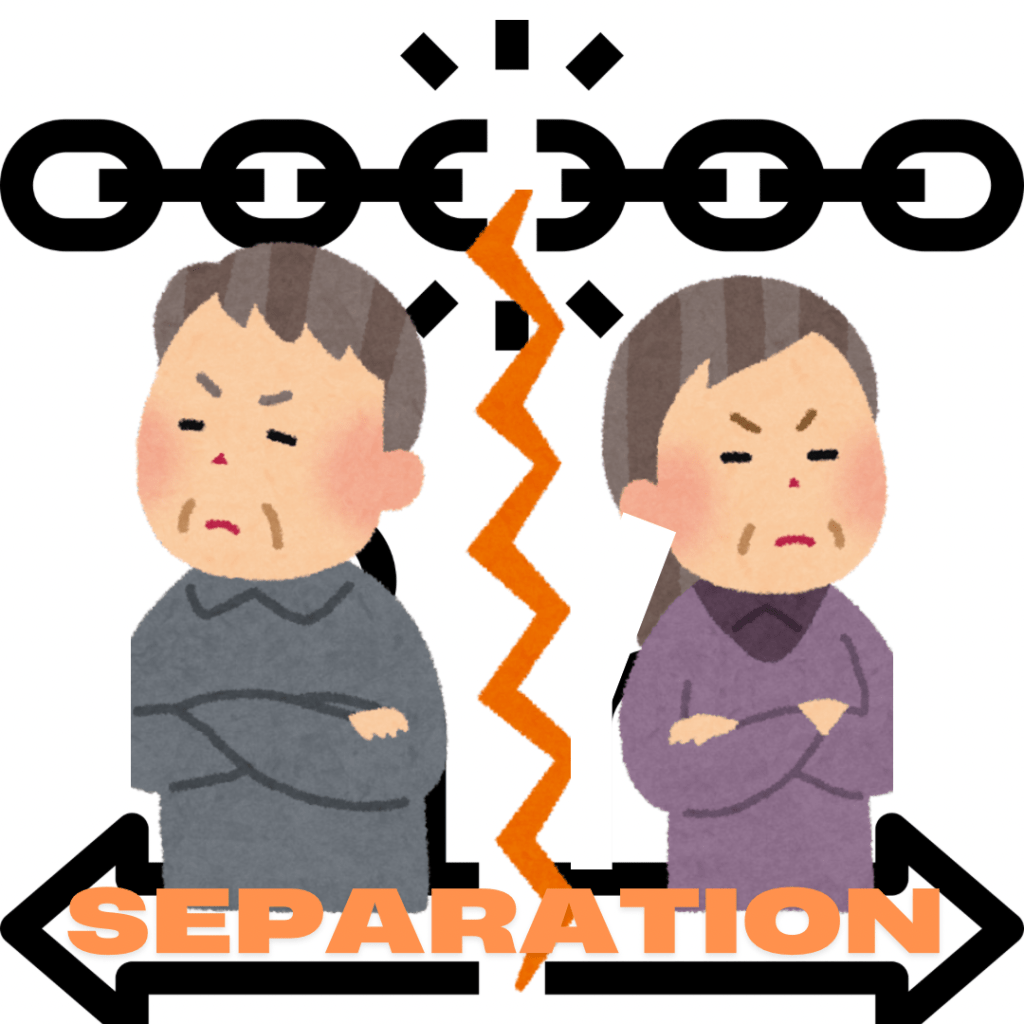
Among women aged 15-44 years, 51% divorce after one year of separation, 76% after three years, and 84% after five years
(onlinedivorce.com)
Personally, separation doesn’t make sense.
Why Separate, Given the Subsequent Divorce Rates?
The statistics — 51% divorce after one year, 76% after three years, and 84% after five years — suggest that separation often leads to divorce, which raises the question: why separate at all? The means rarely justify the end.
The Means and End?
The purpose of separation for married couples often varies depending on individual circumstances, but it typically serves as a time to reflect, reassess the relationship, and either work towards reconciliation or prepare for the possibility of divorce. Here are some key reasons why couples might separate, despite the high divorce rates among those who live apart:
- A Cooling-Off Period
Separation can provide couples with a much-needed break from conflict and emotional tension. By stepping away from the everyday stressors of marriage, they may gain a fresh perspective on their relationship. This period allows them to think clearly without the pressure of constantly engaging in disputes or feeling overwhelmed by day-to-day responsibilities. - Self-Reflection and Personal Growth
Separation offers an opportunity for both partners to focus on themselves, their needs, and personal growth. Sometimes, issues in a marriage stem from individual insecurities or emotional baggage that could be worked on during this time apart. By gaining clarity about their personal needs and desires, spouses may be able to come back stronger or realize they need to move on. - Opportunity for Reconciliation
Some couples use separation as a step toward mending their relationship. With counseling or therapy, they may resolve underlying issues that couldn’t be dealt with while living together. This “trial separation” often helps them to assess whether the marriage is salvageable or if it’s time to part ways. - Avoiding Immediate Divorce
Not everyone is ready to jump straight into divorce. Separation allows time to consider the legal and financial implications without rushing into a permanent decision. Some might believe that separation gives the relationship a final chance to improve before choosing the more definitive step of divorce. - Parental Responsibility
For couples with children, separation might be seen as a softer transition than divorce. It allows for time to figure out how to co-parent effectively and what the family dynamic will look like if divorce becomes inevitable. It may also help children adjust gradually to the potential permanent changes. - Financial or Logistical Considerations
Separation can also provide time for individuals to sort out their financial or logistical situations before divorce. By living apart, couples can better understand what life will look like in terms of income, housing, and lifestyle post-divorce. It can be a practical move to ensure both parties are prepared for life apart, especially when major assets or debts are involved.
For many, separation is not a step toward divorce but a chance to prevent it. Even though the odds may seem high, some couples do successfully reconcile after separation. For others, separation provides clarity and closure, allowing them to transition into divorce knowing they’ve explored all options.
Moreover, the duration of separation can impact the outcome. The longer couples stay apart, the more they might drift emotionally, making divorce seem like the natural next step. However, for couples who use separation as a short-term strategy, the time apart may help heal wounds and encourage communication
In conclusion, while separation often leads to divorce, it can still be utilized as a useful tool for personal growth, reflection, and relationship reassessment. It gives couples a chance to explore whether they are truly better off apart or if their marriage can be saved. The decision to separate is personal, and despite the statistics, for some, some consider it a vital step in finding the best way forward—whether that’s together or apart.
 Think-Talk