Is there a place for Separation when a marriage is in distress? The answer is: Maybe.
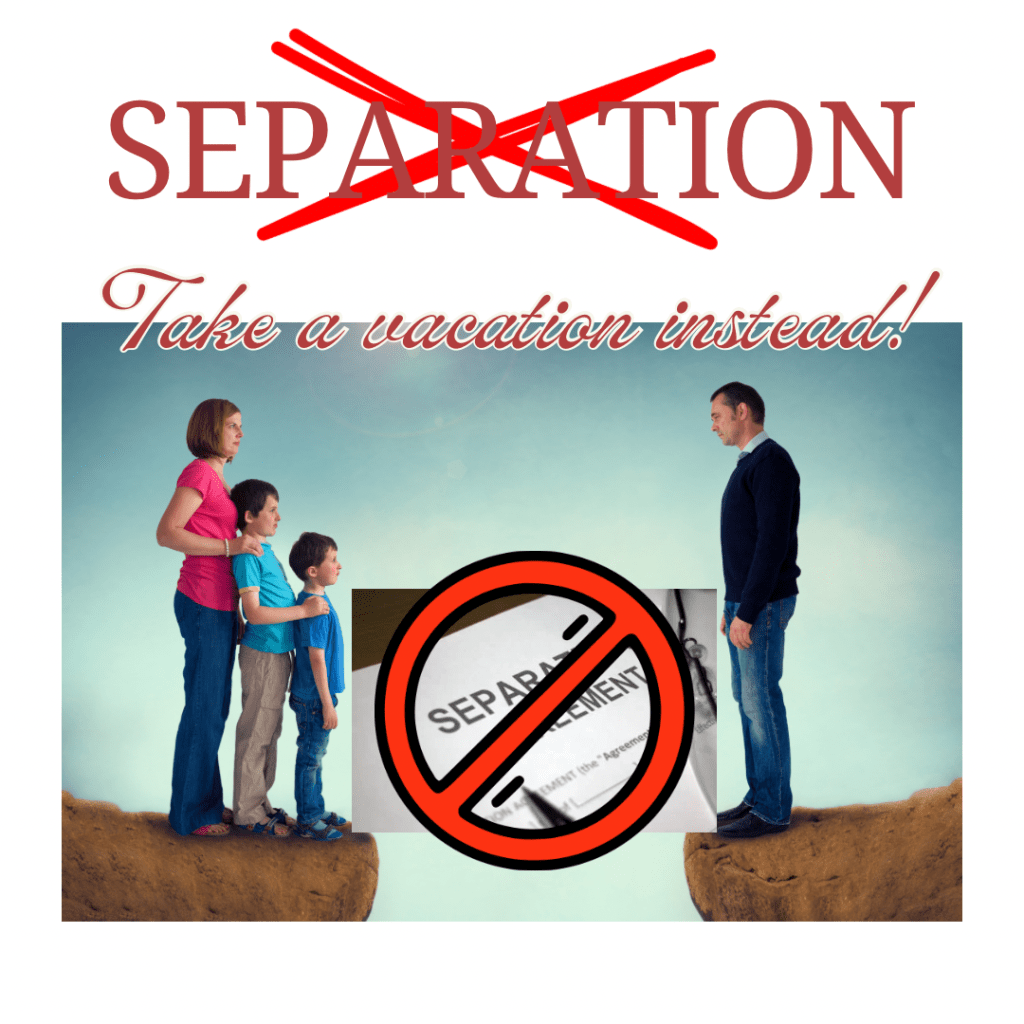
Separation can work in very specific cases—when both parties genuinely want to reconcile but need a break from the conflict to refocus on themselves and what they want from the marriage. It requires clear boundaries, consistent communication, and a shared commitment to working on the relationship during the time apart. The break should not be used just as a way to avoid addressing the deeper issues: it won’t solve anything and is likely just a prelude to divorce.
The effectiveness of separation largely depends on what both partners hope to achieve and how they approach it. To have contemplated separation means that both partners have dug their feet in the sand.
Before choosing separation, hopefully the couples addressed the root problems head-on through counseling, direct communication, or other interventions while staying together. If not, that is the first place to start.
Give Counseling A Chance
Marriage counseling, coupled with therapy, might not only help to dig deeper into the root issues but also help with actionable solutions.
the effectiveness of marriage counseling is directly related to the motivation level of both partners and timing.
Dr. John Gottman
Some folks think that counseling is a waste of time. Others even think that counseling is not for their particular race. But, finding and using a great marriage counselor can make the difference.between staying married and divorcing.
Timing is everything and the earlier, the better.
However, if a marriage has reached the point where separation is being considered, it likely means that significant issues have gone unresolved for too long. And that counseling hasn’t helped.
In summary, I believe separation can have a place, but it’s not a fix-all solution. It requires a clear purpose and shared commitment to growth or reconciliation. Otherwise, it might just delay the inevitable. Again, if a relationship has reached such a low point, it’s questionable whether living apart will address the core issues that led to that state.
Why Separation Might Not Be the Best Option
When couples hit a rough patch, many turn to the idea of separation as a solution, but is it really the best choice? Statistics show that separation often leads to divorce — “51% of women aged 15-44 divorce after one year of living apart, 76% after three years, and 84% after five years.” (Onlnedivorce.con) These numbers raise a serious question: “Why separate in the first place, if it so often ends in divorce?”
As someone who believes that separation can often do more harm than good, I want to explore why working through issues together is more effective than living apart.
- Separation: A Hard Label that Pauses the Marriage
Separation is more than just physical distance; it’s a hard label that puts a “semi-colon” on the marriage. It marks a formal break where neither partner is fully in the relationship, yet they’re still legally married. This creates a kind of emotional limbo—‘you can’t date others, but you’re also not really together.’ It makes things complicated, adding a legal and emotional layer to the strain the couple is already experiencing.
Separation tends to shift the focus from fixing the problem together to living apart. In many cases, this can lead to further disconnection and make the path back to reconciliation even harder. So, if the issues in the marriage weren’t salvageable before, there’s no guarantee that separation will magically resolve them.
- “A Softer Approach: The Separate Individual Vacation”
Instead of separating, couples should consider a softer, less formal option—a “separate individual vacation”. Taking time apart individually to reflect and recharge can be a valuable way to gain perspective without the weight of legal separation. This kind of break doesn’t impose a formal “pause” on the marriage but allows each person to return refreshed, with a clearer mind, and hopefully a renewed willingness to work on the relationship.
By stepping away temporarily, each partner can reflect on the core issues without stepping out of the marriage itself. Whether they come back ready to put in the effort to fix things or return realizing that divorce is the next step, they’ve at least avoided the gray area of limbo that legal separation creates.
And, if money is not an issue, the couple can take a vacation together afterwards; a second honeymoon if you will, to further discuss their future.
- Working Through Issues Together is Key
The essence of marriage is facing problems together, not avoiding them. If the couple has reached the point where they’re considering separation, the real solution lies in communication, compromise, and mutual commitment. Separation often delays the inevitable, leaving the underlying issues unaddressed. Instead of tackling them, each person is left to their own devices, further straining the relationship.
When couples stay together and work through their issues, they’re much more likely to find a path to healing. There’s power in showing up for one another, even in the tough times. It’s in the process of working together that couples can rediscover what brought them together in the first place and rebuild their bond.
Conclusion: Avoiding the Limbo of Separation
While separation might seem like a break that offers clarity, it often leads to more confusion and emotional distance. A formal separation puts couples in a space where they’re not together, but they’re not truly apart either—leaving them stuck in limbo. Instead, a vacation or time apart to reflect, without labeling it as separation, allows couples to return refreshed and ready to either work through their issues or make the difficult decision to divorce.
Ultimately, marriage is about commitment, and that means facing problems head-on, together. When both partners are willing to work on their issues, the chance of healing is far greater than stepping away.
 Think-Talk