The City of Inglewood, once known primarily for its residential neighborhoods and proximity to Los Angeles, has rapidly transformed into a vibrant entertainment and economic hub. Earning the City of Angels its new reputation as “The City That Never Sleeps.” The latest addition of the Intuit Dome, new home of the Los Angeles Clippers, complements Inglewood’s other major venues – the SoFi Stadium, YouTube Theater, and Kia Forum, turning the city into a hotspot for sports, entertainment, and economic growth. But behind this transformation lies careful planning, strong leadership, and a strategic vision spearheaded by the city’s Mayor, James T. Butts Jr., and other key stakeholders.
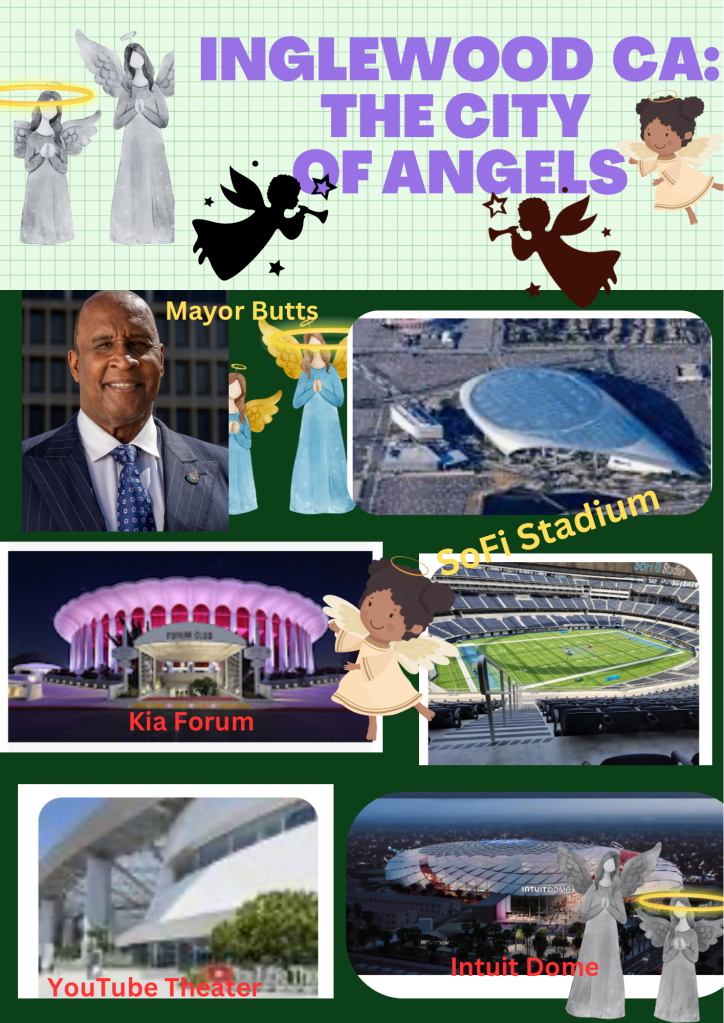
Inglewood’s Transformation
SoFi Stadium
Inglewood has been at the forefront of a major economic and cultural revitalization over the past decade. The city’s rise began with the opening of SoFi Stadium in 2020, a 3.1 million square feet, state-of-the-art sports and entertainment venue that serves as home to both the Los Angeles Rams and the Los Angeles Chargers. It’s the first indoor-outdoor and largest NFL Stadium in the NFL.
YouTube Theater
There is also another state-of-the-art 227,000-square foot, three-story indoor venue, YouTube Theater, which shares the same roof canopy as the SoFi Stadium. The Theater opened in August 2021. Both are part of the Hollywood Park, a 300 acres across 890,000-square-foot, which houses other attractions that include a casino, movie theater, residential, businesses, and other attractions.
Kia Forum
Alongside is the adjacent Kia Forum, another legendary venue for concerts and events. These facilities have already placed Inglewood on the map as a major destination for sports fans and entertainment enthusiasts alike.
Intuit Dome
Now, the Intuit Dome, opened in August 2024, added to Inglewood’s growing list of attractions. The Dome, now the permanent home of the NBA’s Los Angeles Clippers, is one of the most technologically advanced sports arenas in the world. With a seating capacity of 18,000, it will host not only Clippers games but also concerts, conventions, and other large-scale events.
The combination of all these venues has already increased foot traffic, boosted Inglewood’s economy, attracted new businesses, restaurants, hotels, and investment in infrastructure, and quickly turned a once not-so- quiet suburban area into a bustling city that stays active day and night.
The Brains Behind Inglewood’s Economic Growth
At the heart of this economic boom is Mayor James T. Butts Jr., a visionary leader who has played a pivotal role in Inglewood’s resurgence. Elected in 2011, Mayor Butts brought a dynamic and ambitious approach to economic development, which has resulted in the transformation of the city.
Key Contributions of Mayor James T. Butts Jr.:
• Championing Major Development Projects: Mayor Butts was instrumental in bringing SoFi Stadium to Inglewood, negotiating the deals that made the venue a reality. His administration worked closely with developers to ensure the stadium and surrounding areas would be a catalyst for the city’s economic growth.
• Advocating for the Intuit Dome: The Intuit Dome project is another feather in Mayor Butts’ cap, as he worked closely with Clippers owner, Steve Ballmer, to secure the arena’s location in Inglewood. The Dome surely created thousands of construction and permanent jobs, generating significant tax revenue for the city.
• Infrastructure Improvements: In response to the city’s growing popularity, Mayor Butts has overseen key infrastructure upgrades, including road expansions, improved public transit access, and enhanced public safety measures. These improvements are critical for supporting the influx of visitors to the new entertainment hubs.
• Community Engagement: While developing these projects, Mayor Butts has been committed to ensuring that Inglewood’s longtime residents benefit from the city’s growth. Initiatives have been put in place to preserve affordable housing and improve public services, creating a balanced approach to development.
Economic Impact on Inglewood
The economic ripple effect of these developments is already evident. Job creation is one of the major benefits, with thousands of construction jobs generated for the Intuit Dome, SoFi Stadium, and infrastructure improvements. The opening of these venues also creates long-term employment opportunities in event management, hospitality, and retail.
Additionally, the influx of visitors for major events boosts local businesses, from restaurants and hotels to small shops. The city has seen a rise in new business openings, particularly in the hospitality and retail sectors, catering to both tourists and residents. This vibrant economic activity is helping solidify Inglewood as a must-visit destination in Southern California.
The Future of “The City of Angels”
Inglewood’s future looks incredibly bright. The city is poised to continue growing its reputation as a premier entertainment and sports destination, with additional projects on the horizon that will further boost its economy. As Inglewood prepares to host events like Super Bowl LVI and the 2028 Summer Olympics, its global profile will only increase, drawing even more visitors and investment.
Under Mayor Butts’ leadership, Inglewood is no longer just a city on the rise—it is a city that has arrived. With the Intuit Dome, SoFi Stadium, YouTube Theater, and Kia Forum, Inglewood is well on its way to becoming a 24/7 entertainment and economic powerhouse, living up to its nickname as “The City That Never Sleeps.”
Inglewood’s Transformation
Inglewood, California, didn’t used to be this economic powerhouse. The City has indeed experienced a profound transformation, emerging from a notorious past marred by crime, economic struggles, and negative perceptions to become one of Southern California’s most dynamic and prosperous cities. This dramatic shift is a testament to the belief that transformation is possible for anyone or anything—even a city. By tracing the city’s past challenges and its current resurgence, we can see how strategic leadership, economic development, and a commitment to change have completely altered Inglewood’s trajectory.
1. Inglewood’s Notorious Past: A Struggling City
During the 1980s and 1990s, Inglewood was often associated with high crime rates, gang violence, and economic decline. This period coincided with the rise of gang culture in Los Angeles, where cities like Inglewood became infamous for drug-related crime and violence. The city struggled with unemployment, underfunded schools, and deteriorating infrastructure, which further contributed to its negative image.
Inglewood’s crime rate became a serious issue, with the city being labeled unsafe by many residents and outsiders. Many businesses were hesitant to invest in the area, leaving residents with fewer economic opportunities and limited access to essential services. For decades, the city seemed to be stuck in a cycle of decline, struggling to shake off its reputation.
2. A Turning Point: The Early 2000s
Inglewood’s revival began in the early 2000s, when local leadership started pushing for redevelopment and a change in the city’s approach to economic growth and public safety. However, the real turning point came in 2011 with the election of Mayor James T. Butts Jr. A former police chief and public safety expert, Mayor Butts came into office with a clear vision: to turn Inglewood from a city on the decline into a thriving, modern metropolis.
Mayor Butts’ leadership marked the beginning of a new chapter for Inglewood. He understood that, to attract investment and revitalize the city, safety had to improve, and the community needed hope. Through his background in law enforcement, Mayor Butts implemented community policing strategies, strengthened relationships between law enforcement and residents, and prioritized reducing crime rates. As crime decreased, public perception of Inglewood began to shift.
3. The New Inglewood: Where Transformation Took Root
The foundation for Inglewood’s modern transformation was laid with strategic investments in large-scale development projects. Mayor Butts worked tirelessly to attract investors and developers to the city, pushing for projects that would create jobs, improve infrastructure, and breathe new life into the community. To rehash, below is how the city began its remarkable turnaround:
• SoFi Stadium: Inglewood’s rebirth began with the announcement of SoFi Stadium in 2016. The largest and most technologically advanced stadium in the country, SoFi brought national attention to Inglewood and symbolized the city’s renewed potential. The stadium became a magnet for future projects and solidified the city as a major player in the entertainment and sports industries.
• Kia Forum: Formerly known as The Forum, this iconic venue was revitalized and restored as a premier destination for concerts and large events. The venue’s renovation helped boost tourism and created jobs, attracting a new wave of visitors and putting Inglewood back on the map as a top entertainment destination.
• Intuit Dome: The construction of the Intuit Dome is another critical milestone in Inglewood’s transformation. As the future home of the Los Angeles Clippers, the Dome will attract millions of visitors and add to the city’s growing reputation as a 24/7 destination.
With each new development, the city’s economy gained momentum. Inglewood saw the arrival of new hotels, restaurants, retail stores, and other businesses eager to be part of the city’s growth. As a result, the local job market expanded, and property values increased, boosting the overall quality of life for residents.
4. The Role of Leadership and Vision in Transformation
Mayor Butts and his administration played an essential role in guiding Inglewood through this period of transformation. The key to this success lay in strategic vision and leadership. Instead of letting the city’s past define its future, Mayor Butts embraced the challenges head-on, working to rebrand Inglewood as a city of opportunity.
He also focused on making sure the community benefited from this transformation. While the massive development projects were critical to the city’s resurgence, Mayor Butts ensured that local residents were not left behind. He advocated for housing initiatives that protected affordable units, offered job training programs for residents, and emphasized the importance of community participation in shaping the city’s future.
5. A Broader Message: Transformation Is Possible for Anyone
The story of Inglewood’s transformation serves as an inspiring reminder that change is possible, no matter how difficult the past may be. Just like a city, individuals can overcome personal struggles, challenges, or even negative reputations with the right mix of leadership, strategy, persistence, and vision.
Inglewood’s journey from a city marked by crime and economic stagnation to a thriving hub of entertainment and culture shows that transformation takes time, but it is achievable. The city’s resurgence stands as proof that no matter how deep the challenges, change is within reach with commitment and vision. This transformation didn’t happen overnight, but through sustained efforts, the once “notorious” Inglewood now proudly shines as a beacon of opportunity.
6. The Future: Inglewood’s Endless Potential
Today, Inglewood is a city bustling with energy, a city that never sleeps. With its burgeoning entertainment industry, thriving economy, and visionary leadership, it’s poised for even more growth. The coming years, especially with hosting duties for major event of the 2028 Olympics, will only solidify Inglewood’s place as a global destination.
Inglewood’s story is a testament to how vision, leadership, and strategic partnerships can transform a city into a thriving, global destination.
Just as the city has risen from its past, it continues to serve as a symbol of what is possible when leadership, community, and vision come together to spark lasting change.
 Think-Talk