In the United States, social class is more than just income—it encompasses lifestyle, education, occupation, and overall economic stability. The traditional class structure, often segmented into lower, working, middle, upper-middle, and upper classes, has been the foundation of American society for generations. However, as economic dynamics have evolved, so has the concept of the “middle class,” raising questions about its relevance today.
Here are the various Class Statuses in America:
1. Lower Class
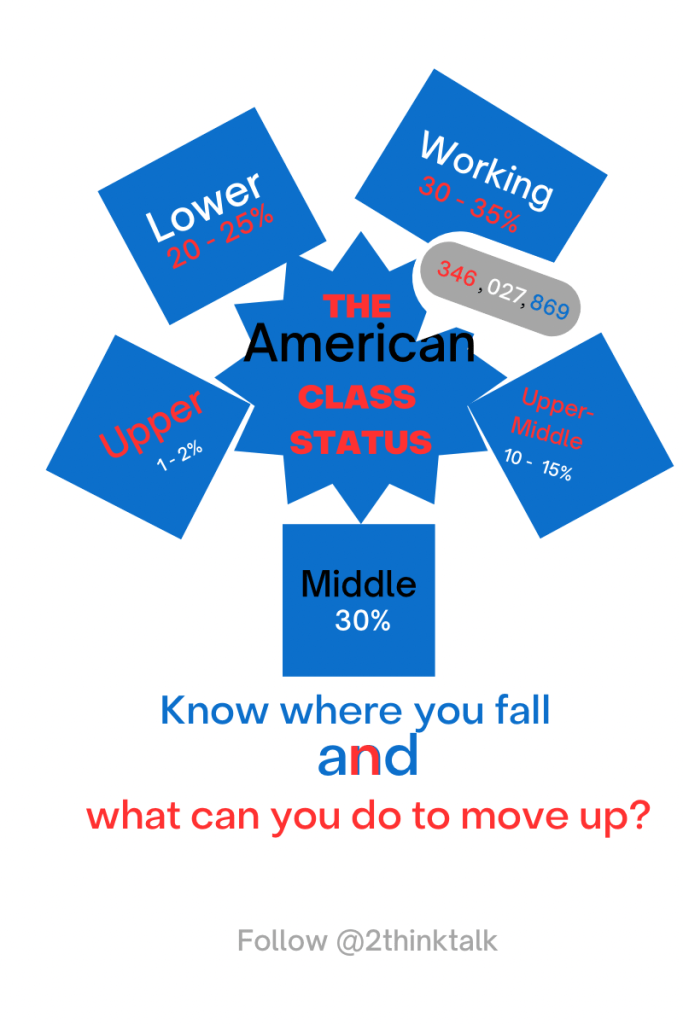
About 20-25% of Americans fall into this category. This group includes individuals and families who live below or just above the poverty line, often with limited access to stable employment, healthcare, and savings. They often struggle to meet basic needs due to limited income, minimal savings, or economic instability. They may work in low-wage jobs or rely on government assistance, and their opportunities for upward mobility can be limited due to barriers like education costs and job availability.
2. Working Class
The working class, roughly 30-35% of Americans, typically includes those who work in hourly wage, trade, or service jobs or manual labor. While they may cover basic expenses, they often have minimal savings and limited upward mobility. They typically earn enough to meet their needs but may not have substantial savings or assets. While they may own a home or car, economic instability or unexpected expenses can significantly impact their financial standing.
3. Middle Class
Traditionally, the middle class, around 30% of Americans, encompasses people with moderate, stable incomes, often from professional or technical jobs, They have some savings or assets, and are able to provide moderate education for their children. However, due to stagnant wages, rising costs, and economic shifts, achieving or maintaining middle-class status has become increasingly challenging. This group is shrinking as economic pressures make it harder to sustain this lifestyle.
4. Upper-Middle Class
This group, approximately 10-15% of Americans, generally includes people with advanced education, high-paying jobs in professional fields like medicine, law, or finance, and have disposable income, significant savings or investments. They often enjoy economic security, a comfortable lifestyle with access to the best educational and healthcare options.
5. Upper Class
The upper class, about 1-2% of Americans, translates to roughly 3 to 6 million people out of the 346+ million people in the U.S.. They represent the wealthiest Americans, with substantial assets, investments, such as high-net-worth business owners, investors, and wealth that may span generations. They often have access to the best education, exclusive investment opportunities, and connections, allowing them to maintain and grow their wealth across generations.
Note on The Percentages:
The percentages of each class in the United States can vary depending on the study, methodology, and criteria (e.g., income thresholds, education, occupation) used by researchers. We’ve used a general breakdown often used by economists and sociologists, based on income and lifestyle factors.
These percentages provide a general picture but can vary slightly based on specific reports and annual economic fluctuations. As economic divides grow, the middle class has been gradually shrinking, with some people moving either into the working class or, less commonly, advancing to upper-middle or upper-class levels.
Does the Middle Class Still Exist?
The middle class as we once knew it has indeed shifted. Economic pressures like inflation, housing prices, student debt, and healthcare costs have placed strain on those traditionally viewed as middle class. While the middle class still exists, it has become harder to achieve and sustain due to wage stagnation and the erosion of purchasing power. Many now find themselves either slipping into the working class or striving to move into the upper-middle class to secure financial stability.
How to Move Up the Social Class Ladder
Moving from one class to a higher one is challenging, but not impossible. Here are some strategies to improve socioeconomic standing:
1. Invest in Education
Education remains one of the strongest drivers of upward mobility. Skills in high-demand fields like tech, healthcare, or finance can open doors to higher-paying careers.
2. Develop In-Demand Skills
Continuous skill development, whether through certifications, workshops, or hands-on experience, can lead to career advancement and better job opportunities. Fields like coding, data analysis, and digital marketing, for instance, offer solid growth prospects.
3. Build Financial Literacy
Managing money wisely through budgeting, saving, and investing is essential for long-term financial health. Many people benefit from learning to invest in stocks, real estate, or retirement accounts.
4. Entrepreneurship and Side Hustles
Starting a business or side hustle can be a significant income boost and, if successful, create opportunities for financial independence.
5. Networking and Mentorship
Building relationships within one’s industry or field can open doors to opportunities that may not be publicly advertised. Mentorship from those who have advanced in their careers is also invaluable.
6. Live Below Your Means
It may sound simple, but living within or below one’s means allows for more money to be saved, invested, and put toward career advancement.
Final Thoughts
While the American class structure may appear stable, socioeconomic factors and economic policies are constantly reshaping it. While the middle class does still exist, maintaining this status requires more effort than in previous decades.
For those aiming to move up, a combination of education, financial literacy, and strategic career choices can be transformative, providing not just economic security but also a chance to break free from the limitations of one’s current class status.
 Think-Talk