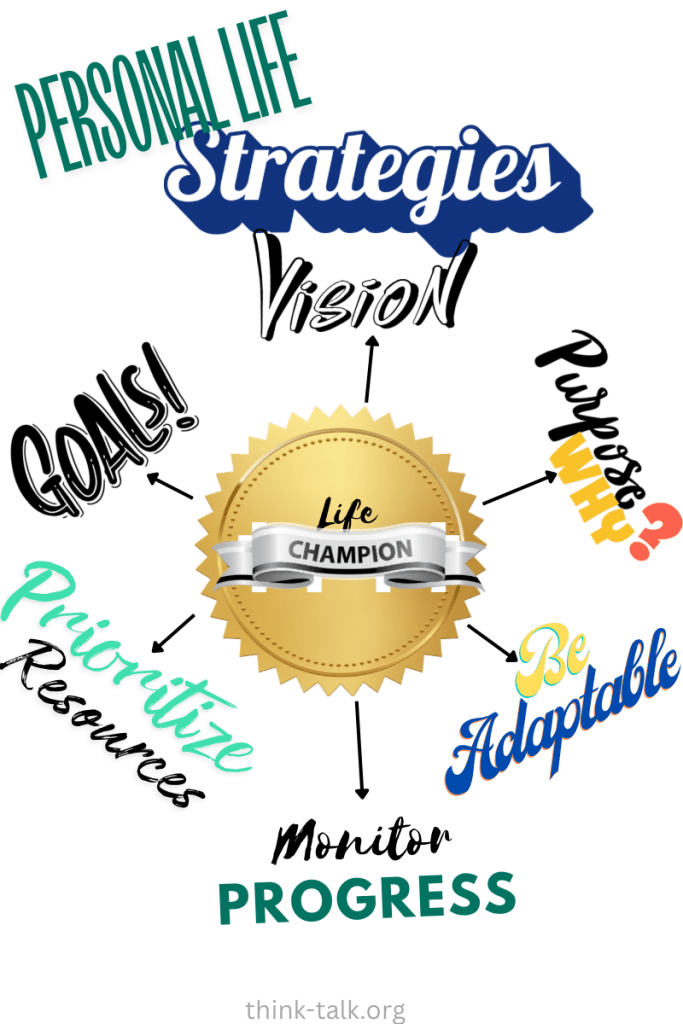
We often hear about strategies and strategic planning in business. It is equally important to have personal strategies, be strategic, and live strategically in life.
By being strategic, you gain clarity on what matters most, prioritize your resources, and make decisions that lead to long-term fulfillment.
In business, strategies serve as a blueprint for growth, risk management, and competitive advantage. The same principles apply to our personal lives, where a strategic approach can foster better relationships, personal growth, and a more meaningful existence. Just as businesses plan meticulously to achieve goals, we too can be deliberate about our lives, making decisions that align with our values, aspirations, and unique purpose. The earlier we know that and intentionally start, the better our lives will be.
Life strategies are not set in stone.
This post explores why being strategic in one’s personal life matters, the elements of effective life strategies, and how to create and implement a life plan with impact.
Why Be Strategic in Life?
A strategic approach to personal life is not about rigidly controlling every aspect. Rather, it’s about creating a framework to make purposeful decisions, adapt to change, and focus on meaningful goals. By being strategic, you gain clarity on what matters most, prioritize your resources, and make decisions that lead to long-term fulfillment. It helps you avoid common pitfalls, such as drifting through life without direction or becoming overwhelmed by unnecessary demands.
Consider the journey of building a healthy relationship. Just like a business, relationships flourish when both partners invest in clear communication, set shared goals, and make deliberate efforts to grow together. Without a strategy for nurturing intimacy, mutual respect, and shared goals, even the strongest bonds can falter.
Key Components of a Personal Life Strategy
1. Vision and Purpose
Every effective strategy starts with a clear vision. Ask yourself, “What do I truly want out of life?” This vision could include aspects like personal fulfillment, health, relationships, career, and spiritual growth. Think of your purpose as your life’s mission statement; it guides your actions and decisions. Defining a purpose grounds you, making it easier to set long-term and short-term goals that align with what truly matters to you.
2. Goal Setting
Setting goals provides the actionable steps to fulfill your vision. Goals should be specific, measurable, achievable, relevant, and time-bound (SMART). For instance, if your vision includes financial independence, a goal might be to save a certain amount or invest in assets that align with your risk tolerance.
3. Prioritization of Resources
Time, energy, and money are finite resources. By prioritizing where you allocate these resources, you can avoid burnout and focus on high-impact areas. For example, if you want to improve your health, allocate time for regular exercise, meal planning, and mental wellness practices. Prioritizing may also mean saying “no” to activities or relationships that drain your energy without adding value to your goals.
4. Adaptability
Life, like business, is unpredictable. Building flexibility into your life strategy ensures that you can pivot when circumstances change. A person with a strategic mindset might re-evaluate their career path if they notice a shift in industry trends or make lifestyle changes in response to health challenges. Adaptability allows you to adjust your plans without losing sight of your overall vision.
5. Progress Monitoring
Tracking your progress keeps you motivated and accountable. It’s similar to reviewing key performance indicators (KPIs) in a business. If you’re working towards a goal, such as learning a new skill, regular self-assessment can help you recognize areas where you’re thriving and areas that need adjustment. Progress monitoring ensures that you stay on track and make incremental improvements.
Building a Personal Strategy: Steps to Take
Step 1: Reflect and Define Your Core Values
Core values are the fundamental beliefs that shape your identity and guide your actions throughout life. Unlike regular values, which may adapt over time, core values are consistent and enduring, providing a steady foundation that guides decisions and actions in various circumstances. Core values serve as your “compass,” helping you make decisions even in complex or challenging situations.
Core values might include things like honesty, family, compassion, or self-reliance. These are not preferences but principles that fundamentally define what you stand for.
For example, if your core value is family above all, you might prioritize a work-life balance that allows for quality time with loved ones.
Conversely, if career advancement is a core value, you may focus on opportunities for professional development and networking.
Another example, if integrity is a core value, it will influence how you approach relationships, career decisions, and daily interactions.
Why Core Values Matter in a Life Strategy
By centering your life strategy on core values, you ensure that your goals and actions align with the principles that matter most to you. While certain life goals or preferences may change, core values offer a stable framework that keeps you grounded. Reflecting on these core values before creating a life strategy helps to ensure that your decisions feel authentic and purpose-driven.
Step 2: Identify Your Long-Term Goals
Long-term goals give your life a direction. Perhaps you want to start your own business, buy a house, or spend your retirement traveling. Visualize where you want to be in five, ten, or twenty years. Long-term goals provide a sense of purpose, but they should be flexible enough to adapt to life’s changing dynamics.
Step 3: Break Down Goals into Actionable Steps
Once you’ve identified your long-term goals, break them down into smaller, actionable steps. If you aspire to travel the world, an actionable step could be setting up a savings plan or learning a new language. This approach makes your larger goals manageable and keeps you from feeling overwhelmed.
Step 4: Develop a Support System
Like any successful venture, having a support system is essential. Surround yourself with people who support your goals and values. Whether it’s a mentor, family members, or friends, a support system offers encouragement, accountability, and fresh perspectives. In business, partnerships create synergy; in life, relationships can provide similar benefits.
Step 5: Continuously Re-Evaluate and Adjust
Life strategies are not set in stone. Regularly assess your progress and be open to adjusting your goals. You might find that some goals lose relevance or that new priorities emerge. For example, you may begin with a strong career focus but later decide that work-life balance matters more to you.
Examples of Strategic Personal Goals and Plans
1. Health and Wellness
Let’s say you value physical wellness. Your strategy might involve setting achievable fitness goals, investing in nutritious food, and practicing self-care habits. A person with a strategic mindset might plan meals weekly to ensure balanced nutrition, schedule workouts in advance, and track health metrics to monitor progress.
2. Career Advancement
Imagine you want to become a leader in your industry. Your strategic plan could include networking, pursuing further education, and developing specific skill sets. To make it manageable, you might break down this goal by setting quarterly targets, such as attending conferences or completing a course related to your field.
3. Financial Independence
If financial independence is a priority, a strategy could involve saving a portion of your income, investing in diversified assets, and minimizing unnecessary expenses. A personal budget becomes a strategic tool, helping you stay on track to achieve financial security without sacrificing other life goals.
4. Relationships and Family
Strong relationships are often a key part of a fulfilling life. You might create a personal strategy to nurture relationships by setting time aside for family and friends, actively communicating, and prioritizing quality time over quantity. Planning family vacations or regular check-ins with friends can help maintain these connections, creating a support system that enriches your life.
Strategic living fosters deeper self-awareness, better decision-making, and, ultimately, a more rewarding life experience.
The Benefits of Being Strategic in Life
Adopting a strategic approach empowers you to live intentionally and avoid drifting through life. By setting clear goals and actively working towards them, you gain a sense of control and purpose. It also encourages resilience; when challenges arise, a strategic person can adjust their approach rather than feeling lost or defeated. Strategic living fosters deeper self-awareness, better decision-making, and, ultimately, a more rewarding life experience.
In summary, being strategic in life is about aligning your actions with your core values and goals. By following a personal plan, you’ll make decisions that lead you closer to your vision, adapt to life’s changes with grace, and find fulfillment in both small achievements and big milestones. Just as businesses rely on strategy to succeed, embracing a strategic approach in your personal life can help you lead a purpose-driven, intentional, and satisfying life.
 Think-Talk