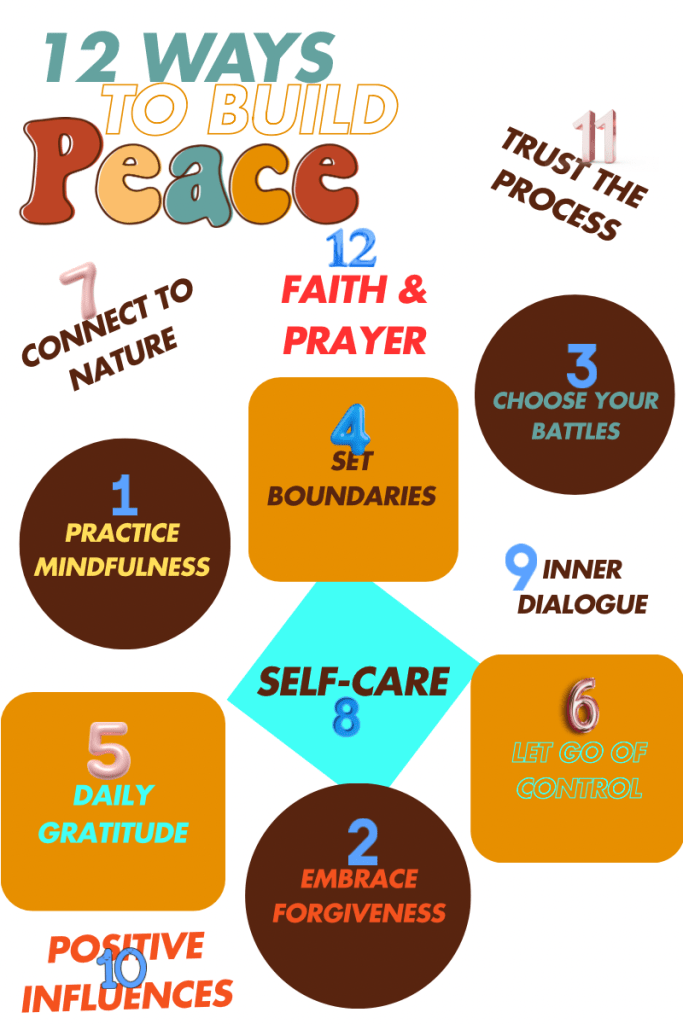
While anger is a natural human emotion, peace is the antidote that helps keep it in check. It’s not about avoiding life’s challenges, but rather about maintaining a calm, centered mindset no matter what’s happening around you. The key to sustaining peace is building habits and mindsets that keep negativity from taking root. Here are a few ways to nurture and sustain peace in your life:
1. Practice Mindfulness
Mindfulness is all about being present in the moment. When you focus on the “now,” it’s harder for worry, frustration, or anger to take over. Take a few minutes each day to sit quietly and simply observe your thoughts without judgment. Breathing exercises or a quick meditation can help ground you and prevent a reactive mindset.
2. Embrace Forgiveness
Holding grudges or staying upset over past wrongs only steals your peace. Learn to forgive, not just for the other person’s sake, but for your own well-being. Forgiveness doesn’t mean condoning the action; it means releasing the power that negative feelings have over you. In doing so, you create space for peace to flourish.
3. Choose Your Battles
Not everything is worth getting worked up over. When something frustrates you, ask yourself: “Will this matter in a week? A month? A year?” If the answer is no, let it go. Prioritizing what truly matters helps you conserve your energy and maintain peace.
4. Set Boundaries
Sometimes peace is disrupted because we allow too many negative influences into our space. Protect your peace by setting healthy boundaries in your personal and professional life. Whether it’s limiting time with toxic people or saying no to commitments that drain you, setting clear limits can protect your mental and emotional well-being.
5. Engage in Daily Gratitude
Starting or ending your day by reflecting on things you’re grateful for shifts your focus away from what’s lacking or wrong in your life. This practice helps rewire your brain to notice positive things, which fosters a peaceful state of mind. The more you focus on gratitude, the less room there is for anger or discontent.
6. Let Go of Control
One major source of stress and anger is the desire to control things we can’t. Accepting that some things are out of your hands can be liberating. Instead of fighting what’s beyond your influence, focus on what you can control—your reactions, your effort, and your attitude.
7. Stay Connected to Nature
Nature has a remarkable ability to restore peace. Whether it’s a walk in the park, listening to birds, or simply sitting by a window and watching the sky, spending time in nature helps clear your mind and recharge your spirit. Nature reminds us that life is full of rhythms and cycles, and not every moment needs to be perfect.
8. Focus on Self-Care
When you’re exhausted, hungry, or overwhelmed, it’s harder to stay peaceful. Take time for self-care activities that recharge you—whether it’s a hobby, reading a book, or simply resting. Regularly replenishing your energy makes it easier to navigate challenges without losing your sense of peace.
9. Control Your Inner Dialogue
Negative self-talk or overthinking can lead to a turbulent mind. Pay attention to your inner dialogue and replace critical or anxious thoughts with positive words and phrases that center on peace. A simple phrase like “I am calm, I am at peace” can remind you to stay centered when life gets chaotic.
10. Surround Yourself with Positivity
The people, media, and environments you engage with directly impact your mental state. Surround yourself with positive influences—people who uplift and encourage you, books and podcasts that inspire peace, and environments that make you feel relaxed. Limit your exposure to negativity, whether that’s in the form of toxic relationships, media, or environments.
11. Trust the Process
Sometimes, maintaining peace requires surrendering to life’s flow. Trust that everything will work out in its time. This doesn’t mean being passive, but rather releasing unnecessary anxiety and worry. Trusting the process helps you stay grounded even when things aren’t going your way.
12. Faith and Prayer
For many, peace comes from a spiritual connection. Whether through prayer, meditation, or spiritual study, having a deep connection with your faith can provide a sense of peace that surpasses external circumstances. It helps remind you that there is a greater purpose beyond the immediate stressors.
Concluding, Peace is not something that happens automatically; it’s cultivated and sustained through daily practice. When you actively and intentionally choose peace, you create an environment where anger and frustration struggle to find a foothold. By incorporating the above suggestions, you can experience more calm, joy, and balance in your life, even amid life’s inevitable challenges.
 Think-Talk