When God “puts a life on pause,” it often feels like an interruption of plans, ambitions, or even comfort. This pause might come through a challenging season—unexpected illness, loss, a career setback, or even a profound sense of restlessness. For believers, these pauses can be bewildering, especially when they’re pursuing a path they thought was in line with God’s will. But within the pause, there’s often a divine purpose unfolding.
“Be sober, be vigilant; because your adversary the devil walks about like a roaring lion, seeking whom he may devour.”
I Peter 5:8 NKJV
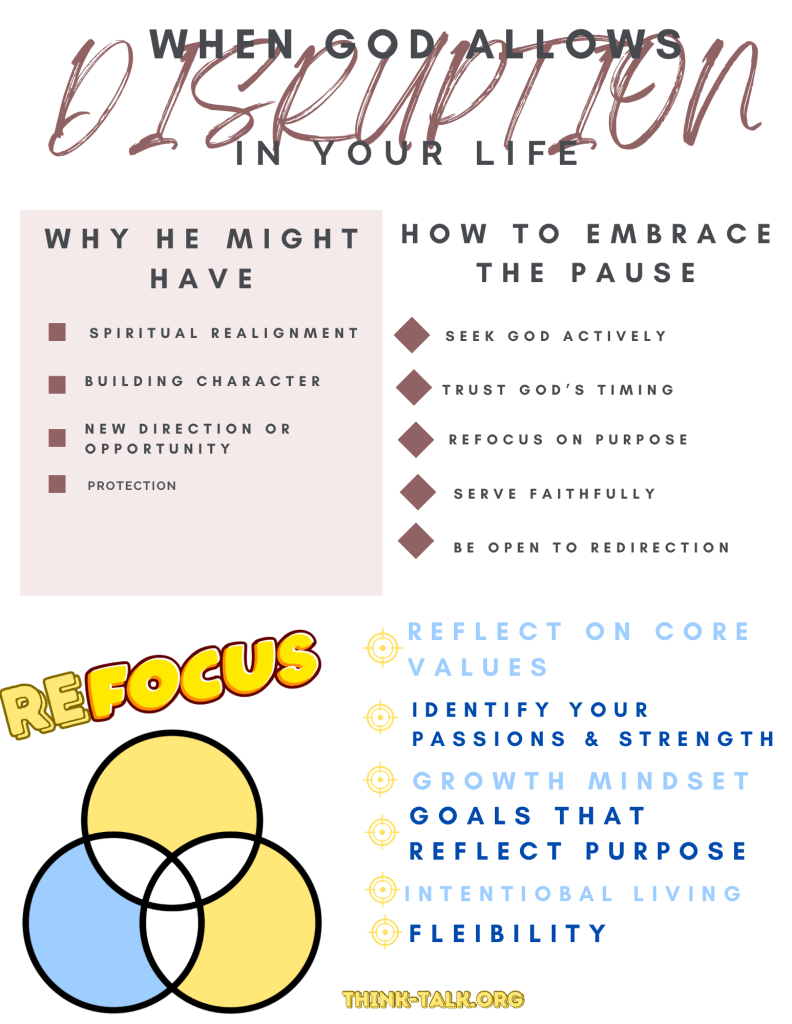
Why God Might Put Life on Pause
1. Spiritual Realignment:
Sometimes, God halts progress to realign us with His purpose. If we’re veering off course or prioritizing something over our relationship with Him, He may disrupt the flow to draw our attention back. In the Bible, figures like Moses, David, and Paul all experienced times when God interrupted their plans for deeper personal growth and alignment with His calling.
2. Building Character:
During a pause, God may be shaping patience, humility, or resilience within us. For instance, Joseph’s years of waiting in prison and David’s time in the wilderness were pauses that refined their character. Often, these waiting periods prepare believers for a larger calling that requires greater spiritual maturity.
3. New Direction or Opportunity:
Sometimes, God closes a door or allows a period of stillness to guide us toward a new path we hadn’t considered. The pause can serve as an invitation to reassess, listen for His voice, and discover areas He wants us to explore, possibly a path that’s more beneficial for us or others around us.
4. Protection:
There are times God pauses our lives to protect us from things we cannot see. It might feel like a setback, but in reality, God may be shielding us from harm or a bad decision. By putting things on hold, He creates space for us to see what’s best.
How Believers Can Embrace the Pause and Align with God’s Agenda
1. Seek God Actively:
Instead of rushing to “fix” the pause, this is the time to press into prayer and actively seek God. Asking questions like, “What are You trying to teach me?” or “How can I realign with Your will?” opens the door for revelation and understanding. Spending time in His Word and being attentive to His voice can reveal purpose in the waiting.
2. Trust His Timing:
Patience is vital. Trusting God’s timing, even when things seem unclear, is part of cultivating faith. Pauses can feel frustrating, but believing that God works all things for good (Romans 8:28) can help believers approach the season with peace, knowing that He is in control.
3. Refocus on Purpose, Not Plans:
Often, our personal plans can cloud our purpose. A pause may be God’s way of redirecting us toward His broader plan, which might not always align with what we envisioned. Reflecting on what truly matters in light of His kingdom purpose can bring clarity to what’s next.
4. Serve Faithfully Where You Are:
While waiting, believers should focus on what they can do in the present. Serving others, even in small ways, can be a way of saying, “I trust You, God, with this season.” This kind of active faith shows humility and openness to growth, aligning our hearts with His agenda.
5. Be Open to Redirection:
If God is redirecting your path, being open to change can shorten the length of the pause. Often, people resist God’s prompting because it doesn’t align with their expectations. By embracing where God leads, even if it’s unexpected, believers can enter into the next chapter God has prepared.
Shortening the Pause: Patience, Obedience, and Trust
Believers often want to “fast-track” through seasons of waiting, but true spiritual growth in these times happens by surrendering to God’s timing and method. Practicing patience, obedience, and faith while embracing the unknown shows God that we are ready to move forward in His way. This doesn’t necessarily speed up the process, but it helps us grow through it, aligning us with God’s agenda and ultimately bringing peace even amid the pause.
Plans give us a sense of control and security, tells us where we’re going, and helps us feel like we’re progressing in the right direction.
Purpose, Not Plans: Why Purpose Should Lead the Way
“Purpose, not Plans” is such a transformative mindset. Let’s explore why we’re so drawn to plans over purpose, why it’s often challenging to shift our perspective, and some practical ways to start living with purpose as our guiding principle.
Purpose is constant; it’s our compass.
In today’s world, plans give us a sense of control and security. A plan tells us where we’re going and helps us feel like we’re progressing in the right direction. But while plans are helpful, they’re not the end goal. Plans can change, be disrupted, or fail entirely, but purpose—the deeper reason we exist—remains constant. Purpose is our compass; it grounds us and drives us forward, regardless of whether our plans succeed or falter.
Most people gravitate towards plans because purpose can feel elusive and less tangible. Purpose asks us to look inward, reflect on what truly matters, and live with intentionality, which isn’t easy. But when we’re aligned with purpose, our lives feel more meaningful, and we’re able to navigate life’s twists and turns with resilience and clarity.
Why We Focus on Plans Over Purpose
1. Plans Give a Sense of Certainty:
Plans feel more concrete, so we latch onto them, believing they’ll lead us to success. In contrast, purpose feels broader and requires us to have faith in a direction without clear steps.
2. Purpose Requires Inner Work:
Finding and living by purpose takes self-reflection, vulnerability, and often a shift in priorities. Plans, by comparison, don’t necessarily require deep introspection, making them easier to follow.
3. Our Culture Values Achievement:
Society often rewards and celebrates plans that lead to visible success—career goals, financial milestones, or status symbols. Purpose, however, is less visible; it’s about intrinsic satisfaction rather than external validation.
4. Fear of Change:
Plans create a roadmap that feels predictable. When we shift our focus to purpose, we often have to relinquish the comfort of control and be willing to adapt, which can be intimidating.
How to Refocus on Purpose
To live with purpose, we need to realign our thinking, letting purpose take the lead. Here are some ways to start:
1. Reflect on Core Values:
Purpose is tied to our core beliefs and values. Take time to identify what genuinely matters to you beyond accomplishments or material gains. Ask yourself:
• What values do I want to embody?
• How do I want to impact others?
• What are the principles that guide my decisions?
By understanding what you stand for, you’ll start identifying a purpose that aligns with those values, giving you a foundation that’s consistent even when plans shift.
2. Identify Your Passions and Strengths:
Your purpose often lies at the intersection of what you’re passionate about and what you’re naturally skilled at. Ask yourself:
• What do I love doing, even if I’m not getting paid for it?
• What tasks make me lose track of time?
• What are my unique strengths that could benefit others?
Understanding your strengths and passions can guide you toward a purpose that feels authentic and fulfilling.
3. Embrace a Growth Mindset:
When purpose is at the center, success becomes less about achieving specific milestones and more about growth and contribution. Adopting a growth mindset helps you see “failures” as learning opportunities and moments to build resilience. In this way, purpose gives you a stable foundation, even if plans fall apart.
4. Set Goals That Reflect Purpose:
Goals and plans aren’t the enemy—they just need to reflect a greater purpose. Instead of making goals solely based on career advancement, wealth, or social recognition, ask how each goal aligns with your purpose. For example:
• If your purpose is to help others, focus on goals that allow you to make a positive impact.
• If your purpose is creative expression, focus on goals that encourage originality and growth in that area.
This doesn’t mean you can’t aim for financial security or career success, but that your goals should serve your purpose rather than define it.
5. Practice Mindfulness and Intentional Living:
Living with purpose requires staying attuned to the present. Set aside time each day to meditate, pray, or journal, allowing yourself to tune into what feels purposeful. This habit keeps you grounded and mindful of whether your actions align with your deeper “why.”
6. Be Willing to Redefine Success:
Success looks different when you’re focused on purpose. It’s less about what you achieve and more about how aligned your actions are with your purpose. This shift can make you less focused on external validation and more fulfilled by living with integrity and intention.
7. Embrace Flexibility in Plans:
Purpose gives you the freedom to adapt without losing direction. When your purpose is clear, you can shift your plans without feeling “lost.” If a career opportunity doesn’t align with your purpose, for example, you’ll feel more empowered to say no, trusting that another path will open.
8. Check In Regularly:
Make it a habit to periodically revisit your sense of purpose. Life stages and circumstances change, and so might your understanding of purpose. Ask yourself every so often:
• Am I living in a way that feels aligned with my purpose?
• Have I gotten caught up in plans that distract from what matters?
Periodic reflection can help ensure you stay on track, letting purpose be a consistent guide even as life shifts.
“For our light affliction, which is but for a moment, is working for us a far more exceeding and eternal weight of glory,”
II Corinthians 4:17 NKJV
Moving Forward: Purpose as a Guide for Every Season
Living a purpose-driven life takes practice, but it brings profound clarity and resilience. When we focus on purpose over plans, we’re better equipped to navigate setbacks, and we’re more open to embracing new opportunities that align with our deeper calling. This approach can make our lives more fulfilling, because we’re not just chasing goals—we’re pursuing something meaningful that resonates with who we are.
In closing, plans are tools, but purpose is our north star. Plans will change, but purpose remains steady, guiding us through life’s seasons. When we prioritize purpose over specific outcomes, we find a life of depth, joy, and impact. By understanding what truly matters to us, setting purpose-driven goals, and embracing flexibility, we allow ourselves to live more authentically, in alignment with our core purpose.
CONCLUSION
When God disrupts life, putting it on hold, it’s an opportunity to deepen our faith, examine our motives, and trust His wisdom. Believers can take heart, knowing that these pauses are seldom permanent—they are usually divine intermissions, setting the stage for something greater. By actively seeking His will, trusting His timing, and aligning with His agenda, we can emerge stronger and more in tune with God’s purpose.
This shift isn’t always easy, but it’s worth it—for when purpose leads, we’re no longer just planning our life; we’re living it.
 Think-Talk