Have you heard of the Billionaires Index? It is a Bloomberg’s daily watchlist of the world’s wealthiest individuals. Billionaires as opposed to Millionaires. The list is updated at the end of every trading day. Just in case you don’t know, “Bloomberg L.P. is an American privately held financial, software, data, and media company” (Wikipedia) based in New York City.
However, Forbes LLC., headquartered in New Jersey, has its own Billionaires watchlist, as well. Forbes’ is real-time. Both lists are pretty close in rankings and are updated regularly to reflect changes in each billionaire’s net worth based on fluctuations in stock markets, currency shifts, major business decisions, or company valuations. Both are not only snapshots of who holds the most wealth but also reflections of the industries that drive the modern economy, the emerging markets that foster new wealth, and the impact of market forces on individuals’ net worth.
Analysis
There are over 1,800 billionaires in the world. Of this, a total of 813 (45%), including the top ten (10) world’s, billionaires are based in the USA. With this information, do you wonder as I do why anyone in the USA should be living under the poverty level or any poor person in the USA? Let’s ponder on that for a minute.
Are these Billionaires merely creating jobs only to enrich their pockets, amassing more wealth (stock options), or truly about using their wealth for good? I’m not a hater but merely just wondering out loud. I’d love to be a billionaire some day soon, too, and if you also desire same, wouldn’t it be great for us to learn the Pros and Cons of so being, including what we can do differently on achieving same status? True or true? If you don’t think so, feel free to voice your dissent in the Comments.
Not only should there not be any poor or homeless in America, but the number of women on that list ought to be increased.
While we ponder on these questions relative to today’s post, let’s delve deeper into what the Billionaires Index is, its purpose, and how it is calculated. Read on
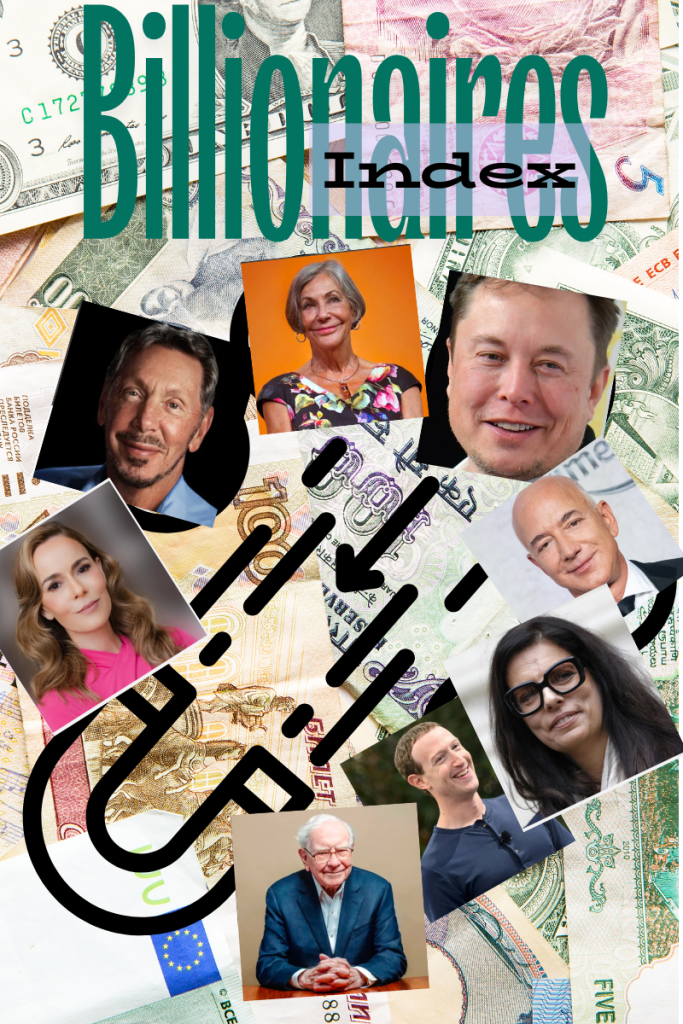
The Billionaires Index: A Window into Wealth, Power, and Influence
The Billionaires Index has become a fascinating tool, not just for understanding wealth but also for seeing how wealth is distributed, grown, and sometimes lost across the world’s most affluent individuals. By highlighting top billionaires across sectors, industries, and regions, it offers insight into the financial might that shapes global business and society. Let’s delve into what the Billionaires Index entails, its purpose, the metrics used, and some of the key takeaways we can gain from this information.

Purpose of the Billionaires Index
At its core, the Billionaires Index aims to:
1. Track Financial Trends: By monitoring the shifts in the wealth of high-profile individuals, analysts and readers can spot trends in specific industries, such as tech, retail, or finance, and understand how market dynamics are impacting them.
2. Gauge Economic Health: The index serves as an economic barometer. When billionaires in certain sectors see rapid wealth accumulation, it may indicate growth in those areas, while downturns can signal economic challenges or market shifts.
3. Offer Transparency in Wealth Distribution: These indexes give a glimpse into the concentration of wealth globally, allowing for discussions on wealth inequality, taxation policies, and societal impact.
4. Highlight Financial Mobility and Innovation: Many of the individuals on the Billionaires Index are self-made, often from sectors like technology, which continue to drive upward mobility for entrepreneurs.
How Wealth is Calculated
Calculating a billionaire’s net worth is complex, as it typically involves both public assets (e.g., stocks in public companies) and private holdings (e.g., private companies, real estate, art). Here are the main methods used:
• Stock Market Valuation: For those with public holdings, their wealth is tied to the stock market. Companies like Tesla, Amazon, or Meta experience frequent fluctuations in stock prices, which directly affect the net worth of their founders.
• Private Equity Valuations: For private companies, estimates are based on investment rounds or estimated market values. This is commonly seen with billionaires in real estate, private tech, and other less liquid sectors.
• Real Estate, Art, and Collectibles: Some billionaires have extensive assets outside of traditional investments. These include real estate, yachts, art, and other valuable collectibles, which are more challenging to appraise accurately.
Noteworthy Trends and Insights from the Billionaires Index
1. Technology Dominance: Over the last two decades, tech entrepreneurs have dominated the Billionaires Index. With the digital transformation of the global economy, figures like Elon Musk, Jeff Bezos, and Mark Zuckerberg have maintained top spots, illustrating how technology continues to drive both economic growth and personal fortunes.
2. Shifts Due to Market Volatility: The Index reflects the sensitivity of wealth to market fluctuations. For instance, tech billionaires’ net worth has seen huge rises during tech booms, only to drop sharply when stock markets fall, demonstrating how volatile wealth can be for those heavily invested in a single sector.
3. Rise of Asian Wealth: The Billionaires Index has shown a significant increase in billionaires from Asia, particularly China and India. These nations’ economic growth and urbanization have allowed entrepreneurs in e-commerce, real estate, and finance to build fortunes that rival or exceed those in the West.
4. The Impact of Philanthropy: Many billionaires are active in philanthropy, and their pledges (such as the Giving Pledge led by Warren Buffett and Bill Gates) sometimes impact their rank on the Index. While philanthropy reduces personal net worth, it highlights the broader impact billionaires can have on society beyond financial markets.
5. Female Representation and Diversity: While the majority of billionaires are men, there has been a growing representation of women in the Index. Often, these women have earned wealth as CEOs, founders, or through inheriting and expanding family businesses. The Index also reflects increasing diversity in billionaire demographics, albeit slowly.
Ethical Debates Surrounding the Billionaires Index
The visibility of billionaire wealth stirs debates around ethics, especially in times of economic disparity. Some common points include:
• Wealth Inequality and Society: The Index spotlights a massive wealth concentration within a small percentage of the population, raising questions about income inequality, taxation, and whether the wealthiest should contribute more to societal welfare.
• Philanthropy vs. Fair Wages: Some argue that instead of philanthropy, billionaires could make a more significant impact by ensuring fair wages, labor practices, and environmentally sustainable business models.
• Political Influence and Power: The Index reveals the financial capacity of individuals who can wield enormous influence over politics, media, and global economies, sparking debates over their role in democracy and policymaking. We witnessed this impact in the just concluded presidential election.
How the Billionaires Index Impacts Society
1. Inspiring Aspiring Entrepreneurs: The Index often highlights individuals who built fortunes from the ground up, showing that innovation, risk-taking, and vision can lead to financial success. This serves as a motivational force for budding entrepreneurs.
2. Investment and Economic Indicators: Since billionaires often invest heavily, following their investments can provide clues to emerging sectors, industries, or regions poised for growth. The Index can thus be a reference for investors, economists, and policymakers.
3. Focus on Sustainable Wealth Practices: With greater visibility, many billionaires feel societal pressure to embrace sustainable practices, support green technologies, and reduce their carbon footprints. This push towards responsible business practices reflects society’s growing environmental consciousness.
Conclusion
The Billionaires Index offers a fascinating, albeit incomplete, view of the concentration of wealth, influence, and economic trends shaping today’s world. It reminds us of the potential within specific industries, the volatility of market-driven wealth, and the societal implications of massive financial disparities.
As the global economy continues to evolve, the Billionaires Index/Watchlist will remain an essential tool for understanding wealth in its modern context—whether as a source of inspiration, a call for societal responsibility, or a reflection of the ever-shifting landscape of wealth and power.
Now that you know, I hope you’ll take time to watch this Index and use it as a guide for your own personal financial purposes. Looking forward to seeing your name on this Index in the nearest future.
 Think-Talk
Pingback: Billionaires in America - Think-Talk