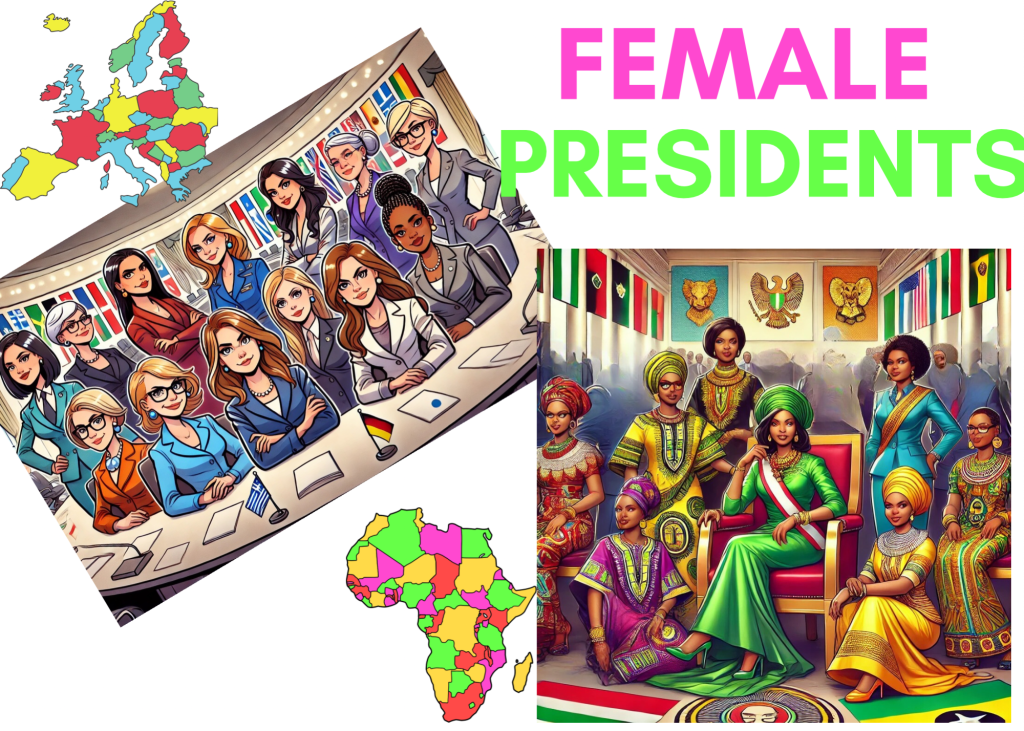
Of the 195 countries in the world, at least a third (60+) have had female presidents, with 13 currently in office. Of those numbers, the continent of Africa has had ten (10) female presidents, including both elected and acting leaders. And there are currently two (2) in office, namely, Samia Suluhu Hassan of Tanzania, who has been serving since March 2021, and Netumbo Nandi-Ndaitwah, who was recently elected as Namibia’s first female president.
“I alone cannot change the world, but I can cast a stone across the water to create many ripples.”
—Mother Teresa
These African female leaders, together with their global counterparts like Vigdís Finnbogadóttir of Iceland, the world’s first democratically elected female president in 1980, to Tsai Ing-wen of Taiwan, Giorgia Meloni of Italy and Claudia Sheinbaum of neighboring Mexico today, demonstrates that women can hold the highest office with competence and grace.
Yet, our dear nation, the United States of America, despite being a global leader in democracy and innovation, has yet to elect a female president. Just look at the presidential election outcomes of Hilary Clinton (eight years ago) and recently Kamala Harris. Ironically, both lost to the same man, Donald Trump.
Why Hasn’t the U.S. Elected a Female President?
The glass ceilings are gradually being shattered in several industries of the globe. But why this resistance to the highest office in America? Several factors contribute to America’s slow progress. It includes:
1. Cultural and Historical Context:
The U.S. political landscape has historically been male-dominated. Despite progress in gender equality, cultural norms often subconsciously associate leadership with masculinity, making it harder for female candidates to gain widespread support.
2. Electoral Barriers:
It appears that women running for president face greater scrutiny compared to male candidates. The double standards can detract from their policies and achievements, undermining their campaigns.
3. Political Polarization:
The deeply divided nature of U.S. politics complicates the rise of a female president. A viable candidate must not only overcome gender biases but also navigate the highly polarized partisan landscape.
4. Lack of Precedent:
A lack of precedent shouldn’t be an issue though the absence of a female president perpetuates doubts about electability. Although Hillary Clinton came close in 2016, her loss to Donald Trump highlighted the challenges female candidates face, even with extensive experience and public visibility. Kamala Harris, on the other hand, was portrayed as a “puppet” to be molded and at the whims of her party and caucus leaders.
What Will It Take for America to Elect a Female President
While the journey may seem arduous, several key factors could pave the way for America to elect its first female president:
1. A Transformative Candidate:
The right woman must possess not only political acumen and leadership qualities but must also possess the ability to inspire and unite diverse demographics, as well as, be stern and verse with both national and global issues. She must transcend traditional gender expectations, connecting with voters on issues that matter most to them to be able to intellectually hone her political views without fear or compromise.
2. Supportive Political Infrastructure:
Political parties play a crucial role in championing female candidates. They must provide robust support, funding, and strategic guidance to ensure their nominee is positioned to succeed.
3. Societal Mindset Shift:
Greater representation of women in leadership roles across industries helps normalize female leadership. The growing visibility of women in Congress, state governorships, and corporate leadership may eventually translate to the presidency.
4. Changing Electoral Dynamics:
As younger, more progressive voters continue to grow in influence, they may prioritize inclusivity and diversity in leadership, increasing the likelihood of electing a female president.
5. Catalysts for Change:
Significant national or global events often act as turning points in leadership preferences. A crisis that highlights the need for empathetic and inclusive leadership could shift public sentiment toward electing a female president.
Global Lessons for America
Other nations have proven that a female leader is not only possible but can be highly effective. For instance, Jacinda Ardern of New Zealand garnered international praise for her empathetic leadership during crises, demonstrating how women can lead with strength and compassion. America’s eventual female president will likely benefit from these global examples, showing voters that women are equally, if not more, capable of navigating complex challenges.
Can a Woman of the caliber of Margaret Thatcher rule America?
She demonstrated that a woman could lead with decisiveness, intellectual rigor, and an unwavering vision, even in the face of intense opposition.
Margaret Thatcher’s legacy as the United Kingdom’s first female prime minister is a powerful example of a woman breaking through barriers and reshaping perceptions of female leadership. Her tenure demonstrated that a woman could lead with decisiveness, intellectual rigor, and an unwavering vision, even in the face of intense opposition. For the United States, a female president of similar caliber could indeed be what it takes to break through entrenched societal and political resistance.
Why Thatcher’s Model Could Work in America
1. Strength and Conviction
Thatcher’s “Iron Lady” persona highlighted her determination and ability to make tough, sometimes unpopular decisions. Similarly, an American female leader who exudes strength while being steadfast in her principles could challenge stereotypes and prove her capability to lead the nation.
2. Policy Over Personality
Thatcher’s success was rooted in her policies and vision rather than her personal charm. She stood firm on economic reforms and national sovereignty, even when they were polarizing. An American woman with a clear, transformative policy agenda that resonates with voters, rather than relying solely on likability, could capture the nation’s trust.
3. Resilience in the Face of Criticism
Thatcher endured relentless criticism, often gendered in nature, but she never allowed it to derail her mission. A U.S. female presidential candidate with similar resilience and thick skin would need to withstand the amplified scrutiny and media biases that women often face.
4. A Clear Vision for Change
Thatcher’s leadership style was characterized by her clarity of purpose; whether it was reforming the economy or asserting Britain’s global standing. An American woman with a compelling vision for tackling key issues like healthcare, economic inequality, and national security could gain widespread appeal.
What Would a “Thatcher-like” Female President Bring to America?
If a woman with Thatcher’s characteristics rose to power in the United States, she could bring transformative leadership in several areas:
Economic Reform: Similar to Thatcher’s revitalization of Britain’s economy, an American leader could prioritize job creation, innovation, and fiscal discipline.
National Unity: A decisive leader could help bridge partisan divides by focusing on common national goals.
Global Leadership: Thatcher’s strong international presence demonstrated how a woman could command respect on the world stage, something the U.S. could greatly benefit from in an increasingly multipolar world.
Final Thoughts
America’s first female president doesn’t necessarily need to emulate Thatcher in every way, but she could draw lessons from Thatcher’s resilience, clarity of purpose, and ability to lead with authority. Thatcher’s model demonstrates that female leaders don’t have to conform to societal expectations of softness to succeed; they can lead decisively, unapologetically, and with an unwavering focus on progress.
A Matter of When, Not If
The U.S. is undoubtedly on the path to electing a female president. Women are already shattering glass ceilings in politics, with figures like Kamala Harris, as the first U.S. female vice president, and numerous women in Congress laying the groundwork. The question remains: how soon will America embrace this historic change?
It will take a combination of societal evolution, political strategy, and an extraordinary candidate to make history. Yet, when it happens, it will be a milestone not only for the United States but for the continued advancement of women’s leadership globally. Hopefully sooner than later.
 Think-Talk