Sleep is an essential part of life, vital for physical health, mental clarity, and emotional well-being. But why is it that some people thrive on as little as 2–4 hours of sleep per night, while others need the full 8–10 hours to function? The answer lies in a complex interplay of genetics, lifestyle, and biological factors.
The Purpose of Sleep
Before diving into why sleep needs vary, let’s understand why we sleep at all:
- Restoration: Sleep repairs and rejuvenates our bodies. Tissues are repaired, muscle growth occurs, and the immune system gets a boost.
- Cognitive Function: Sleep consolidates memories, enhances learning, and clears waste products from the brain.
- Hormonal Regulation: Sleep regulates hormones such as cortisol (stress hormone) and insulin (blood sugar regulation).
- Emotional Well-being: Adequate sleep helps maintain emotional stability by regulating the brain’s response to stress.
Why Some People Need More Sleep
Certain factors influence why some individuals require 8–10 hours of sleep to function optimally:
- Genetics: Your genes play a significant role in determining your natural sleep duration. Some people inherit genes that make them long sleepers.
- Age: Young children and teenagers typically need more sleep for growth and development. As we age, sleep needs tend to decrease.
- Lifestyle: Physically demanding jobs, stress, and active lifestyles may increase the need for sleep.
- Health Conditions: Chronic illnesses, mental health disorders, or recovery from injury can require additional sleep.
- Sleep Quality: If your sleep is fragmented or of poor quality, you may need more hours to compensate.
Why Some People Thrive on Less Sleep
While most adults need 7–9 hours of sleep, there are outliers who perform well on much less:
- Genetic Mutations: Research has identified specific genetic mutations, such as the DEC2 gene variant (see below), in people who naturally require less sleep. These “short sleepers” can thrive on 4–6 hours per night without adverse effects.
- Sleep Efficiency: Some individuals enter deep, restorative stages of sleep more quickly, making their shorter sleep periods more effective.
- Adaptation: Habitual short sleepers may have adapted their bodies and minds to function on minimal rest, although this doesn’t work for everyone.
- Circadian Rhythms: Biological clocks that regulate sleep-wake cycles differ between individuals, influencing how much sleep they need and when they feel most alert.
What is the DEC2 Gene Variant?
The DEC2 gene variant (sometimes referred to as BHLHE41 or basic helix-loop-helix family member e41) is a genetic mutation that has been linked to the ability to function well on less sleep than the average person.
What Does DEC2 Do?
DEC2 regulates circadian rhythms, which are the internal biological clocks that determine our sleep-wake cycles. The gene influences the production of certain proteins that control the timing of sleep and wakefulness.
The DEC2 Mutation and Short Sleepers
Scientists discovered that individuals with a rare mutation in the DEC2 gene (identified as P384R mutation) naturally require less sleep.
People with this mutation typically thrive on 4–6 hours of sleep per night without experiencing negative cognitive or physical effects.
The mutation seems to make the sleep process more efficient, allowing the brain and body to achieve restorative effects in a shorter period of time.
Who Has It?
This mutation is extremely rare. Only a small percentage of the population is naturally “short sleepers” due to the DEC2 mutation. Most people who attempt to reduce their sleep time without such a genetic predisposition experience significant impairments in cognitive function, mood, and health.
Potential Benefits of the DEC2 Variant
- Increased Wakeful Hours: Short sleepers can dedicate more time to productivity, hobbies, or social activities.
- Resilience to Sleep Deprivation: They appear less affected by the negative consequences of limited sleep compared to others.
- Stable Cognitive and Physical Health: Despite reduced sleep, they maintain sharp mental focus and robust energy levels.
Takeaway
While the DEC2 mutation might sound appealing, it’s important to remember that it’s incredibly rare. For most of us, adequate sleep (7–9 hours) is essential for optimal health and performance.
How to Know If You’re Getting Enough Sleep
The amount of sleep you need isn’t just about hours; it’s about how you feel during the day. Ask yourself:
- Do you wake up feeling refreshed and alert?
- Can you maintain focus and energy throughout the day without relying heavily on caffeine?
- Are your mood and emotions stable?
If the answer to these questions is “yes,” you’re likely getting the sleep your body needs, whether it’s 6 or 9 hours.
The Dangers of Too Little or Too Much Sleep
Both insufficient and excessive sleep can have adverse effects:
- Sleep Deprivation: Chronic sleep loss leads to fatigue, weakened immunity, poor concentration, and increased risk of heart disease and diabetes.
- Oversleeping: Sleeping too much is linked to conditions like depression, obesity, and cardiovascular problems.
Tips for Optimizing Sleep
Regardless of how many hours you need, ensuring quality sleep is crucial:
- Stick to a Schedule: Go to bed and wake up at the same time every day.
- Create a Sleep-Friendly Environment: Most people keep their bedroom dark, quiet, and cool. There was a time, however, that I had to have the bedside light on to sleep. But, now I’m comfortable sleeping either way – light on or off. Do whatever works best for you.
- Limit Stimulants: Avoid caffeine, nicotine, and screen time close to bedtime.
- Exercise Regularly: Physical activity promotes better sleep, but avoid intense workouts close to bedtime. I remember once working out at night and was up all night unable to sleep. I probably confused my body clock that night. I never did that again. I could however walk a mile or two after dinner and sleep like a baby all night.
- Address Sleep Disorders: If you suspect a condition like insomnia or sleep apnea, consult a healthcare provider.
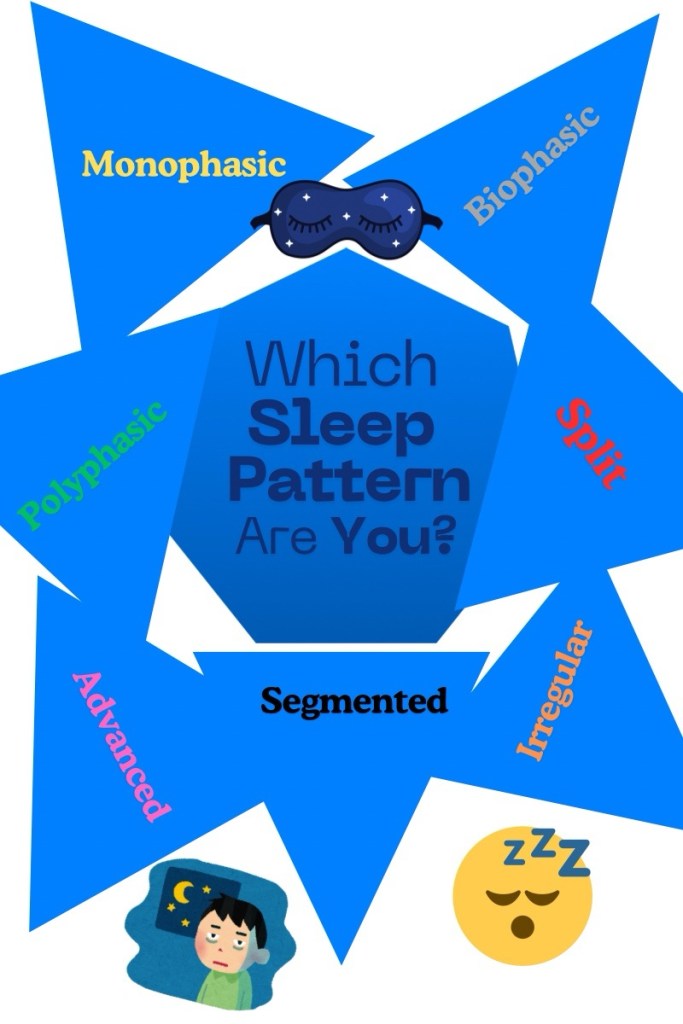
Sleep Patterns
Our bodies, in addition to genetics, get used to whatever we feed it. As such most of our sleep patterns or sleep schedules are formed and often influenced by lifestyle, work, or biology. These patterns are typically based on the body’s circadian rhythm, which regulates the sleep-wake cycle over a 24-hour period. Here’s a breakdown of the most common sleep patterns:
- Monophasic Sleep: A single block of 6–9 hours of sleep per 24 hours, typically at night. Most adults in modern societies follow this pattern. It aligns with the natural circadian rhythm, and promotes deep and restorative sleep. However, demanding schedules or disruptions (e.g., shift work) can make maintaining this pattern difficult.
- Biphasic Sleep is a two sleep periods within 24 hours, often consisting of a long nighttime sleep and a shorter nap during the day. The shorter nap is called a Siesta Pattern. It is common in Mediterranean and European cultures, where people nap in the afternoon and sleep at night. This pattern can increase alertness and productivity but may be impractical in societies that don’t accommodate daytime napping.
- Polyphasic Sleep is the pattern of sleeping multiple times throughout a 24-hour period, often in shorter bursts. Some experimenters, students, or extreme productivity enthusiasts follow this sleep pattern, and could be:
- Everyman: 3–4 short naps (20–30 minutes) and a core sleep of 3–4 hours.
- Uberman: 6–8 short naps (20–30 minutes) spread evenly across the day, with no core sleep, or
- Dymaxion: 4 naps of 30 minutes each, totaling 2 hours of sleep per day.
Polyphasic sleep patterns maximizes waking hours, but can be extremely difficult to sustain, can lead to sleep deprivation and health risks.
- Segmented Sleep (Historical Sleep Pattern): This is a variation of biphasic sleep where people sleep in two main blocks at night, with a wakeful period in between. In pre-industrial times, this was a common sleep pattern before artificial lighting. People would wake between “first sleep” and “second sleep” to pray, read, or socialize. It may feel more natural for some individuals, but modern work schedules rarely accommodate this pattern.
- Irregular Sleep. This is a no-consistent-sleep schedule; sleep occurs at varying times and durations. Shift workers, new moms/parents, caregivers, people with insomnia, or individuals with irregular lifestyles. It is flexible for unpredictable schedules, but can disrupt the circadian rhythm, leading to fatigue, poor concentration, and health issues.
- Split Sleep (Shift Work Pattern): Sleep split into two or more periods, often due to work schedules. Night shift workers (especially medical professionals) may sleep for a few hours after work and nap later in the day. Parents of young children, also, often adopt this pattern due to caregiving demands. Accommodates work or caregiving needs, but misaligns with the natural circadian rhythm, leading to sleep debt and health problems.
- Advanced or Delayed Sleep Patterns: People with genetic predispositions, teenagers (often DSPD), or those with disrupted circadian rhythms.
• Advanced Sleep Phase Disorder (ASPD): Individuals fall asleep and wake up much earlier than typical (e.g., sleeping 6 p.m.–2 a.m.).
• Delayed Sleep Phase Disorder (DSPD): Individuals naturally sleep and wake later than usual (e.g., sleeping 2 a.m.–10 a.m.).
These patterns often conflict with societal norms.
Which Sleep Pattern Is Best?
The best sleep pattern depends on individual needs, lifestyle, and biology. While societal norms may suggest 7–9 hours is the “gold standard,” in many countries, other patterns like biphasic or polyphasic may work better for those with flexible schedules or cultural differences. Some people thrive on less sleep, while others require more. Listen to your body, prioritize quality sleep, and make adjustments as needed.
Sleep isn’t just a necessity—it’s a cornerstone of health and well-being. The key is to ensure you get enough quality sleep, regardless of the pattern.
Your body knows how much sleep it needs. Give it to your body and it will thank you later.
 Think-Talk