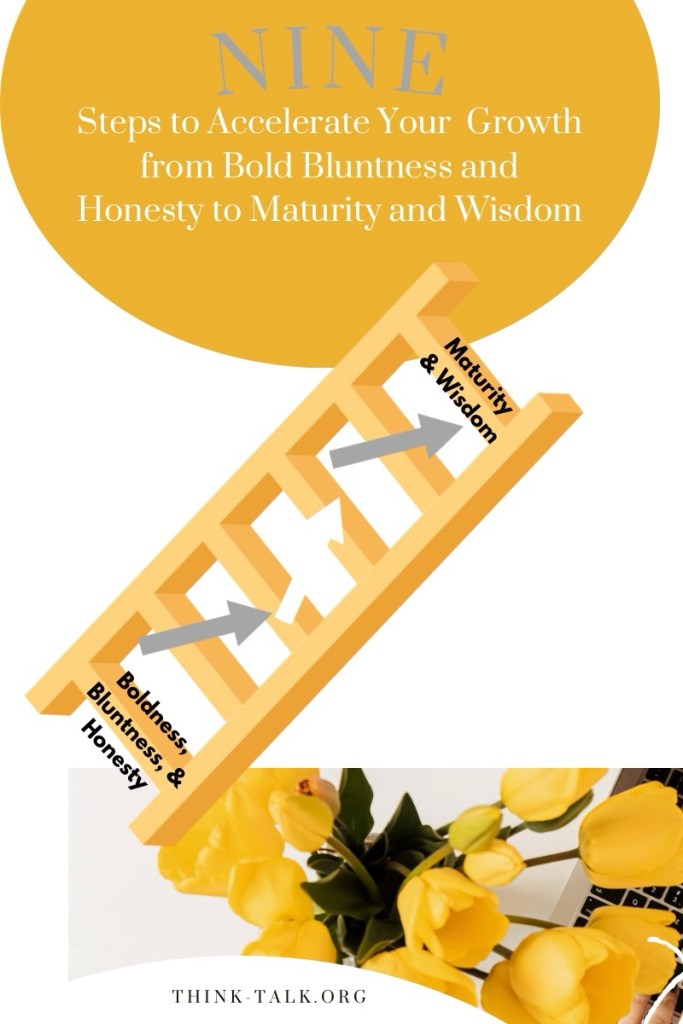
We all know someone who is so blunt that they alienate people away from, with their bluntness and truthfulness, than they draw towards themselves. I used to be and once fell at the bottom rung of that ladder. But, thank God, that I am no longer there. I moved up the ladder. I once heard the Spirit of God tell me:
“What you’re saying is right and true, but I need you to say those things in love.”
I asked God then to teach me and grant me the wisdom to know when to speak and when to be quiet. He did and is still doing. I don’t always get it right, but praise God that I am more intentional about it than I used to be.
God gave the gifts
Being bold, blunt, and truthful is often celebrated as a mark of authenticity, courage, and integrity. It’s a gift from God and people value honesty because it fosters trust and clarity. However, the way honesty is delivered can shape how it is received and whether it serves its intended purpose.
Some argue that bluntness, while truthful, may border on immaturity if it lacks consideration for context, timing, and the feelings of others. Conversely, tact and diplomacy can make honesty more palatable and impactful. But at the heart of the matter lies wisdom — knowing when to speak, how to speak, and when silence is more powerful.
Bold honesty often appeals to those who prioritize transparency over harmony.
The Case for Boldness and Blunt Honesty
Bold honesty often appeals to those who prioritize transparency over harmony. Consider the example of a friend who directly points out your flaws without sugarcoating:
“You always procrastinate, and that’s why you’re failing at your goals.”
While the message may be truthful, its delivery can feel harsh and demotivating. This approach risks alienating the recipient, who might shut down emotionally rather than embracing the critique. However, there are instances where bluntness is necessary — such as intervening in dangerous situations:
“You’re drinking too much, and it’s ruining your life. You need help.”
In such moments, beating around the bush might delay the urgency of the issue. Here, boldness becomes a lifeline, not a weapon.
The Case for Tact and Diplomacy
Tact allows the truth to be shared in a way that respects the recipient’s emotions and dignity. For instance, instead of saying, “You’re always late and unreliable,” a tactful approach might be:
“I’ve noticed time management has been challenging for you lately. Is there something I can help with to make things easier?”
This phrasing still communicates the issue but in a way that invites collaboration rather than defensiveness. Diplomacy fosters understanding and encourages positive change without creating unnecessary conflict.
However, excessive tact can dilute honesty. For example, telling a friend, “You’re doing fine,” when they’re clearly underperforming at work, may spare their feelings in the short term but ultimately does them a disservice.
Where Wisdom Comes In
Wisdom bridges the gap between honesty and tact. It involves discerning what to say, when to say it, and how to frame it. Wisdom recognizes that:
- Context matters: What works for one situation may not work for another.
- Timing is crucial: A truth delivered at the wrong time can do more harm than good.
- The relationship shapes delivery: How you speak to a close friend may differ from how you address a colleague.
Take the biblical story of Nathan confronting King David after his sin with Bathsheba (2 Samuel 12). Nathan used a parable to gently yet firmly expose David’s wrongdoing. His tactful approach allowed David to see his error, repent, and grow.
Applying Wisdom in Everyday Life
In the workplace:
Instead of bluntly saying, “Your idea won’t work,” say, “I see potential in your idea, but I’m concerned about these challenges. Let’s brainstorm solutions together.”
In relationships:
When addressing a partner’s habit that bothers you, avoid saying, “You never listen.” Instead, try, “I feel unheard sometimes. Can we work on better communication?”
The Inspiring Takeaway
Honesty is a virtue, but wisdom elevates it.
“Wisdom is the principal thing; therefore get wisdom: And with all thy getting get understanding.”
Proverbs 4:7 KJV
Boldness without consideration can hurt more than heal, while tact without truth can mislead. The challenge is to strike a balance where your words reflect both your integrity and your care for others.
When you blend honesty, tact, and wisdom, you don’t just speak the truth — you help others receive it in a way that empowers growth and fosters connection.
Maturity and wisdom are two destinations we all aspire to reach, yet the journey to them varies for each person.
How to Accelerate Your Journey to Maturity and Wisdom
Maturity and wisdom are two destinations we all aspire to reach, yet the journey to them varies for each person. While life experiences play a significant role, there are ways to “shorten” the time it takes to arrive at these invaluable qualities. Maturity is often the result of emotional growth, while wisdom stems from the ability to make sound judgments based on insight, knowledge, and understanding. Both can be cultivated intentionally.
Here are 9 actionable steps to fast-track your development in these areas:
1. Seek Self-Awareness and Practice Reflection
Maturity begins with knowing yourself — your strengths, weaknesses, triggers, and biases. Wisdom grows when you can step back and analyze situations with clarity.
Spend time reflecting daily. Journaling can help you process emotions, decisions, and behaviors. Ask yourself: What went well today? What could I have done better?
Regular self-reflection helps you identify patterns and refine your responses to situations, accelerating emotional and mental growth.
2. Learn from Others’ Experiences
You don’t have to make every mistake yourself to grow. Surround yourself with people who embody the maturity and wisdom you desire and learn from their stories.
Read books, listen to podcasts, and engage with mentors who share lessons from their successes and failures.
Gaining insight from others saves you from repeating avoidable mistakes and broadens your perspective.
3. Embrace Accountability
Maturity thrives when you take ownership of your actions. Wisdom deepens when you are open to correction.
Seek out friends, mentors, or partners who can lovingly hold you accountable. Be willing to accept feedback without defensiveness.
Accountability helps you recognize blind spots and accelerates personal growth through constructive feedback.
4. Cultivate Emotional Intelligence
Emotional intelligence (EQ) is at the heart of maturity and wisdom. It includes understanding your emotions, empathizing with others, and managing relationships effectively.
Practice active listening, pause before reacting in emotional situations, and strive to understand others’ perspectives.
Developing EQ helps you navigate conflicts, make thoughtful decisions, and build stronger connections—all hallmarks of maturity and wisdom.
5. Embrace Challenges and Hardships
Life’s difficulties often provide the best lessons, but the key is to approach them with the right mindset.
Instead of avoiding discomfort, lean into challenges. Ask, What is this situation teaching me? How can I grow through this?
Viewing hardships as opportunities for growth accelerates your ability to face future challenges with grace and insight.
6. Stay Humble and Curious
Wisdom requires the humility to admit you don’t know everything and the curiosity to keep learning.
Adopt a beginner’s mindset. Be open to new ideas, ask questions, and be willing to unlearn outdated beliefs.
Humility and curiosity allow you to adapt, grow, and gain new perspectives faster than those who cling to rigid thinking.
7. Pause Before You React
Practice the “three-second rule” before speaking or acting
Maturity often shows in your ability to respond thoughtfully rather than react impulsively. Wisdom comes from understanding the consequences of your words and actions.
Practice the “three-second rule.” Before speaking or acting, pause, breathe, and consider whether your response is helpful, kind, and necessary.
This habit minimizes regret and helps you consistently make decisions rooted in maturity and wisdom.
8. Engage in Prayer or Meditation
Connecting with God or engaging with the Holy Spirit fosters wisdom and inner peace. Ask God for the gift of wisdom according to James 1:5:
“If any of you lacks wisdom, you should ask God, who gives generously to all without finding fault, and it will be given to you.”
James 1:5 NIV
Pray for guidance or meditate to seek clarity and calmness in challenging situations.
Regular spiritual or mindfulness practices provide clarity, patience, and discernment in decision-making.
The paradox of wisdom is that the wiser you become, the more you realize how much there is still to learn.
9. Accept That You’re Always a Work in Progress
The paradox of wisdom is that the wiser you become, the more you realize how much there is still to learn. Accepting this truth fosters humility and lifelong growth.
Celebrate progress, not perfection. Reflect on how far you’ve come and remain open to further growth.
This mindset keeps you from becoming stagnant, allowing continuous improvement.
Inspiring Reminder
Maturity and wisdom aren’t destinations you reach and stop —rather, they are ongoing journeys. By intentionally reflecting, learning, and growing, you can significantly shorten the time it takes to embody these qualities.
Ultimately, maturity and wisdom are less about age and more about choice. Each step you take today brings you closer to a life filled with grace, understanding, and purpose. Choose to grow, and you’ll inspire others to do the same.
Is Wisdom and Maturity a DNA-, God-, or Individual Thing?
Wisdom and maturity are qualities we admire in others and strive to cultivate within ourselves. But where do they come from? Are they prewired in our DNA, gifted by God, or developed through personal effort? The answer lies in a combination of all three. These elements intertwine to shape a person’s capacity for emotional growth and sound judgment. Let’s explore how each plays a role:
DNA: The Role of Nature
Some aspects of wisdom and maturity are influenced by genetics. For example:
• Temperament: Our natural disposition — whether we’re more patient, impulsive, or empathetic — can be partially inherited. A calm temperament may lend itself to thoughtful decision-making, while a more impulsive one might require intentional effort to achieve maturity.
• Cognitive Abilities: Genetics also play a role in memory, analytical thinking, and problem-solving, all of which contribute to wisdom.
However, DNA is just the starting point. While genetics may set the foundation, they don’t determine how much wisdom or maturity a person achieves. With effort and intentionality, even someone with challenging traits (e.g., quick temper or impulsivity) can grow.
God: The Divine Source
For many, wisdom and maturity are seen as gifts from God, given through grace and guidance. This perspective is rooted in spiritual principles:
• Wisdom as a Gift: Scripture teaches that wisdom comes from God. This emphasizes that divine wisdom is available to those who seek it with humility.
• Maturity Through Faith: Spiritual maturity often grows through a relationship with God, as trials, obedience, and reliance on His guidance refine character (e.g., Romans 5:3-5).
God’s role in wisdom and maturity highlights the importance of seeking divine help and aligning decisions with higher principles. However, receiving wisdom from God doesn’t mean one is passive — it requires cooperation and active application.
Individual Effort: The Power of Choice
While DNA and God lay the groundwork, individual effort is the bridge that connects potential to reality. Maturity and wisdom are cultivated through:
• Life Experiences: Learning from successes, failures, and challenges is essential. For example, a person who reflects on past mistakes is more likely to make wiser choices in the future.
• Intentional Growth: Reading, seeking mentorship, and practicing self-discipline are ways individuals can actively pursue wisdom and maturity.
• Personal Responsibility: Ultimately, no one else can force you to grow. You must take ownership of your decisions, actions, and attitudes.
Individual effort shows that while some aspects of wisdom and maturity may come naturally or through divine influence, their full realization requires personal commitment.
The Dynamic Combination
The interplay between DNA, God, and individual effort is what shapes wisdom and maturity:
1. DNA provides the raw material — your natural traits and tendencies.
2. God offers divine guidance, grace, and wisdom to navigate life’s complexities.
3. Your Choices determine how you use what you’re given to grow and evolve.
For example, consider someone with a short temper (DNA). They may pray for patience and wisdom (God), but they must also practice self-control and seek strategies to manage their emotions (individual effort). Together, these elements lead to transformation.
Practical Takeaway
While genetics and divine intervention play a role, wisdom and maturity are not fixed or predetermined. Anyone can grow in these areas by:
- Seeking God’s guidance by praying for wisdom and discernment.
- Embracing self-awareness by identifying areas where growth is needed.
- Taking action to read, reflect, and apply lessons from experiences.
Ultimately, the beauty of wisdom and maturity lies in their dynamic nature. They are not limited to what you inherit or even where you start, but are shaped by how you choose to grow and the grace you invite into your journey. With intention and faith, the heights you can reach are limitless.
 Think-Talk