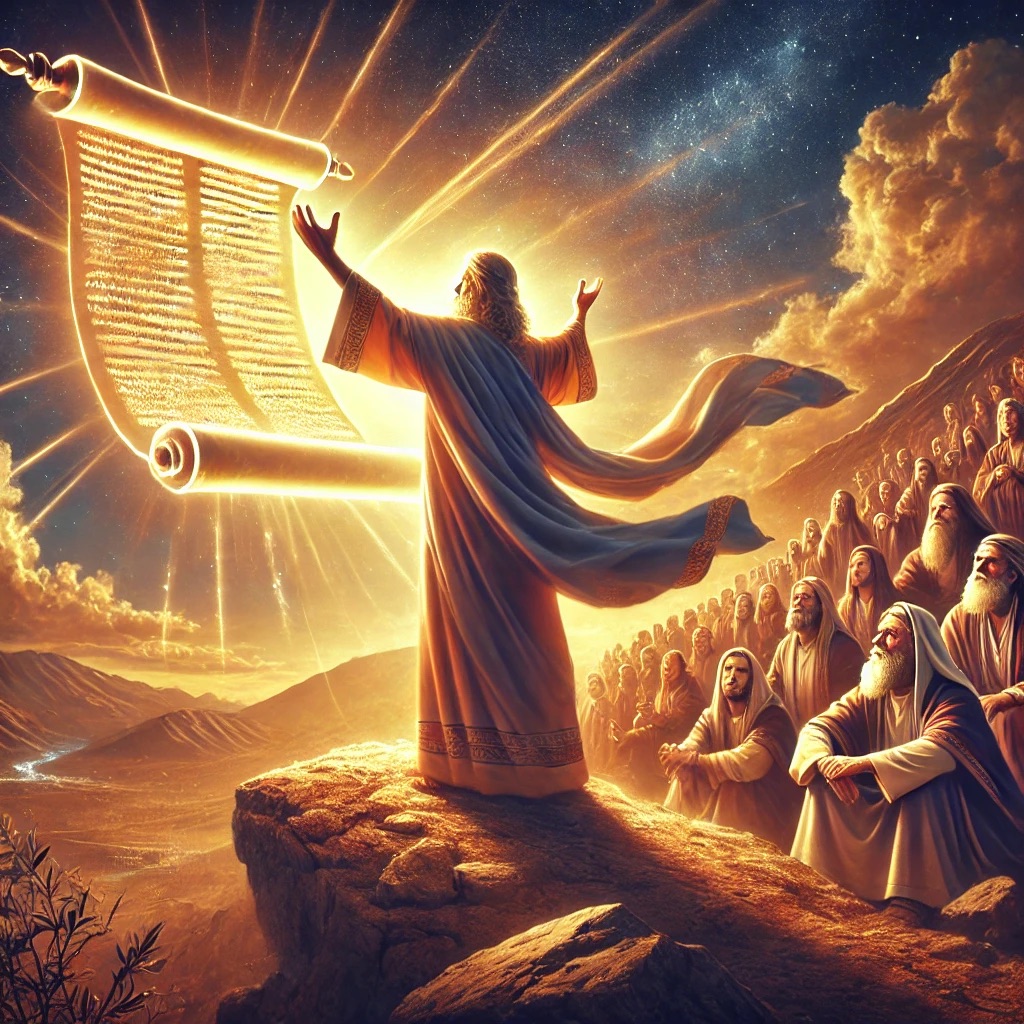
Do you know what a prophetic word is? Have you ever received one (or more) and do you know what to do with it?
“… the one who prophesies edifies the church.”
1 Corinthians 14:4 NIV
What, in the Lord, is a Prophetic Word?
A prophetic word refers to a message or revelation believed to be inspired by God, often delivered by a prophet or someone with the gift of prophecy. It typically conveys guidance, encouragement, correction, or future predictions, and is meant to speak into the lives of individuals, communities, or nations.
“…: I am thy fellowservant, and of thy brethren that have the testimony of Jesus: worship God: for the testimony of Jesus is the spirit of prophecy.”
Revelation 19:10 KJV
I don’t know if prophetic words exist in other religions. But, in the Christian context, a prophetic word is seen as a form of divine communication where God reveals His heart, will, plans, or warnings to His people. It may come in the form of a spoken word, vision, dream, or scripture-based insight that offers direction or insight into a particular situation or future event.
A prophetic word is generally understood as a message intended to build faith, inspire hope, or prepare people for what is to come. However, it is also important to note that discernment is often encouraged to evaluate prophetic words, ensuring they align with spiritual truths or teachings.
My First Time
I have received tons of prophetic words, albeit all similar. I was so elated about the word I received the first time but I didn’t know what to do with it. It took four years after for me to walk into another setting that talked about it.
I concluded that the Church (and the Prophets) just assume that everyone, in or attending the Church, knows what just happened to them, and what they are to do with, and after, receiving a prophetic word.
The frustrating thing was that the Church is quick to look at one like one must be doing something wrong (judge) for the word not to have manifested in one’s life; rather than help or show you. Nope; not always true for most.
Prophets and Their Prophetic Words
Prophets throughout history have served as messengers of God’s heart, delivering words that call us to a higher understanding and invite us to participate in His unfolding plan. Yet, many wonder: if prophetic words are truly from God, why do they not manifest immediately or in the expected manner? And is there something we must do to see these promises come to fruition?
Divine Timing Beyond Our Understanding
Scripture reminds us that God’s timing is not our timing. As Isaiah 55:8–9 teaches, “For my thoughts are not your thoughts, neither are your ways my ways… As the heavens are higher than the earth, so are my ways higher than your ways and my thoughts than your thoughts.” This truth encourages us to trust that every prophetic word has an appointed time – a moment when all conditions in God’s sovereign plan align perfectly. Just as 2 Peter 3:8 affirms, “with the Lord one day is as a thousand years, and a thousand years as one day,” what may seem like a delay from our perspective is actually part of a divine rhythm far beyond human measure.
The Role of Faith and Obedience
Many do not know that prophetic declarations are not mere forecasts to be passively awaited. The prophetic words are mostly conditional, inviting a response of faith, repentance, and obedience. In Romans 10:17 we read, “So then faith comes by hearing, and hearing by the word of God.” As we embrace the message and live in accordance with God’s instructions, we help create an environment where the prophetic promise can fully manifest. Our actions, prayers, and willingness to align with His will often act as the catalyst that moves the prophecy toward fulfillment.
In the space of giving a prophetic word, especially during a service or church event, the prophets or prophetic teams are more passionate to deliver the word, because of time sensitivity, than explain, leaving the receiver hanging,
Preparation: A Partner in Prophetic Fulfillment
It is not uncommon for those who receive prophetic words to feel an urgency—perhaps even frustration—when outcome seem delayed. Yet, such delays can be a call to prepare our hearts and minds. Just as a farmer must till the soil and sow at the right moment, so too are we invited to nurture our relationship with God. Proverbs 3:5–6 counsels, “Trust in the Lord with all your heart and lean not on your own understanding; in all your ways submit to him, and he will make your paths straight.” In this submission, we become active participants in God’s plan, positioning ourselves to receive His blessings when the time is right. But, how would the receiver know if they are not told?
Embracing the Mystery with Hope
The mystery surrounding the fulfillment of prophetic words is not meant to leave us in despair but to deepen our faith and hope. The Scriptures repeatedly encourage us to keep our eyes on the eternal promises rather than the temporary delays. In Mark 11:24, Jesus assures us, “Therefore I tell you, whatever you ask in prayer, believe that you have received it, and it will be yours.” This invitation to believe, even when the manifestation seems distant, is a call to live in confident expectation of God’s faithfulness.
Consider a non-Christian receiving a prophetic word; how would s/he know what to do with it?
I have pondered this question repeatedly after my experiences. The question dives into traditional Christianity, where prophecy is typically given to those with the Holy Spirit. But God could still (and does desire to) speak to all; non-Christians, atheists, antagonists, and all — maybe even as a call to conversion. The prophetic message could reveal truth to all, though non-Christians may struggle to discern God’s voice without alignment to Scripture.
“But if an unbeliever or an inquirer comes in while everyone is prophesying, they are convicted of sin and are brought under judgment by all, as the secrets of their hearts are laid bare. So they will fall down and worship God, exclaiming, “God is really among you!””
1 Corinthians 14:24-25 NIV
The fact that a prophetic word was given to this category of people, hopefully stirs them to draw closer to the well.
“The wrath of God is being revealed from heaven against all the godlessness and wickedness of people, who suppress the truth by their wickedness, since what may be known about God is plain to them, because God has made it plain to them. For although they knew God, they neither glorified him as God nor gave thanks to him, but their thinking became futile and their foolish hearts were darkened.”
Romans 1:18-19, 21 NIV
If a non-Christian receives a prophetic word, they might ask themselves if it calls for repentance and seeking truth. Prophetic words often address core life issues, urging spiritual reflection. It’s important to examine the prophecy against Biblical teachings, seeking guidance from wise believers. They should also view the prophetic words as an invitation to draw closer to God, explore faith, study the Bible, and discern God’s truth.
It can however feel both intriguing and confusing. Prophetic words are ultimately messages from God designed to draw hearts closer to truth and transformation, regardless of one’s current faith background.
Here are some principles to consider:
- Recognizing God’s Universal Call
Scripture reveals that God’s revelation isn’t confined by human boundaries. In Acts 17:26, we learn that God “has made from one man every nation of mankind to live on all the face of the earth.” This suggests that His voice, through prophecy or nature, can reach anyone. A prophetic word, even when received by a non-Christian, may be God’s invitation to explore a deeper truth about Himself and His plan for humanity.
- Testing the Message Against Scripture
One of the Bible’s guiding principles is discernment. In 1 John 4:1, believers are urged, “Do not believe every spirit, but test the spirits to see whether they are from God.” This advice applies universally. Whether or not one has an established faith, any prophetic word should be measured against the teachings of Scripture. If a non-Christian is curious about a prophetic word, they might consider:
• Investigating the Bible: Does the word align with the broader message of hope, redemption, and love found in the Scriptures?
• Seek Wise Counsel: Talking with mature believers or a trusted spiritual mentor can help clarify if the message points toward a life-changing invitation from God.
- An Invitation to Explore Faith
Often, a prophetic word is not just a prediction — it’s a call to transformation and an invitation to explore the claims of Christianity more deeply. It can serve as a prompt to ask important questions about life’s purpose, morality, and the possibility of a relationship with God.
- Responding with an Open Heart
The decision to embrace or investigate a prophetic word is personal. It involves both an honest assessment of its content and a reflective look at one’s own life. Proverbs 3:5–6 advises, “Trust in the Lord with all your heart and lean not on your own understanding; in all your ways submit to him, and he will make your paths straight.” Even if someone hasn’t yet come to faith, an openness to seeking truth can lead to greater clarity. Engaging with the word — through prayer, study, and community dialogue—can help reveal whether it carries the transformative power it seems to promise.
Do (or must) all prophetic words come to pass?
Not all prophetic words are guaranteed to come to pass, although many are believed to be divinely inspired and true. There are a few important points to consider regarding the fulfillment of prophetic words:
- 1. Conditional vs. Unconditional Prophecies: Some prophetic words are conditional, meaning they depend on the actions or choices of individuals, communities, or nations. For example, a prophecy may state that a certain blessing will come if people repent or turn toward God. If those conditions are not met, the prophecy may not come to pass. In contrast, some prophecies are seen as unconditional, meaning they are inevitable and will happen regardless of human actions.
- Human Free Will: Prophetic words often interact with human free will. While a prophecy may provide insight into what could happen, people’s decisions and behaviors can influence whether or not that outcome materializes. For instance, a prophecy may indicate a positive future, but if the people involved do not respond according to God’s guidance, it might not come to pass as originally predicted.
- Testing Prophecy: In the Bible, believers are often encouraged to test prophetic words (1 Thessalonians 5:20-21). This means discerning whether the prophecy aligns with God’s character and scripture. If a prophecy does not come to pass, it may be considered false or misunderstood, but it can also be seen as a reminder to carefully weigh and understand prophetic messages.
- God’s Sovereignty: Ultimately, some believe that God’s purposes will prevail, and His will will be accomplished. However, the timing or exact nature of a prophecy may not always unfold as expected.
In short, while many prophetic words are believed to come to pass, especially those that are seen as God’s direct will, the fulfillment of others can depend on various factors, including human actions, the conditions set within the prophecy, and God’s greater plan.
Prophetic words are conditional
Many prophetic words are conditional. This means their fulfillment depends on certain actions, behaviors, or choices. For example:
- Repentance or Obedience: A prophetic word might predict a blessing or promise, but it may be conditional on repentance, faithfulness, or obedience to God. If the conditions aren’t met, the prophecy may not come to pass.
- God’s Mercy and Will: Sometimes, a prophecy could foretell judgment or a negative event, but God’s mercy or a change in behavior could alter the outcome. For instance, in the Bible, when the prophet Jonah delivered a word of judgment to the city of Nineveh, the people repented, and the prophecy of destruction was averted (Jonah 3:10).
So, while some prophecies are seen as unconditional and will certainly happen, many prophetic words are conditional and can be influenced by human response and choices.
It’s important to remember that these conditions can sometimes be subtle or spiritual, and understanding the full meaning of a prophecy often requires discernment.
Shouldn’t all prophetic words, if truly from God, come to pass? Could these actually be the prophets’ words?
That’s a great question, and it’s one that many people wrestle with when it comes to understanding prophecy. Let’s break it down:
- God’s Will and Human Agency:
While many believe that prophetic words come directly from God, the presence of human agency is crucial. In some cases, the prophet may deliver the word clearly and accurately, but whether that prophecy comes to pass can depend on human choices (as stated above with conditional prophecies).
If a prophecy truly reflects God’s will, it’s believed to be grounded in His sovereignty and wisdom. However, if people do not respond in the way God intends (such as repentance, faith, or obedience), the prophecy may not unfold as expected. In this way, God gives space for human response in the fulfillment of His plans.
- Testing the Prophet’s Words:
Prophecies from God should align with His character and will, and they should be tested (1 Thessalonians 5:20-21). The Bible even says that there are false prophets who speak from their own hearts and not from God (Jeremiah 23:16). So, not every prophecy that is spoken is necessarily from God, and it’s important to evaluate and discern its truth.
The accuracy of a prophetic word can be a key factor in discerning whether it is from God. If a prophet repeatedly speaks words that do not come to pass, they may be considered a false prophet (Deuteronomy 18:22). However, even well-intentioned prophets can misinterpret or misunderstand what God is saying, which is why discernment is so important.
- The Role of the Prophet:
Prophets are vessels through which God speaks, but they are still human and capable of error. Even prophets in Scripture sometimes faced situations where their prophecies didn’t come to pass due to people’s response or a shift in God’s direction (as with the example of Nineveh’s repentance in the Book of Jonah). So, while the prophet may believe they are delivering a message from God, there can be instances where human understanding, miscommunication, or spiritual factors influence how a prophecy is delivered or interpreted.
- Prophecy and Timing:
Some prophetic words do come to pass, but the timing may be different than expected. Sometimes the fulfillment of a prophecy happens far in the future or requires long-term unfolding. So, just because a prophecy doesn’t come to pass immediately doesn’t necessarily mean it wasn’t from God.
- God’s Sovereignty and Mercy:
Ultimately, God is sovereign and can choose to delay or even change His plans based on His mercy or the choices of His people. For example, prophecies of judgment can sometimes be withheld if there’s repentance, or God might extend mercy when it seems unlikely.
Conclusion
Prophetic words are a divine bridge connecting our present with God’s ultimate plan. While we may question why these words do not always manifest immediately, we are reminded that God’s timing is perfect. Our role is not one of passive waiting but of active, faithful participation — preparing our hearts, living in obedience, and trusting that, when the appointed time comes, every promise will be fulfilled in ways that surpass our understanding. In the interplay of divine timing and our response, we find hope, purpose, and the assurance that God’s words will never fail.
By embracing both the mystery and the call to action, we align ourselves with the flow of divine grace, confident that the prophetic word, when it comes to pass, will transform our lives and the world around us.
Ideally, if a prophetic word is truly from God, it should come to pass. However, the conditional nature of many prophecies, the role of human free will, and the potential for misinterpretation or misunderstanding can all affect the outcome. It’s also important to remember that testing prophecies and discerning the source is essential. Just because someone claims to speak for God doesn’t mean their words are accurate or from Him.
So, not every prophetic word that doesn’t come to pass necessarily points to it being from the prophet’s own imagination. It could be a combination of the prophet’s own limitations, human response, and God’s greater plan at work.
I hope this helps clarify things for many!
A prophetic word received by a non-Christian can be a profound opportunity rather than a point of confusion. It may serve as a gentle prompt to explore God’s character, the truth of His Word, and the possibility of a relationship with Him. By seeking wise counsel and approaching the invitation with an open heart, anyone—regardless of their current beliefs—can discern whether the prophetic word is a divine call to deeper faith and transformation.
 Think-Talk