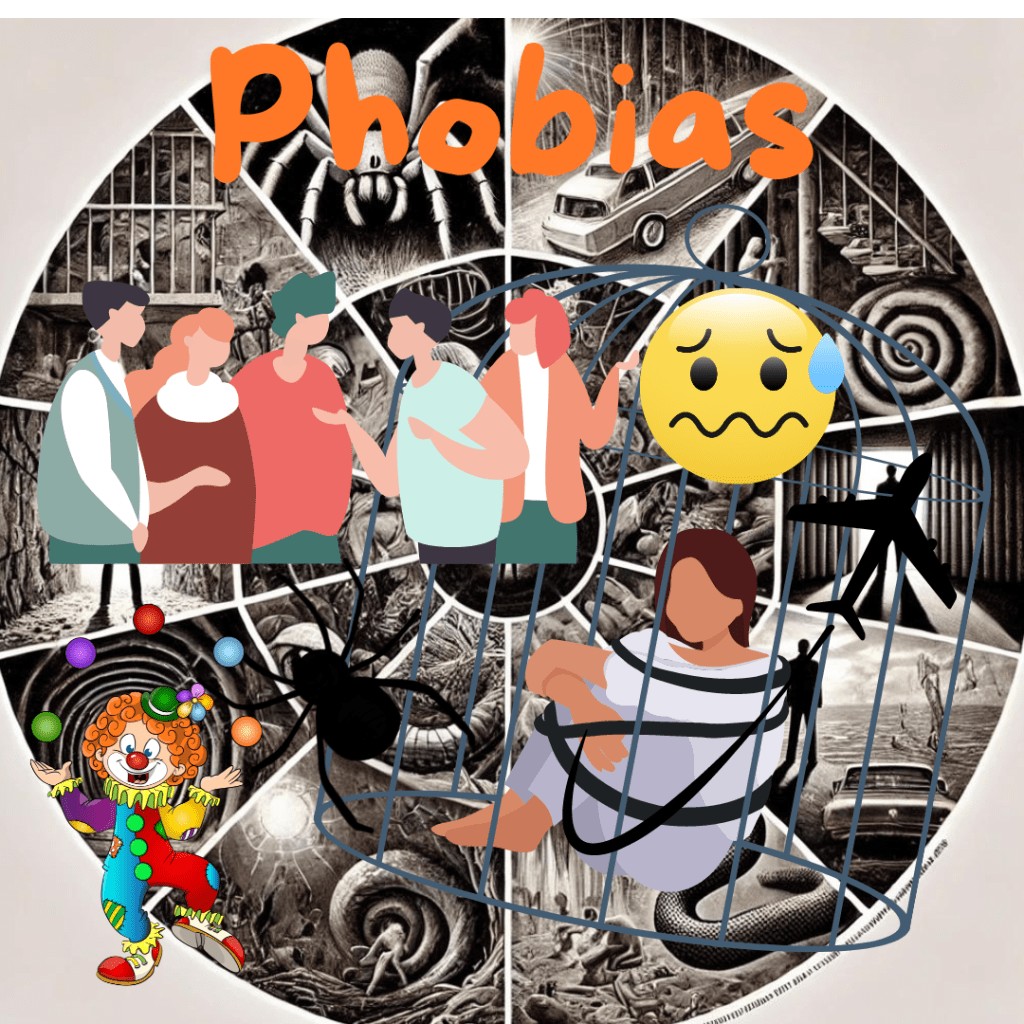
Phobias, defined as irrational and persistent fears of people, specific objects, situations, or activities, are a universal phenomenon. They can significantly impact an individual’s daily life and well-being. While some phobias are unique to certain cultures, many are experienced globally.
Most phobias are latent; you probably wouldn’t know that you have the fear until you’re faced with the situation or object.
Phobias are often listed as psychiatric conditions and anxiety disorders (Cleveland Clinic) and can range from mild to severe.
This post provides an overview of common global phobias, and explores their prevalence.
Phobias relating to People
- Anthropophobia (Fear of People):
Anthropophobia is the fear of people in general, which can manifest as an extreme and irrational avoidance of social interaction. Unlike social phobia, which is specific to social situations, anthropophobia can lead to a complete withdrawal from society. This phobia can stem from traumatic experiences or deep-seated anxieties about human interaction. - Haphephobia (Fear of Being Touched):
Haphephobia is the fear of being touched by other people. This phobia can result from traumatic experiences, cultural beliefs about personal space, or a heightened sensitivity to physical contact. Individuals with haphephobia may avoid crowded places, physical intimacy, or even casual greetings like handshakes and hugs. - Androphobia (Fear of Men):
Androphobia is the fear of men, which can be particularly distressing for individuals in male-dominated environments. This phobia may arise from negative experiences with men, societal attitudes, or internalized gender biases. Androphobia can impact personal relationships, professional interactions, and general social activities. - Gynophobia (Fear of Women):
Gynophobia, the fear of women, can affect both men and women. Like androphobia, this fear may be rooted in personal experiences, cultural stereotypes, or psychological factors. Gynophobia can lead to difficulties in forming relationships, workplace challenges, and social isolation. - Xenophobia (Fear of Strangers or Foreigners):
Xenophobia is the fear of strangers or foreigners, often manifesting as distrust or hostility towards people from different cultural or ethnic backgrounds. This phobia can result from unfamiliarity, cultural prejudices, or negative experiences. Xenophobia can contribute to social division, discrimination, and conflict within communities. - Pedophobia (Fear of Children):
Pedophobia is the fear of children, which can be challenging for individuals in family-oriented or educational environments. This phobia may develop from traumatic childhood experiences, feelings of inadequacy in dealing with children, or cultural attitudes towards youth. Pedophobia can affect parenting, teaching, and social interactions with young people. - Gerontophobia (Fear of the Elderly):
Gerontophobia is the fear of elderly people, often linked to anxieties about aging and mortality. This phobia can lead to avoidance of older adults and negative attitudes towards aging. Gerontophobia can affect family dynamics, caregiving roles, and societal views on the elderly. - Coulrophobia (Fear of Clowns)
Coulrophobia is the fear of clowns, often triggered by their exaggerated features and behaviors. This phobia can be traced to unsettling media portrayals of clowns or negative personal experiences. Coulrophobia can lead to avoidance of circuses, parties, and other events where clowns may be present.
Phobias relating to Animals
- Arachnophobia (Fear of Spiders):
Arachnophobia is one of the most common and well-known phobias worldwide. People with this phobia experience intense fear or panic when they encounter spiders or even think about them. This fear can be traced back to evolutionary survival mechanisms, as some spiders are venomous. Cultural representations of spiders as sinister or dangerous also contribute to this widespread fear. - Ophidiophobia (Fear of Snakes):
Ophidiophobia, the fear of snakes, is another common phobia with evolutionary roots. Throughout history, snakes have posed threats to human survival due to their potential venomous bites. Cultural myths and media representations further reinforce this fear, making it prevalent across various societies. - Cynophobia (Fear of Dogs):
Cynophobia is the fear of dogs, which can range from mild discomfort to extreme panic. This phobia often originates from negative experiences with dogs, such as bites or aggressive behavior. Cultural attitudes towards dogs and their role in society also influence the prevalence of this fear.
Phobias relating to Situations and Activities
- Social Phobia (Social Anxiety Disorder): Social phobia, or social anxiety disorder, involves a pervasive fear of social situations and being judged or embarrassed by others. This fear can interfere with daily activities, relationships, and career opportunities. Social phobia is influenced by cultural norms and expectations regarding social behavior and performance.
- Acrophobia (Fear of Heights):
Acrophobia involves an extreme fear of heights, leading to anxiety and avoidance of high places such as tall buildings, mountains, or even staircases. This phobia is prevalent across different cultures and can significantly limit an individual’s activities and experiences. The fear of falling and the potential for injury often underlie acrophobia. - Claustrophobia (Fear of Enclosed Spaces): Claustrophobia is the fear of being in confined or enclosed spaces, such as elevators, small rooms, or crowded places. This phobia can trigger panic attacks and cause individuals to avoid situations where they might feel trapped. The fear of suffocation or loss of control often contributes to claustrophobia.
- Agoraphobia (Fear of Open or Crowded Spaces):
Agoraphobia is characterized by the fear of being in situations where escape might be difficult or help unavailable, often leading to avoidance of open or crowded spaces. This phobia can confine individuals to their homes and severely limit their activities. It is often linked to panic disorder, where panic attacks exacerbate the fear of certain environments. - Aerophobia (Fear of Flying):
Aerophobia is the fear of flying in airplanes, which can hinder travel plans and career opportunities. This phobia is often associated with the fear of crashing, loss of control, or claustrophobia within the confined space of an aircraft. Media coverage of plane accidents and turbulence can exacerbate this fear. - Trypanophobia (Fear of Needles):
Trypanophobia, the fear of needles or injections, can be a significant barrier to medical care and vaccinations. This phobia often stems from early traumatic experiences with needles or witnessing others’ reactions to injections. The anxiety associated with pain and the invasive nature of needles contribute to this widespread fear. - Mysophobia (Fear of Germs or Contamination):
Mysophobia, also known as germophobia, involves an excessive fear of germs and contamination. This phobia can lead to compulsive cleaning, hand-washing, and avoidance of perceived sources of contamination. The recent COVID-19 pandemic has heightened awareness and fear of germs, making mysophobia more prevalent globally. - Emetophobia (Fear of Vomiting):
Emetophobia is the fear of vomiting, whether it’s the fear of oneself vomiting or seeing others vomit. This phobia can lead to extreme measures to avoid situations where vomiting might occur, such as avoiding certain foods, places, or activities. Emetophobia can severely impact an individual’s quality of life and social interactions. - Thanatophobia (Fear of Death):
Thanatophobia, or the fear of death, is a common phobia that can lead to intense anxiety about dying or the dying process. This fear may be related to existential concerns, religious beliefs, or personal experiences with loss. Thanatophobia can affect daily living and mental health, often requiring therapeutic intervention to manage. - Nyctophobia (Fear of the Dark):
Nyctophobia is the fear of darkness, which is common among children but can persist into adulthood. This phobia can cause anxiety and panic in dark environments, leading to sleep disturbances and avoidance behaviors. Nyctophobia may stem from evolutionary survival instincts or negative experiences in the dark. - Trypophobia (Fear of Patterns of Holes):
Trypophobia is the fear of irregular patterns or clusters of small holes or bumps. This phobia can cause discomfort, anxiety, and even physical symptoms like nausea. The fear may be triggered by natural objects like honeycombs or man-made objects with similar patterns. - Atychiphobia (Fear of Failure): Atychiphobia is the fear of failure, which can prevent individuals from pursuing goals, taking risks, or engaging in new activities. This phobia is often rooted in perfectionism, high self-expectations, or past failures. Atychiphobia can limit personal growth, career advancement, and overall life satisfaction.
- Glossophobia (Fear of Public Speaking):
Glossophobia is the fear of public speaking, a common phobia that affects many individuals. This fear can lead to avoidance of speaking engagements, presentations, or any situation where one must speak in front of others. Glossophobia can impact career prospects and personal confidence. - Astraphobia (Fear of Thunder and Lightning):
Astraphobia is the fear of thunder and lightning, which can cause extreme anxiety during storms. This phobia is common among children but can persist into adulthood. Astraphobia may lead to avoidance of outdoor activities and heightened anxiety during inclement weather.
The above phobias are not exhaustive, but merely a sample of the common ones globally.
Conclusion
Phobias are a diverse and widespread phenomenon, with many specific fears affecting individuals worldwide. Understanding the variety of phobias and their underlying causes can help in providing appropriate support and treatment. Whether it’s a common fear like public speaking or a more unusual one like trypophobia, recognizing and addressing these fears can improve mental health and overall well-being.
Last Note
We will continue with Part 2 on Causes, and. Managing and Overcoming Phobias.
Click here if you’re interested in learning more.

