Put on your thinking (or is it, your green) cap for some intro to some, and refresher for others. Set your brain to the left. I hope you came with your notepad (you’re allowed to use your iPhone), pen, and retentive memory. You will need this class for your lifetime. You might want to memorize the terms because today’s class is essential, not only for those considering relocating, but for all in making your dollars and cents make sense.
Let’s proceed, class 😎
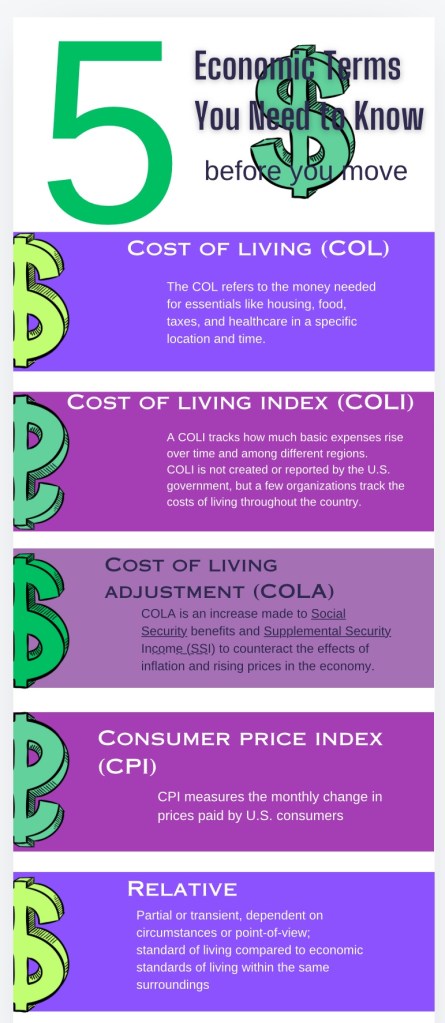
Today’s class/post is about Cost of Living (COL), Cost of Living Index (COLI), Cost of Living Adjustment (COLA), Consumer Price Index (CPI), etc; all those economic indicators/terms that we all use. But, do we really know what they mean?
By constant reason of use, we kind of get an understanding of those terms. But, nothing compares to knowing that you really know, right?
I must admit that I struggled in college really understanding the terminologies and differences. But now, I know that I know that I know. Do you?
What do these terms really mean?
The definitions are above. For a deeper dive, click on each term, courtesy of Investopedia, to read. They have done a great job of explaining than I could have done. May God give you fresh understanding as you do.
Consumer Frustrations
Most people are complaining about rising food and other prices, especially when wages and salaries are constant. And some are contemplating moving out of their current places to live in places that are affordable. Those who are not complaining, have however realized that their monies are buying lesser than what it used to.
You may have also heard that a few great companies are leaving SoCalifornia CA for Texas TX. Similar moves happened in NoCalifornia when the Golden State Warriors and Raiders left Oakland. Why the then Mayor couldn’t prevent the exodus, still beats me. Ouch, that was a digress … moving on.
Though the companies’ moves are connected to our topic today, the corporations’ are more commercial and, rightly so, on a higher level than those of the individuals. But, it’s still about rising costs.
Before the individuals relocate, though, they must consider the terminologies above because they are relative.
It’s all Relative
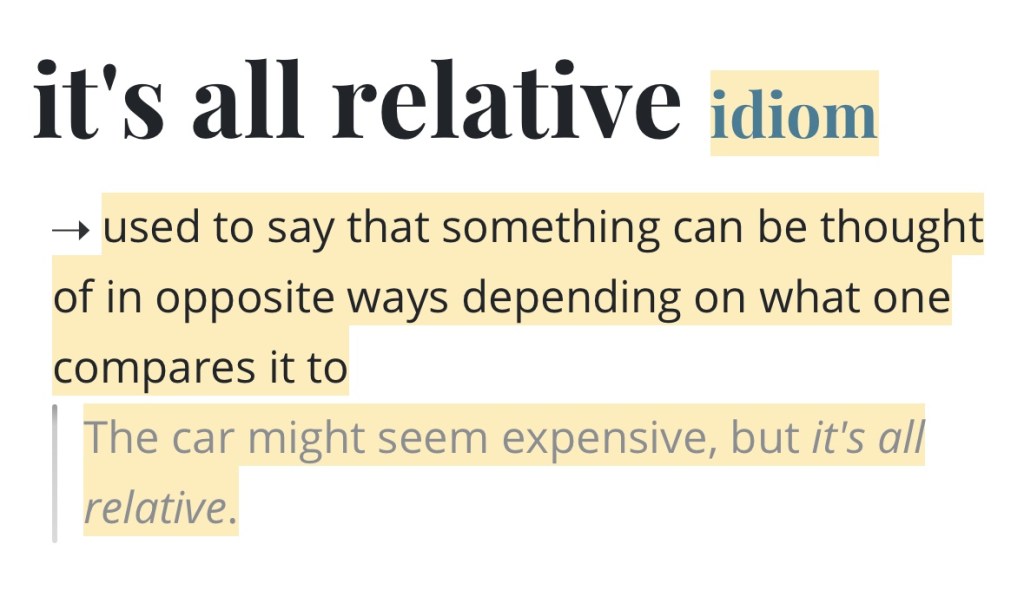
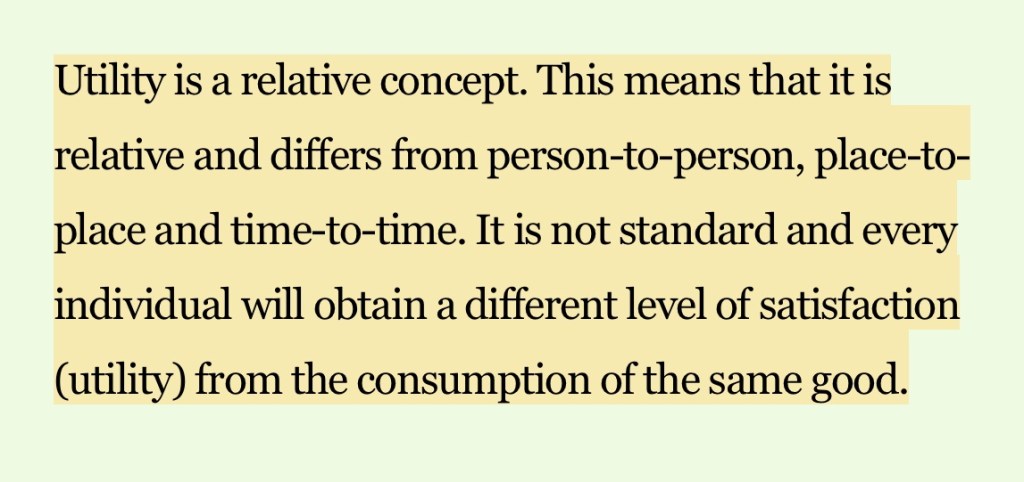
Relative in Economics means that things are expensive or cheap (or one is rich or poor) based on the “standard of living compared to economic standards of living within the same surroundings.” (byjus.com) Relative also “means partial or transient, dependent on circumstances or point-of-view.” (marxists.org)
It’s Econ 101 today, class 🤓. Again, click on the above to read in depth on how relativity affects prices.
Finally, before you make that relocation decision, read this article on the Cost of Living Indices in the USA, and consider the relative prices. For example, if you work as a techie in CA and earn a $100K salary; relocating to Virginia might only pay you $70K for the same position; except of course you get a transfer. But I doubt that your company would relocate you in the same capacity as a techie for that same salary. You might be given a “promotion” with a new/higher title like a manager for your company to justify, and for you to maintain, that salary.
In summary, next time you converse with these economic terms, you now know that you know that you know. 😊
Quiz will be on Friday and the exam next Monday. I’m expecting all to ace both!

