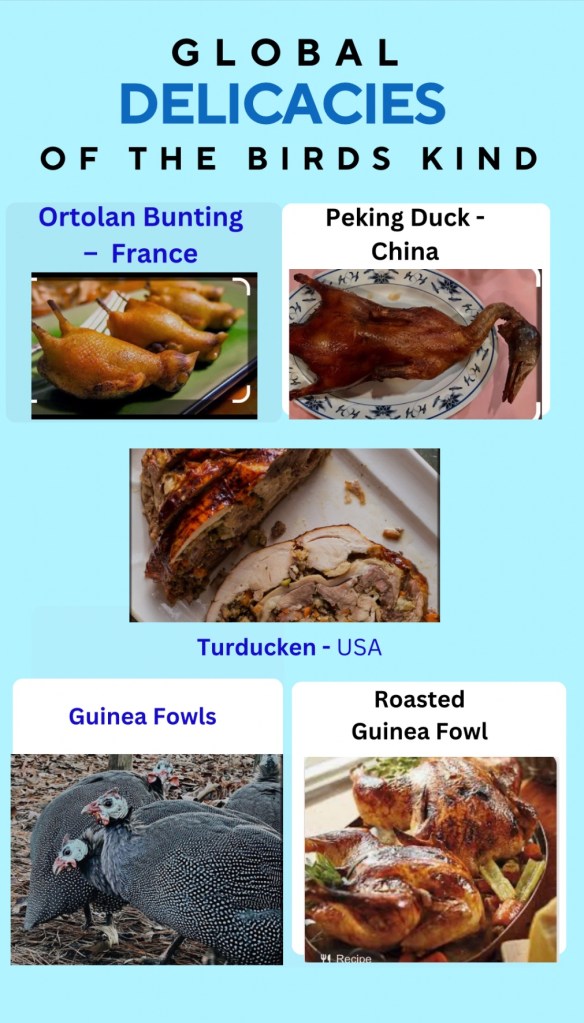
There are more unique delicacies from around the world that reflect the incredible diversity of cultural cuisines. Let’s dive deeper into delicacies, of the birds kind, that stretch the boundaries of culinary creativity, enjoyed in various countries and cultures that might seem repugnant or unusual to others:
- Ortolan Bunting – France
The Ortolan Bunting is a small songbird that was once considered a delicacy in France, though its consumption is now illegal due to conservation efforts. Traditionally, the bird was captured, fattened, and then drowned in Armagnac (a type of brandy). The whole bird was roasted and eaten in a single bite, bones and all. Gourmands would often cover their heads with a napkin while eating it, both to savor the aromas and to “hide from God” while consuming such a luxurious meal. While it’s no longer widely available, the ortolan holds a controversial place in French culinary history. - Goose Blood Soup – Poland and other parts of Eastern Europe.
A soup made with goose blood and sometimes served with goose meat or other organ parts. Known as Czernina in Poland, this dish may be unsettling due to the use of fresh blood as a primary ingredient. Blood-based dishes are not common in many parts of the world, making this traditional soup repugnant to those unfamiliar with it. - Cooked Sparrow – China and parts of East Asia.
In certain parts of China, sparrows are roasted or stir-fried with spices and eaten whole, bones and all. These tiny birds are seen as a delicacy, but the idea of eating a small bird whole, particularly in countries where sparrows are common garden birds, can be unsettling. - Fried Pigeon – Egypt, Morocco, and other North African countries.
Pigeons are bred specifically for eating in these regions. They are stuffed with rice or wheat and deep-fried or grilled. In many parts of the world, pigeons are considered pests or “rats with wings.” - Blood Sausage with Bird Meat – Spain
Known as morcilla, this sausage contains bird meat, such as partridge or pigeon, mixed with blood, fat, and spices. Blood dishes, in general, can be off-putting, especially for those not accustomed to consuming blood as an ingredient, but it’s highly regarded in many parts of Spain. - Blackened Chicken Feet – China, other parts of Asia, and Africa.
Chicken feet are considered a delicacy and are enjoyed in various preparations, often braised, blackened, stewed, or deep-fried. For many people, the idea of eating the feet of a bird, which are often seen as inedible parts in Western culture, is quite repellent. However, they are a common delicacy in Chinese dim sum, other Asian, and African cuisines.
It’s worth sharing these TikTok videos on chicken feet 🙂 - Foie Gras – France
Foie Gras is the liver of ducks or geese often fattened through a specific feeding process called gavage. Foie gras is typically served as a rich, buttery, and smooth pâté, mousse, or seared, and is a delicacy associated with luxury dining. - Squab – Global
Squab, young pigeons usually less than four weeks old, is often roasted or grilled and served as a high-end dish in many fine-dining restaurants around the world. Its meat, rich, and game, is considered a delicacy due to its tenderness and flavor profile. - Chicken Biryani – India/Pakistan
A layered rice dish where the chicken is marinated and cooked with rice, saffron, and a variety of spices such as cardamom, cloves, and cinnamon. Biryani is a beloved dish across South Asia, with each region having its own variation. - Guinea Hen/Fowl – Africa/Europe
Often roasted or braised, guinea hen/fowl is a popular bird in both African and European cuisine. It’s leaner and more flavorful than chicken, with a slight gamey taste. Prized for its slightly wild taste and is a staple in gourmet restaurants. - Quail Eggs – Global
Quail eggs are delicate, and slightly richer than chicken eggs. They are commonly used as garnishes, in salads, or served soft-boiled. They are also considered a delicacy due to their size and distinctive flavor. In some cuisines, like Japanese, they are even used raw in sushi dishes. - Turducken – USA
Turducken, a combination of the distinct flavors of turkey, duck, and chicken, is a festive dish where a deboned chicken is stuffed into a deboned duck, which is then stuffed into a deboned turkey. Each layer is seasoned, and it’s roasted for hours. It’s particularly popular around Thanksgiving in the United States. - Poularde de Bresse – France
A type of chicken from the Bresse region. Known for its protected designation of origin (PDO), this chicken is fed a special diet, giving it a unique taste. It’s typically roasted or poached and is a luxury item in French cuisine.
Each of these bird dishes, differ dramatically from the familiar, and holds cultural significance and reflects the culinary creativity of the regions they come from. Some are beloved for their intricate preparation, while others are revered for their rarity and distinct flavors.
What might seem repugnant to some is a beloved tradition to others, often based on available resources and cultural norms.
These rare and controversial dishes certainly adds to the diversity of bird-based delicacies!
Ducks-Your-Way
Roast, bake, braise, or fry them, whole or parts, Ducks are also enjoyed as a delicacy in various cultures around the world, with many regions having their own unique preparation methods. Here are a few notable examples:
- Peking Duck – China
One of the most famous duck dishes in the world, Peking Duck, originates from Beijing, China. This dish features a whole duck roasted until the skin is crispy, often served with thin pancakes, hoisin sauce, and sliced vegetables. The preparation is an art form, and the dish has been part of Chinese cuisine for centuries, often served during celebrations or special occasions. - Canard à l’Orange – France
Canard à l’Orange (Duck with Orange Sauce) is a classic French dish where roasted duck is served with a tangy orange sauce. This is an iconic dish in French cuisine, often associated with fine dining. Duck is commonly prepared in many ways across France, including duck confit (slow-cooked in its own fat) and magret de canard (duck breast). - Ped Yang (Roast Duck) – Thailand
In Thailand, Ped Yang (roast duck) is a popular dish, often found in Thai-Chinese restaurants. The duck is marinated in herbs and spices, roasted to crispy perfection, and typically served with rice or noodles, accompanied by a rich gravy or a tangy sauce. Thai duck curries, like Gaeng Ped Yang, which combines roast duck with red curry, are also widely loved. - Vit Quay – Vietnam
In Vietnam, Vit Quay is a popular dish made by marinating and roasting duck, much like Peking Duck but with a unique blend of spices including star anise, cinnamon, and ginger. It’s commonly served with rice or noodles and a sweet, savory sauce. - Entenbraten (Roast Duck) – Germany
In Germany, Entenbraten (Roast Duck) is often enjoyed during the winter months, particularly around Christmas. The duck is roasted and served with traditional accompaniments like red cabbage, dumplings, and a rich gravy. Duck is a staple of hearty German holiday meals. - Wild Duck – United States
In the United States, particularly in the southern states, wild duck hunting is popular, and duck is often served roasted or grilled. Duck gumbo is a well-known dish in Louisiana’s Cajun cuisine, blending duck with spicy sausages, vegetables, and a rich roux-based broth. In more modern American cuisine, duck is often used in gourmet preparations, like seared duck breast. - Roasted Duck with Sauerkraut – Hungary
In Hungary, roasted duck is commonly served with sauerkraut or red cabbage. Duck dishes are often paired with hearty portions of potatoes or dumplings, making them a popular option during festive seasons and family gatherings. - Nasi Itik (Duck Rice) – Malaysia
In Malaysia, particularly among the Malay and Chinese communities, duck is featured in various dishes like Nasi Itik, a fragrant rice dish served with roasted or braised duck. The preparation includes a variety of spices like star anise and cinnamon, and the duck is typically served with rice and a flavorful dipping sauce.
Ducks are truly a versatile delicacy enjoyed around the world in so many diverse ways! Each culture brings its own special twist to how duck is prepared and served, making it a globally beloved dish.
Changing Perceptions of Delicacies
While the thought of eating tarantulas, raw fish sperm, or fermented eggs might be off-putting to some, many of these foods are considered normal or even luxurious in their home countries. Often, the concept of what is acceptable to eat is shaped by necessity, availability, and tradition. Foods like offal or insects, once seen as survival foods, have risen to the level of delicacies as cultures have evolved.
Similarly, Western dishes such as blue cheese, caviar, or even oysters can seem repugnant to people in other parts of the world. What is considered an acquired taste in one region is often revered and enjoyed elsewhere.
The existence of such delicacies highlights not only the resilience and resourcefulness of various cultures but also the diversity of global cuisine.
Why These Foods Are Considered Delicacies
Food is deeply tied to identity, and trying unfamiliar delicacies can be a way to connect with different traditions and understand the world through the flavors and textures it offers.
Delicacies often stem from necessity—cultures traditionally had to make use of every available food source, whether it was a particular animal, insect, or part of an animal that was commonly discarded. Over time, these foods became symbolic, ritualistic, or even markers of status and tradition.
What we consider edible is largely determined by our environment, cultural upbringing, and societal norms. While some cultures celebrate a broad range of foods, including what others might find unpalatable, it’s important to understand that the perception of food varies greatly around the world. Whether it’s snails in France, guinea pigs in Peru, or dog in Vietnam, these foods reflect the diversity of human experience and the adaptability of cultures to their surroundings.
In the end, the boundary between delicacy and repugnance is often a matter of perspective.
Why Delicacies Differ
What is considered a delicacy often stems from the availability of ingredients, survival needs, or cultural and religious practices. In many cases, these foods have been passed down through generations, and while they may seem strange or unpleasant to outsiders, they are valued and celebrated in their respective cultures.
These unique dishes showcase the diversity of human tastes and traditions, reminding us that food is not only nourishment but also a powerful cultural expression. Whether repulsive or delicious, delicacies are windows into the histories and values of the people who enjoy them.
Were you surprised by any of today’s bird delicacies? Share in the Comments section below.
 Think-Talk